Non-alcoholic wine: alcohol, sugar, and calories
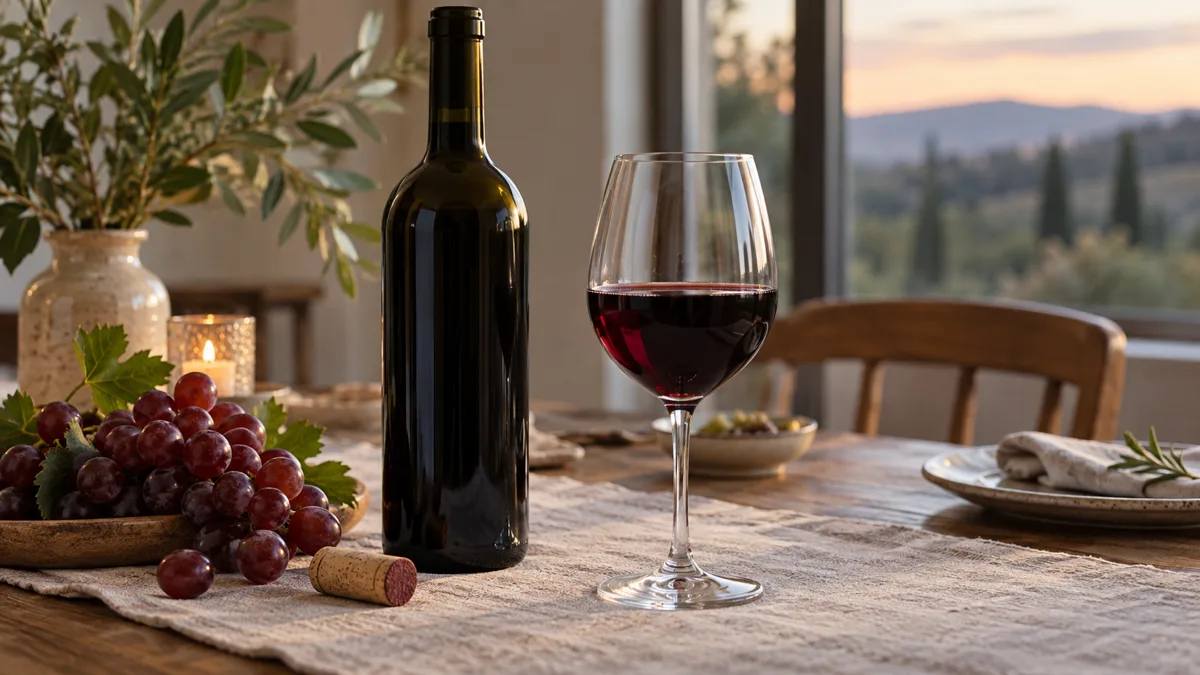
The front label says “non-alcoholic,” but the answers to three different questions—how much alcohol remains, how much sugar is in the drink, and how many calories are in a glass—appear in different places. The distinction between “up to 0.5%” and no alcohol at all matters when complete abstinence is required.
How much alcohol does “non-alcoholic” mean?
Wine sold this way is usually first fermented as wine, then some or nearly all of its ethanol is removed. Under EU rules, wine treated to remove alcohol is labelled dealcoholised when its actual strength is no more than 0.5% ABV. Partially dealcoholised means above 0.5% but below the minimum strength of the original wine category. These are EU definitions; the words on bottles sold in other markets need to be read under their own rules.
A new EU regulation has already been adopted: from 19 September 2027, such wine will use alcohol-free instead of dealcoholised at no more than 0.5% ABV, with “0.0%” added when strength is no more than 0.05% ABV. Bottles labelled under the earlier rule may remain on sale until stocks run out. Even the forthcoming EU “0.0%” therefore does not assert absolute zero.
In the United States, FDA labelling guidance allows non-alcoholic on dealcoholised wine containing less than 0.5% ABV. It distinguishes this from alcohol-free, a term it reserves for products with no detectable alcohol. A large front-label claim is therefore not proof of an analytical zero. Check the stated strength on the particular bottle: 0.5% ABV, less than 0.5% ABV, and 0.0% are different claims.
For scale, a 150 ml glass at 0.5% ABV would contain about 0.75 ml of ethanol. That is far less than ordinary wine, but it is not zero. If pregnancy, medical care, personal preference, or religion requires complete abstinence, do not rely on the category name alone. Water is an option; for another drink, check that alcohol absence has been confirmed and discuss medical restrictions with your clinician. The CDC says there is no known safe amount of alcohol use during pregnancy.
Where does the sugar come from?
Grapes contain sugars of their own. Fermentation turns some of those sugars into alcohol, but some may remain; the final composition after alcohol removal also depends on the recipe. Removing alcohol therefore tells you nothing definite about sugar content. “No added sugar” does not mean “sugar-free” either: sugars from the grapes may still be present.
Look for “carbohydrate” and, where provided, “of which sugars” per 100 ml. Multiply by 1.5 for a 150 ml glass. For example, 4 g of sugars per 100 ml becomes 6 g per glass. Do not add the sugars figure to the carbohydrate figure: sugars are already part of total carbohydrates. Descriptors such as “dry” or “semi-sweet” cannot replace the numbers for the specific product.
How many calories are in a glass?
Alcohol supplies 7 kcal per gram and digestible carbohydrate 4 kcal per gram, according to the conversion factors in Annex XIV of the EU food information regulation. Removing alcohol removes most of its energy, but does not automatically make the drink calorie-free. At 0.5% ABV, residual ethanol in a 150 ml glass would supply roughly 4 kcal; 6 g of sugars in that glass would supply about 24 kcal. Organic acids and other components may also contribute, so the labelled total energy is the best figure to use.
If a bottle lists 30 kcal per 100 ml, a 150 ml glass contains 45 kcal and three glasses contain 135 kcal. ABV alone cannot tell you the calorie count: two drinks at the same strength may differ substantially in carbohydrate content. Compare bottles on the same basis—per 100 ml—instead of using an arbitrary manufacturer's serving size. The same method helps when choosing juice and fruit drinks.
What to check before buying
- Alcohol by volume. If you need to avoid alcohol completely, the large “non-alcoholic” claim is not enough.
- The product name and ingredients. Dealcoholised wine, a grape-based drink, and grape juice are different products; read the full name rather than judging by the bottle design.
- Carbohydrates, sugars, and kcal per 100 ml. Convert them to your glass size. Sweetness and a near-zero ABV do not establish the calorie count.
When tracking food intake, count non-alcoholic wine like any other drink that supplies energy. For other packaging claims, see our guide to reading food labels.
Frequently asked questions
- Does non-alcoholic wine contain alcohol?
- It can. Under EU rules, wine treated to remove alcohol may be labelled dealcoholised at a strength up to and including 0.5% ABV. Check the stated ABV on the bottle; “non-alcoholic” alone does not prove that no ethanol remains.
- Can I drink non-alcoholic wine during pregnancy?
- If you need to avoid alcohol, do not rely on the “non-alcoholic” claim alone because the drink may contain traces. The CDC says no amount of alcohol use during pregnancy is known to be safe. Choose a drink with suitable confirmation of alcohol absence and discuss medical restrictions with your clinician.
- How much sugar and how many calories are in a glass?
- There is no single figure for every brand. Multiply the label values per 100 ml by 1.5 for a 150 ml glass: 4 g of sugars per 100 ml becomes 6 g per glass, while 30 kcal per 100 ml becomes 45 kcal.
- Does 0.0% ABV mean sugar-free?
- No. ABV describes ethanol content, not sugars. Check carbohydrates and sugars separately in the nutrition information.
Read next
- Juice, nectar, mors, and juice-containing drinks: what is the difference — Four different products with similar images sit on adjacent shelves: juice, nectar, mors, and juice-containing drinks.
- Soda and its "zero": what changes when sugar is removed — The difference between regular soda and its "zero" version comes down to one line in the ingredients: a sweetener instead of sugar.
- "Sugar-free," "fitness," "eco": what these labels actually mean — The front of a package speaks in short words: "light," "fitness," "sugar-free," "eco.
- Hidden sugar: under what names it appears in ingredients — The word "sugar" appears in ingredients less often than sugar itself does in a product: it has a dozen legal names, and the manufacturer has every right to use any of them.
This article is for general information. It is not medical advice, a diagnosis, or a prescription for treatment or a diet, and it does not replace a consultation with your doctor. If you have a health condition, are pregnant, take medication, or follow a diet prescribed to you, decisions about food belong with your doctor.
Figures from regulations, guidelines and studies are given as they stood when this article was prepared and may since have changed; check them against the primary sources. This article is not advertising, an offer, or individual advice, and neither the author nor the site owner is responsible for decisions taken on the basis of it.