Soda and its "zero": what changes when sugar is removed
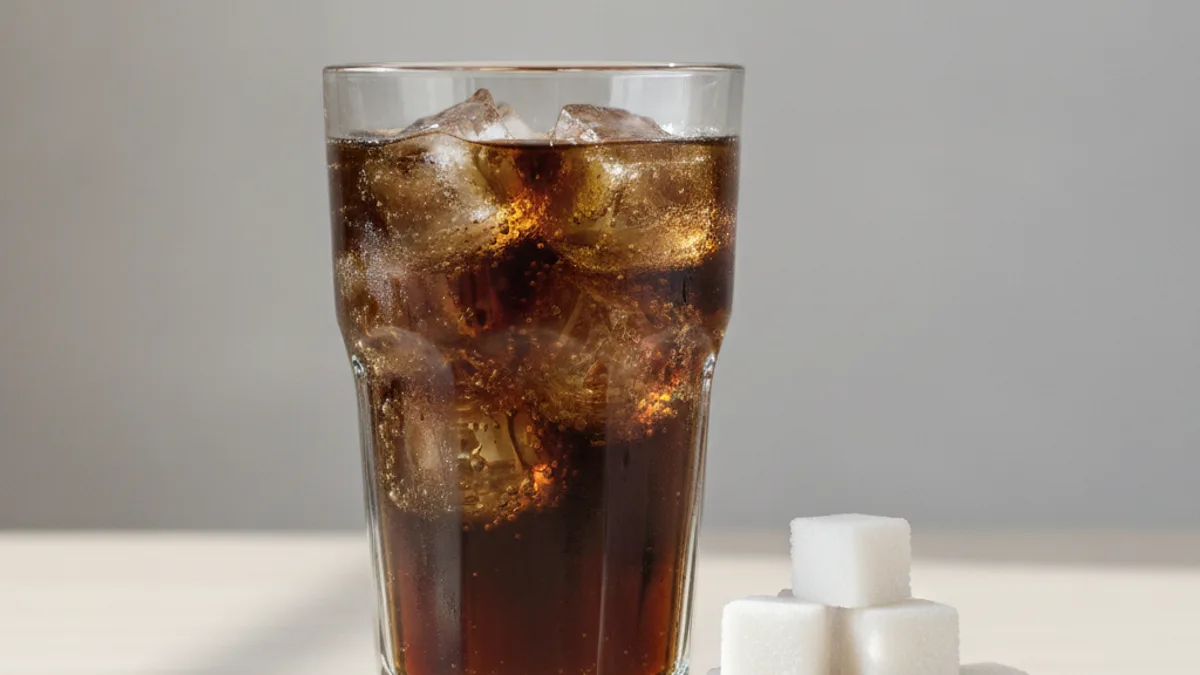
The difference between regular soda and its "zero" version comes down to one line in the ingredients: a sweetener instead of sugar. The calorie count drops to almost zero, and the taste remains similar. The question that arises from this is simple—does the substitution help—and the answer is more complex than just "yes" or "no".
How much sugar is in regular soda
A standard 330 ml can contains about 35 g of sugar—this is approximately seven teaspoons. A half-liter bottle contains about 53 g.
For comparison: the WHO recommendation for free sugars is less than 10% of daily energy, and preferably less than 5%. With a 2000 kcal diet, 10% is about 50 g. This means one bottle covers the entire daily target.
A specific feature of liquid sugar is that it provides almost no satiety. The same 200 kcal in the form of food provides a feeling of fullness, but in the form of a drink, it does not, and therefore it does not displace other food.
What replaces sugar in the "zero" version
Usually, it is a combination of two or three sweeteners: aspartame, acesulfame potassium, sucralose, steviol glycosides, and less commonly cyclamate and saccharin. They are combined because each has its own sweetness profile and aftertaste, and together they are closer to sugar.
What is known about the safety of each and what assessments have been made by expert bodies is analyzed in the article on sugar substitutes. Aspartame is a separate story: in 2023, the WHO and IARC published the results of a hazard and risk assessment, where the substance was classified as possibly carcinogenic to humans, while the acceptable daily intake was reaffirmed. The difference between "hazard" and "risk" here is the essence of the publication: the former is whether the substance is capable of something in principle, the latter is at what quantities.
Does the substitution help
Mechanically—yes: by removing 35 g of sugar, you have removed about 140 kcal. If these calories are not replaced by anything else, the deficit becomes larger. The mechanism is in the article on calorie deficit.
In practice, the effect is less than expected for two reasons. The first is compensation: what is saved is sometimes made up for by food, consciously or not. The second is that the habit of a sweet taste persists, and along with it, the preference for sweetness in the rest of the diet remains.
The practical conclusion is cautious: as a step away from regular soda, it is an improvement, and a noticeable one. As a standalone method for weight loss—no.
Acid and teeth
This part is the same for both versions and is discussed less often than sugar. Soda is acidic due to phosphoric or citric acid, and acid dissolves the mineral component of enamel. "Zero" is no better here: there is no sugar, but the acid remains.
It is mitigated by the same things as in the case of lemon water: drink through a straw, rinse your mouth with water, do not brush your teeth immediately—more on this in the article on lemon water.
Caffeine and carbonation
Cola contains caffeine—about 30–40 mg per can, roughly three times less than in a cup of coffee. This should be taken into account when calculating your daily amount, especially if you have several sodas a day; guidelines are in the article on coffee.
Carbon dioxide itself does not affect weight. It can increase the feeling of bloating and symptoms of reflux—this is individual.
What to do with this
- Treat soda as food, not as a drink. A bottle of regular soda is a full-fledged dessert in terms of calories.
- Use "zero" as a transition, not as an end point: it is easier to move on to water, tea, and coffee without sugar.
- Look at the total amount of sweet taste per day, not just at the calories.
- Remember the acid. It is present in both versions and affects enamel regardless of sugar.
Frequently asked questions
- How much sugar is in a can of soda?
- About 35 g in a 330 ml can — roughly seven teaspoons, or about 140 kcal. A 500 ml bottle contains about 53 g, which covers the entire daily WHO guideline for free sugars.
- Does zero-calorie soda help with weight loss?
- As a replacement for regular soda, yes, noticeably: it eliminates 140 kcal per can. As a standalone method, no: the saved calories are sometimes made up for by food, and the habit of a sweet taste remains.
- What is known about aspartame?
- In 2023, the WHO and IARC published the results of an assessment: the substance was classified as possibly carcinogenic to humans, while the acceptable daily intake remained unchanged. These are different questions — whether a substance is capable of causing harm in principle and at what quantities.
- Does zero-calorie soda damage teeth?
- Yes, just like regular soda. It is not the sugar that dissolves enamel, but phosphoric or citric acid, which is present in both versions. Drinking through a straw, rinsing your mouth with water, and avoiding brushing your teeth immediately afterward can help.
- How much caffeine is in cola?
- About 30–40 mg per can — roughly three times less than in a cup of coffee. This is worth considering when calculating your daily caffeine intake, especially if you drink several sodas throughout the day.
Read next
- Artificial sweeteners: are they harmful, and do they help you lose weight? — Arguments about sweeteners are conducted as though the choice were between them and plain water.
- Juice, nectar, mors, and juice-containing drinks: what is the difference — Four different products with similar images sit on adjacent shelves: juice, nectar, mors, and juice-containing drinks.
- Hidden sugar: under what names it appears in ingredients — The word "sugar" appears in ingredients less often than sugar itself does in a product: it has a dozen legal names, and the manufacturer has every right to use any of them.
This article is for general information. It is not medical advice, a diagnosis, or a prescription for treatment or a diet, and it does not replace a consultation with your doctor. If you have a health condition, are pregnant, take medication, or follow a diet prescribed to you, decisions about food belong with your doctor.
Figures from regulations, guidelines and studies are given as they stood when this article was prepared and may since have changed; check them against the primary sources. This article is not advertising, an offer, or individual advice, and neither the author nor the site owner is responsible for decisions taken on the basis of it.