Juice, nectar, mors, and juice-containing drinks: what is the difference
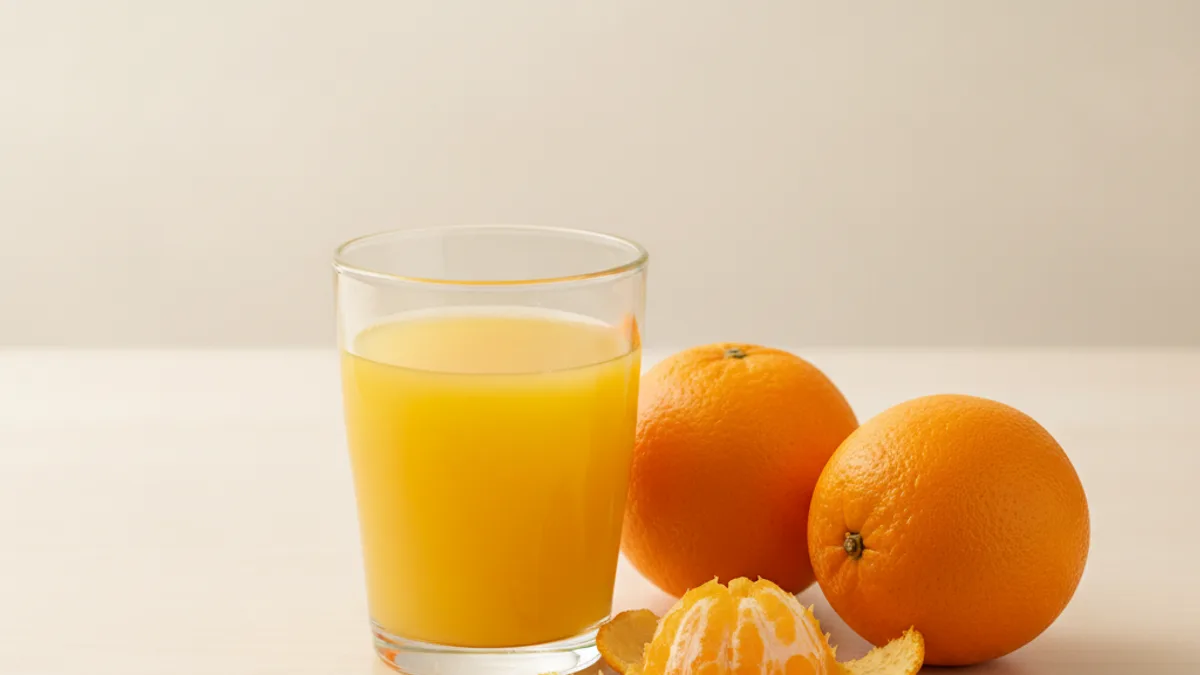
Four different products with similar images sit on adjacent shelves: juice, nectar, mors, and juice-containing drinks. These are not just marketing terms, but established categories with different juice content and specific rules regarding additives. The difference between them is greater than that between two brands within the same category.
Four categories
| Category | Juice content | Allowed additives |
|---|---|---|
| Juice | 100% | No added sugar; reconstitution from concentrate is permitted |
| Nectar | Usually 25–50% | Water, sugar, acid |
| Mors (berry drink) | Usually from 15% | Water, sugar; made from berries |
| Juice-containing drink | From 10% | Water, sugar, acid, flavorings |
The logic is simple: the lower the juice content, the more additives are permitted. Nectar exists precisely because some fruits—like bananas, peaches, and apricots—are too thick and acidic in their pure form to be consumed undiluted.
The category name is mandatory on the packaging, though it is often in small print: the word "Orange" might be large, while the word "nectar" is placed beneath it. This is a case where the front of the package says one thing, but the category indicates another; a general breakdown is available in our article on packaging labels.
"100% juice" does not mean "no sugar"
This is the main misunderstanding regarding this topic. While sugar is not added to juice, the fruit itself contains enough natural sugar: a glass of orange juice contains about as much as a glass of soda.
The difference between added and natural sugar for the body is minimal: they are the same monosaccharides. WHO recommendations on free sugars include sugars naturally present in juices precisely because they are released from the cellular structure during juicing.
The names under which sugar appears in the ingredients of other products are analyzed in our article on hidden sugar.
How juice differs from a whole fruit
In three ways, all of which work in the same direction.
No fiber. During juicing, it ends up in the pulp. Fiber slows down the absorption of sugars and provides satiety—a mechanism explained in our article on fiber.
Liquid form. A glass is consumed in a minute, whereas three oranges take ten minutes to eat and provide significantly better satiety for the same calorie count.
More at once. A glass of juice contains three to four oranges. People usually do not eat that many whole fruits in one sitting.
The practical conclusion: it is reasonable to consider juice a sugary drink rather than a serving of fruit. How this affects glucose spikes is covered in our article on fast and slow carbohydrates.
Reconstituted vs. not from concentrate
Reconstituted juice is made from concentrate: water is evaporated from the pressed juice for transport and storage, then added back later. Not from concentrate means it was never concentrated.
They are comparable in terms of sugar and calories. Differences exist in aroma and some heat-sensitive substances, but this is a matter of taste and price, not a fundamental difference for your diet. Both options remain sugary drinks.
How many calories are in it
Guidelines for a 250 ml glass:
- orange juice — about 110 kcal;
- apple juice — about 115 kcal;
- grape juice — about 150 kcal;
- nectar — comparable or slightly lower due to dilution, but with added sugar;
- commercial mors — usually lower, but due to water and sugar, not juice.
This is a case where calories are not perceived as food and therefore are not recorded in a food diary. For more on this mechanism, see our article on calorie counting apps.
What to choose
- A whole fruit instead of juice, if your goal is to include fruit in your diet.
- Water instead of juice, if your goal is hydration.
- Juice as a dessert, if that is what you really want: one glass, not a liter, and accounted for in your daily balance.
- Check the category, not the picture. "Nectar" and "juice-containing drink" are written on the package—just in smaller print.
- Calculate homemade mors based on the sugar you added to it: there are few berries in it, but usually several spoonfuls of sugar.
Frequently asked questions
- How does nectar differ from juice?
- By the juice content and what is permitted to be added. In juice, the content is 100% and no sugar is added; in nectar, the juice content is usually between a quarter and a half, and water, sugar, and acid are permitted.
- Is it true that 100% juice contains no sugar?
- There is no added sugar, but there is enough natural sugar: a glass of orange juice contains about as much sugar as a glass of soda. WHO recommendations classify juice sugars as free sugars precisely because they are released from the cellular structure during juicing.
- Does a glass of juice replace a serving of fruit?
- Not entirely. Juice lacks fiber, is consumed in a minute, and contains three to four fruits at once. Satiety and the rate of sugar absorption are significantly better with a whole fruit.
- Is reconstituted juice worse than cold-pressed juice?
- In terms of sugar and calories, they are comparable. Differences relate to aroma and some heat-sensitive substances—this is a matter of taste and price, not a fundamental difference for a diet.
- How many calories are in a glass of juice?
- Approximately 110 kcal in a glass of orange juice, 115 in apple, and about 150 in grape. These calories are rarely recorded in a food diary because they are not perceived as food.
Read next
- Hidden sugar: under what names it appears in ingredients — The word "sugar" appears in ingredients less often than sugar itself does in a product: it has a dozen legal names, and the manufacturer has every right to use any of them.
- Soda and its "zero": what changes when sugar is removed — The difference between regular soda and its "zero" version comes down to one line in the ingredients: a sweetener instead of sugar.
- Fiber: what it does in the gut and how much you need — We know that we "need more" fiber, but that is usually where the conversation ends: it is unclear what it physically does, why it causes bloating, and where the 25–30 grams per day recommendation comes from.
This article is for general information. It is not medical advice, a diagnosis, or a prescription for treatment or a diet, and it does not replace a consultation with your doctor. If you have a health condition, are pregnant, take medication, or follow a diet prescribed to you, decisions about food belong with your doctor.
Figures from regulations, guidelines and studies are given as they stood when this article was prepared and may since have changed; check them against the primary sources. This article is not advertising, an offer, or individual advice, and neither the author nor the site owner is responsible for decisions taken on the basis of it.