Insulin index: why cottage cheese has a higher score than pasta
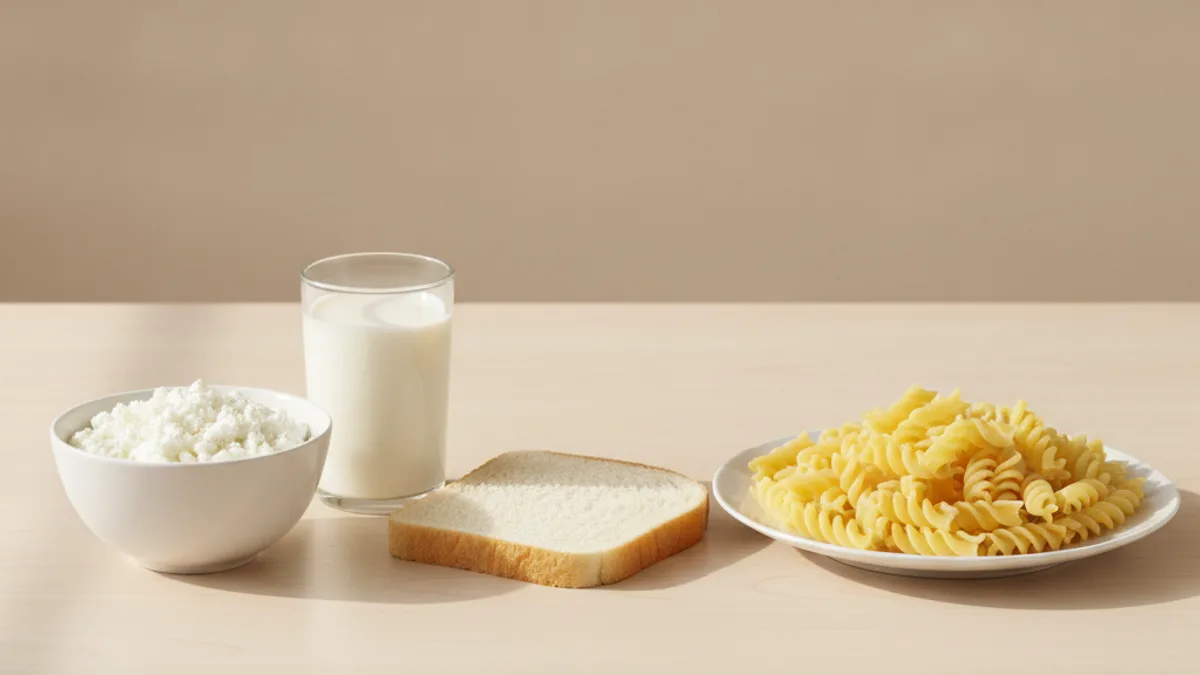
The insulin index shows how much insulin is released in response to a portion of food with the same caloric value. It does not mirror the glycemic index: dairy products barely raise glucose levels, yet they require as much insulin as white bread. The index was designed for calculating insulin requirements, not for choosing groceries at the store.
What was measured in 1997
The index appeared in a study by Australian researchers: 38 products were given to healthy volunteers in portions of equal energy value — 1000 kJ, or 240 kcal. Each product was consumed by a group of 11–13 people, blood was drawn every 15 minutes for two hours, and the area under the insulin curve was converted into a percentage of the response to white bread.
The main result: glucose and insulin responses are related but do not coincide. The correlation between them was 0.70 — meaning about half of the differences between products are explained by something other than glucose. Protein-rich foods and baked goods produced an insulin response disproportionately higher than their glycemic response.
This is where the whole topic comes from: the same rise in blood sugar does not mean the same workload for the pancreas.
Milk and cottage cheese: low glycemic, high insulin
The most illustrative case was analyzed by Swedish researchers. In an experiment with 10 healthy volunteers, dairy products showed glycemic indices of 15–30 — very low — but insulinemic indices of 90–98, which is at the level of the reference white bread, from which they did not statistically differ.
The reason is not lactose: fermentation, which reduced the glycemic response in bread products, did not work for dairy. The protein fraction of milk and the amino acid composition of whey are considered responsible.
This is the fact for which the article is usually sought: cottage cheese, with its almost zero effect on glucose, requires no less insulin than bread.
What happens in a mixed meal
A single product is rarely eaten alone, so the index was tested on composite meals. In a 2009 study, responses to different meals of the same caloric content varied threefold, and the insulin index of the components predicted them best (r = 0.78). Glycemic load performed worse (r = 0.68), and the amount of carbohydrates alone performed even worse (r = 0.53) and was on the verge of significance.
The conclusion from this work is practical: if you need to predict the insulin requirement for a specific meal, carbohydrates are not enough — protein and fat contribute as well.
What the index does not show
This is where conclusions usually go off track. Three clarifications:
- Insulin response is not synonymous with weight gain. Insulin rises in response to protein as well, including meat and fish, and weight is determined by energy balance over weeks and months, not by the height of a single peak. There is a separate article about calorie deficit.
- The index was measured in healthy people and in 240 kcal portions. A real portion of cottage cheese can be half or double that, and you cannot linearly scale the index to it.
- Lists on the internet vary. There are an order of magnitude fewer values measured than glycemic indices, and most tables repeat the same 1997 study.
Who might find the index useful
The practical application for which it was developed is calculating the insulin dose for a meal high in protein and fat. This is a field of clinical research, and therapy decisions are made by a doctor: translating food into a dose is selected individually, not by a table from an article. How carbohydrate counting, from which this selection grew, works is analyzed in the article about bread units.
For a healthy person, the index does not provide a tool for choice: products with a high insulin response — dairy and protein — are exactly what is usually recommended to eat.
What to look at instead
For everyday decisions, two other things are more useful. The first is how many carbohydrates and how many calories are in a portion, because that is what you manage. The second is how food behaves in your body personally, if there is a reason to measure it: continuous glucose monitoring is analyzed in the article about glucose sensors, and the analysis of techniques to "smooth the spike" — in the article about blood sugar spikes after eating.
With insulin resistance and PCOS, the question is posed differently, and there the conversation is not about the indices of individual products — this is covered in a separate article about PCOS and insulin resistance.
Frequently asked questions
- What is the insulin index of a product?
- The area under the insulin curve after a portion of a product with an energy value of 1000 kJ (240 kcal), expressed as a percentage of the response to white bread. The scale was proposed in a 1997 study on 38 products.
- Why do cottage cheese and milk have a high insulin index?
- In an experiment with 10 healthy volunteers, dairy products had glycemic indices of 15–30, yet insulinemic indices of 90–98 — similar to white bread. The reason is not lactose, but the protein fraction of milk.
- Does a high insulin response hinder weight loss?
- There is no direct evidence to suggest this: insulin also rises in response to protein, and weight changes based on energy balance over weeks, not by the height of a single post-meal spike.
- Is the insulin index more useful than the glycemic index?
- For predicting insulin requirements for a mixed meal, yes: in a study of composite meals, it explained the response better (r = 0.78) than glycemic load (0.68) and carbohydrate content (0.53). It does not serve as a practical tool for a healthy person to choose foods.
- Where can I find a table of insulin indices?
- Few reliable values have been measured, and most tables on the internet simply recount a single 1997 study. Values for new products are most often estimated rather than measured.
Read next
- Glycemic index: what it measures and when it is useless to use — Glycemic index tables look like a list of allowed and forbidden foods: buckwheat has one number, potatoes have another, and it seems straightforward from there.
- Glucose spikes after meals: which of the hacks actually flatten them — Consumer glucose sensors turned the post-meal curve into a spectator sport, and a market of tricks grew up around flattening it.
- Bread units: how to count them and who needs them today — A bread unit is a measure of carbohydrates designed to convert food into an insulin dose.
This article is for general information. It is not medical advice, a diagnosis, or a prescription for treatment or a diet, and it does not replace a consultation with your doctor. If you have a health condition, are pregnant, take medication, or follow a diet prescribed to you, decisions about food belong with your doctor.
Figures from regulations, guidelines and studies are given as they stood when this article was prepared and may since have changed; check them against the primary sources. This article is not advertising, an offer, or individual advice, and neither the author nor the site owner is responsible for decisions taken on the basis of it.