Glucose spikes after meals: which of the hacks actually flatten them
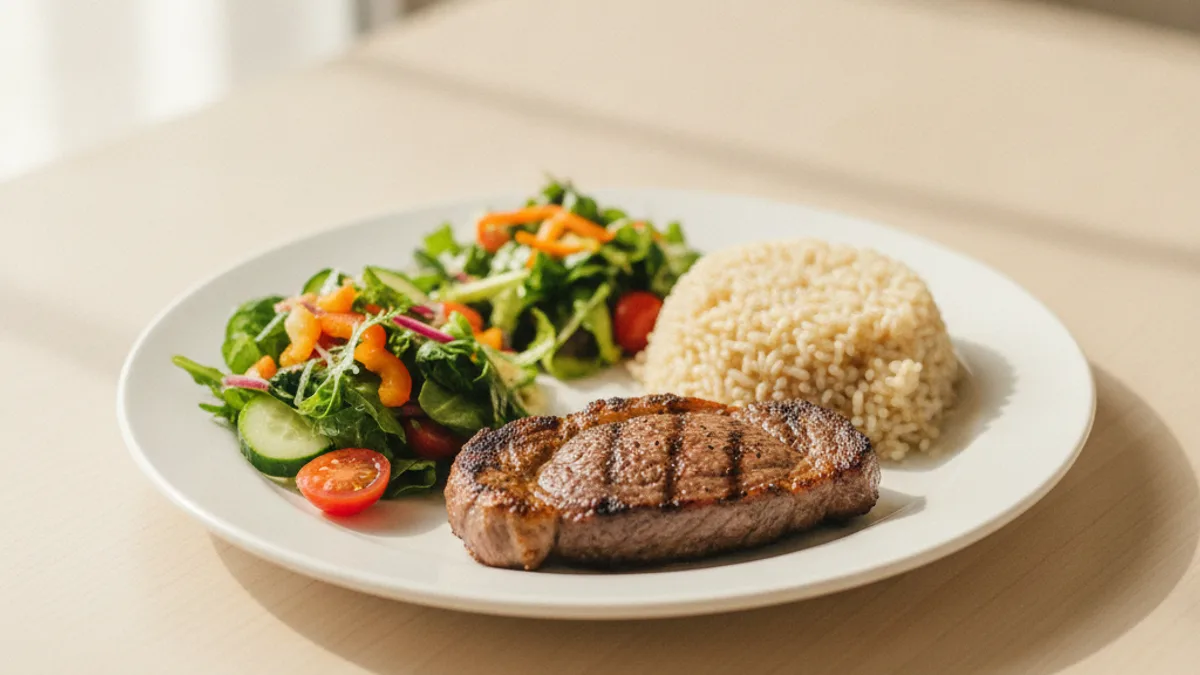
Consumer glucose sensors turned the post-meal curve into a spectator sport, and a market of tricks grew up around flattening it. Several of them do lower the rise, and that has been measured. The question almost never asked is what follows from a flatter curve if you do not have diabetes.
What a meal actually does
Carbohydrate is broken down to glucose, absorbed in the small intestine and released into the blood. The pancreas answers with insulin, glucose moves into muscle and liver, and the level returns to baseline. In someone without diabetes the whole episode takes an hour or two. A rise after eating is the system working, not failing.
How big the rise is depends on the amount of carbohydrate, what it was eaten with, how fast the stomach empties, and on the individual. That last factor turned out to matter more than expected: in a study that monitored glucose continuously in eight hundred people, responses to the same food differed between individuals enough to undermine any universal table — the same limitation that argues against reading the glycemic index too literally.
Food order
The most testable of the tricks. Starting a meal with vegetables and the protein portion and leaving carbohydrate for last produces a lower glucose rise than the reverse order. This has been shown in small crossover studies — for instance in people with prediabetes and in work that separated out the contribution of eating speed.
The mechanism is plausible: protein and fat slow gastric emptying and increase incretin release, so carbohydrate arrives more gradually. The limits are equally plain — dozens of participants, short observation, and the curve itself as the only outcome.
The trick is free and harmless. That is the entire reason it can be mentioned without hedging: it costs nothing, so weak evidence is enough to justify trying it.
Vinegar, cinnamon and other additions
Weaker ground. Small studies of vinegar before a carbohydrate meal report a lower rise, but they vary in dose and method, and nothing beyond the curve was measured. Cinnamon looks similar with an even wider spread of results.
This is the textbook case where the honest answer is "possibly a little, and it is unclear what for". The promise of a spoonful of vinegar standing in for a diet does not follow from that data on any reading.
Walking after a meal
The most sensible item on the list, for a different reason. Working muscle takes up glucose partly by a route that does not require insulin, so ten to fifteen minutes of unhurried walking after eating genuinely lowers the rise. The same mechanism explains why breaking up long sitting with short standing bouts shifts markers in desk workers — covered in the article on sitting.
What separates walking from vinegar is that walking has reasons to exist outside the glucose curve, and the energy cost is a pleasant side effect, if a smaller one than most people assume.
What a flat curve is worth
Here comes the caveat that governs the whole topic. Every trick above was assessed on one outcome: the area under the glucose curve over two hours. None has been shown, in a long trial, to make a person without diabetes lose weight, fall ill less often, or live longer.
The broader idea of personalising diets by predicted glucose response has drawn serious criticism as well: a commentary published under the heading of garbage in, garbage out questions the reproducibility of the underlying models. That does not make the direction a dead end. It does mean commercial services are running well ahead of the evidence.
For someone with normal glucose metabolism, a post-meal rise is not an event. It is not felt, it does not call for intervention, and it does not decide whether weight is gained: that is settled by the sum of what was eaten, not by the shape of individual peaks. What a sensor does and does not tell you is covered in continuous glucose monitors without diabetes.
Who this does matter for
Where glucose metabolism is already disturbed the conversation changes: in diabetes and prediabetes post-meal excursions are part of the clinical picture, and decisions belong to a clinician rather than to a protocol found online. A neighbouring topic is insulin resistance in PCOS.
For everyone else, two things are worth taking from all this: food order costs nothing, and a walk after a meal is worth doing regardless of glucose. The rest is watching a graph that, in the absence of disease, leads to no decision.
| Trick | Lowers the glucose rise | Shown to affect weight or health |
|---|---|---|
| Vegetables and protein before carbohydrate | Yes, in small studies | No |
| A 10–15 minute walk after eating | Yes | Indirectly, through movement in general |
| Vinegar before a meal | Possibly, weakly | No |
| Cinnamon | Results conflict | No |
| Less carbohydrate in the meal | Yes, mechanically | Through total calories |
Frequently asked questions
- Is a glucose spike after eating bad?
- In someone without disturbed glucose metabolism, a rise after a meal is the system working rather than failing. It is not felt and does not on its own call for any intervention.
- Does eating food in a particular order lower the rise?
- In small crossover studies, yes: leaving the carbohydrate portion until last produces a lower rise. The studies are small, and only the glucose curve was measured, not any longer-term outcome.
- Does vinegar before a meal help?
- A few small studies report a lower rise, but they differ in dose and method, and effects on anything beyond the curve were not measured. Treating it as an established technique is premature.
- Why does walking after a meal lower blood sugar?
- Working muscle takes up glucose partly through a route that does not depend on insulin. Ten to fifteen minutes of easy walking measurably reduces the post-meal rise.
- If every spike is flattened, does weight come off?
- That does not follow from the available data. Body weight is decided by total intake over long periods, not by the shape of individual glucose peaks.
Read next
- Glycemic index: what it measures and when it is useless to use — Glycemic index tables look like a list of allowed and forbidden foods: buckwheat has one number, potatoes have another, and it seems straightforward from there.
- Glucose monitoring without diabetes: what the sensor on your arm shows — A coin-sized sensor on the shoulder and a blood sugar graph on a phone are no longer exclusive to diabetes: people without a diagnosis are using them to "understand their reaction to food.
- Fast and slow carbohydrates: what lies behind this classification — The classification of carbohydrates into fast and slow is older than the data it is supposed to be based on.
- Insulin index: why cottage cheese has a higher score than pasta — The insulin index shows how much insulin is released in response to a portion of food with the same caloric value.
This article is for general information. It is not medical advice, a diagnosis, or a prescription for treatment or a diet, and it does not replace a consultation with your doctor. If you have a health condition, are pregnant, take medication, or follow a diet prescribed to you, decisions about food belong with your doctor.
Figures from regulations, guidelines and studies are given as they stood when this article was prepared and may since have changed; check them against the primary sources. This article is not advertising, an offer, or individual advice, and neither the author nor the site owner is responsible for decisions taken on the basis of it.