Cutting out sugar, gluten or dairy: questions to ask before you start
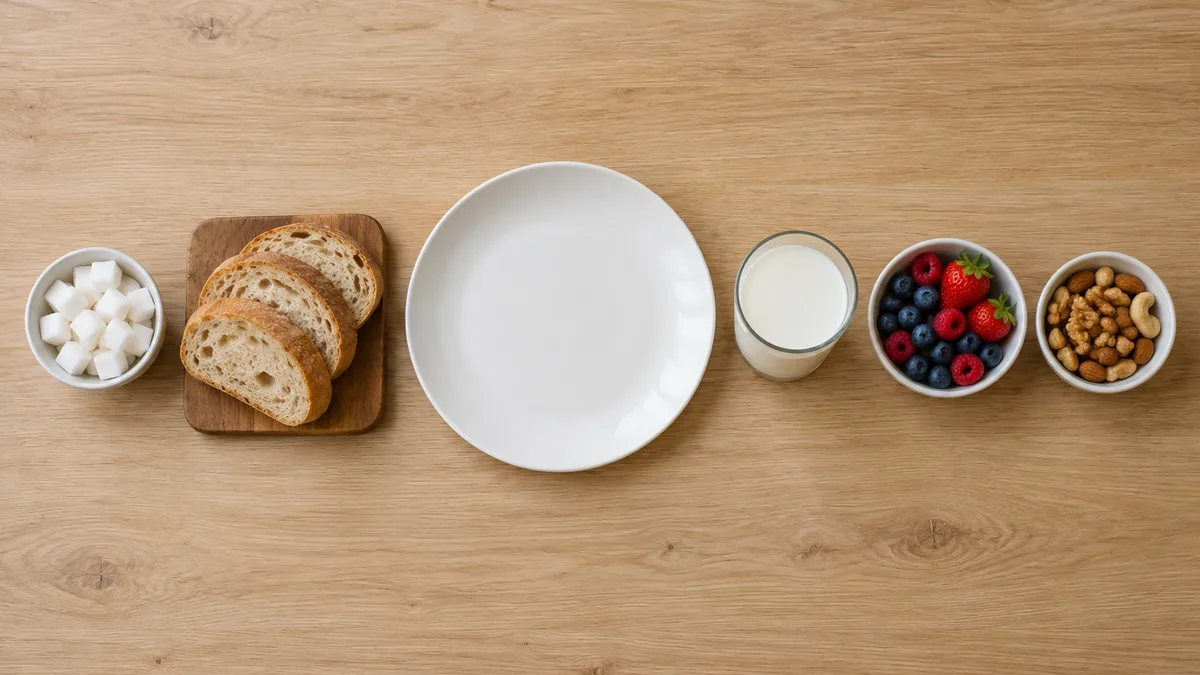
Cutting a food out completely has consequences: you can lose the chance of a diagnosis, fall short on nutrients, or build a fear of food. The six questions below help you work out why you want to do it, what to check with a doctor, and how to step back if it is not helping.
What are you noticing: a symptom or a belief
These are two different situations. In the first, there is something you notice in yourself: bloating, stomach pain, loose stools, tiredness, a rash. In the second, there is something you read or heard: "gluten harms everyone", "sugar is poison", "adults don't need milk".
With a symptom, the doctor comes first, not the elimination. The UK's NHS recommends testing for coeliac disease for persistent unexplained digestive symptoms (diarrhoea, stomach ache, bloating), long-lasting tiredness and unintentional weight loss (NHS, Coeliac disease: diagnosis, as of 5 October 2026). With a belief, the next question applies: what exactly are you cutting, all of it or part of it?
Will you lose the chance of a diagnosis
The most common trap is gluten. According to the NHS, you need to keep eating gluten while being tested for coeliac disease, because avoiding it could make the result inaccurate, and you should not start a gluten-free diet until a specialist has confirmed the diagnosis, even if a blood test is positive. The same page recommends testing for people with a parent, sibling or child who has coeliac disease. The difference between coeliac disease, wheat allergy and gluten sensitivity is in coeliac disease and wheat allergy and gluten explained.
With milk the confusion is different: lactose intolerance and milk-protein allergy can look alike but are managed differently. How to tell them apart is in allergy versus intolerance. If a food causes swelling of the lips or tongue or difficulty breathing, call emergency services rather than testing the food again.
If you suspect irritable bowel syndrome and the symptoms last more than four weeks, the NHS advises seeing a GP. It says to ask for urgent help if you have lost a lot of weight for no reason, are bleeding from the bottom or have bloody diarrhoea, find a hard lump in your tummy, or have shortness of breath, palpitations and unusually pale skin (NHS, IBS symptoms). Cutting out a food will not help with these and will only delay the appointment.
How much do you want to cut: everything or less
Guidelines usually speak of a share, not of zero.
| What you cut | What the source says |
|---|---|
| Sugar | WHO recommends that free sugars provide less than 10% of daily energy (about 50 g on 2,000 kcal); going below 5% may bring additional benefits, but that recommendation is conditional. WHO's definition of free sugars covers sugar added to food and drink plus honey, syrups and fruit juices; whole fruit is not on that list |
| Gluten | Do not cut it out before diagnosis if coeliac disease is suspected (NHS) |
| Dairy | Dairy products are rich in calcium, and people who avoid them have a higher risk of inadequate intake (NIH Office of Dietary Supplements) |
| Carbohydrates | WHO: low-carbohydrate diets are used for certain conditions, but for most people carbohydrates from whole grains, vegetables, fruit and pulses make up a significant part of the diet, around 45-75% of energy |
Sources: WHO sugars guideline (2015), WHO, Healthy diet, NIH ODS, Calcium, as of 5 October 2026. Where sugar hides on a label is in hidden sugar names, and how sugar in fruit differs from sugar in sweets is in fruit and blood sugar.
In practice, "fewer sugary drinks and desserts on weekdays" and "not a gram of sugar" are different tasks with different costs. The second takes far more effort and, judging by WHO's guidance, is not required.
What will you replace it with
WHO notes that a varied diet drawn from different food groups is linked to a greater likelihood of meeting vitamin and mineral needs. So each group you drop is worth replacing on purpose, not leaving as an empty space on the plate.
With dairy this means calcium. The US National Institutes of Health's Office of Dietary Supplements says that people with lactose intolerance can choose lactose-free dairy, which has the same calcium, and that people who avoid dairy for other reasons can get calcium from non-dairy sources such as some vegetables, canned fish with bones, and fortified foods. How much calcium is in which foods, and what is poorly absorbed, is in calcium-rich foods.
How will you know it helped
Write down three things before you start: what you notice now, how you will track it (for example a note in a diary each day), and when you will review. Set the date in advance, or any day becomes "not yet".
If nothing improves, you can bring the food back: the cause was most likely not that food. If things improve, that is an observation, not proof. You can test the link by reintroducing the food, but only when there is no suspicion of allergy or coeliac disease; in those cases a doctor makes the call. How to read a week of notes: analysing a food diary.
What happens when you eat out
Picture a birthday, a business trip, lunch with colleagues. If the rule means you skip gatherings, cook separate meals, or cannot eat without anxiety, it costs more than you think. The NHS includes avoiding socialising when food will be involved and very strict habits around food among the signs of an eating disorder (NHS, Eating disorders). One line is not a diagnosis, but it is a reason to rethink the rule.
It helps to ask in advance: which departures from the rule are acceptable to me? If the answer is "none", stop and talk to a specialist. The line between a tool and an obsession is in the article on calorie counting and eating disorders.
When to see a doctor or dietitian
- symptoms last more than four weeks, or any of the signs that need urgent help (see above);
- you are losing weight without an obvious reason;
- you suspect an allergy or coeliac disease;
- the decision concerns a child: cutting foods out of a child's diet should be done only with a paediatrician;
- you are pregnant, breastfeeding or on regular medication;
- fear of a food is growing, the rules are getting stricter, and breaking them causes strong anxiety or guilt. That is a reason to talk to a doctor: a GP, therapist or psychiatrist. With treatment most people with eating disorders recover (NHS).
How a dietitian differs from a nutritionist and who to ask about your diet: Nutritionist vs dietitian.
Frequently asked questions
- Can I cut out gluten without testing?
- If you have no symptoms and no suspicion of coeliac disease, it is your call. With symptoms, or a close relative with coeliac disease, get tested first: gluten should not be dropped before testing, or the result will be inaccurate.
- Do I have to give up sugar completely?
- WHO recommends keeping free sugars under 10% of daily energy and calls going below 5% a conditional recommendation. Zero is not required.
- Where do I get calcium if I do not drink milk?
- From lactose-free dairy if lactose is the problem, or from non-dairy sources: some vegetables, canned fish with bones and fortified foods.
- How do I know a food does not suit me?
- Note how you feel before and during the elimination, and set a review date in advance. Persistent symptoms and signs that need urgent help go to a doctor first.
Read next
- Gluten in a healthy gut: what actually happens to it — Gluten has become the word people reach for to explain bloating, fatigue and stubborn weight, and also the word people say with a smirk.
- Allergy or intolerance: what is the difference and why it matters — Both conditions are described with the same words: "this makes me feel bad.
- Lactose intolerance: why milk becomes harder to digest with age — Milk that caused no issues in childhood may start to trigger bloating and rumbling by your twenties—and this can feel like a malfunction that needs fixing.
- Calcium: how much a day, and where to get it without dairy — Adults are advised 1000 mg of calcium a day in Russia and 950 mg by EFSA.
This article is for general information. It is not medical advice, a diagnosis, or a prescription for treatment or a diet, and it does not replace a consultation with your doctor. If you have a health condition, are pregnant, take medication, or follow a diet prescribed to you, decisions about food belong with your doctor.
Figures from regulations, guidelines and studies are given as they stood when this article was prepared and may since have changed; check them against the primary sources. This article is not advertising, an offer, or individual advice, and neither the author nor the site owner is responsible for decisions taken on the basis of it.