Sudan dyes: industrial paint found in spices
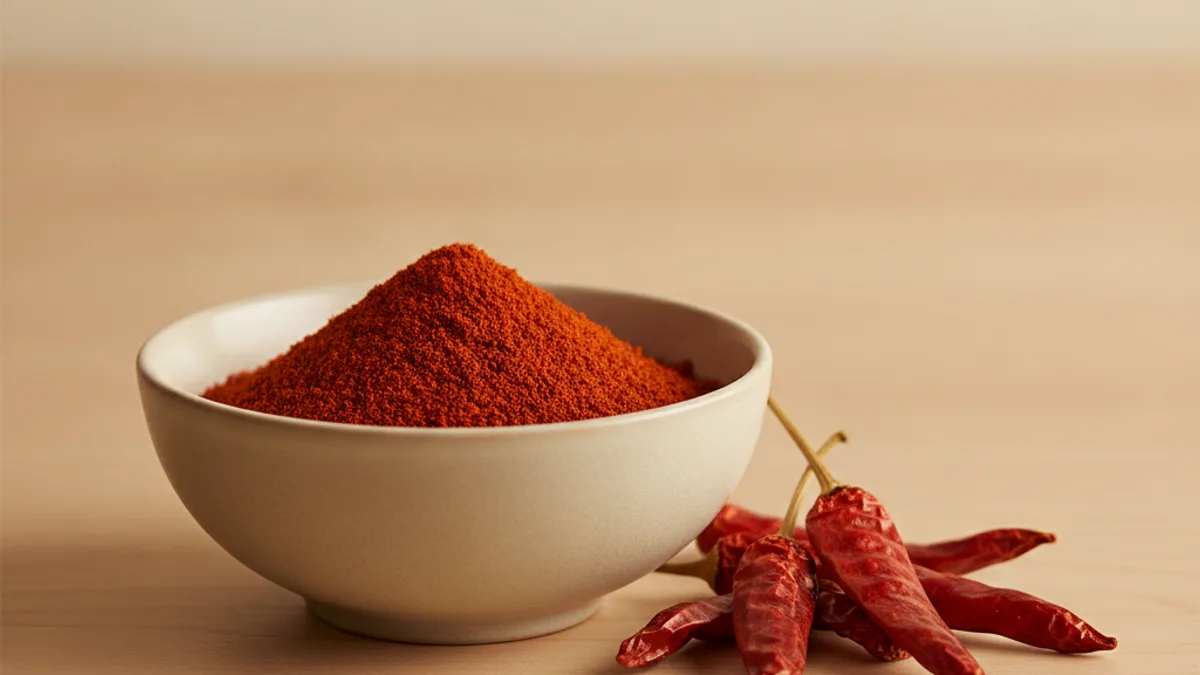
Sudan I, II, III, and IV are synthetic dyes for industrial use: they are used to color waxes, oils, solvents, and polishes. They have never been food-grade and do not have an E number. They did not enter food products through regulatory approval, but through the adulteration of raw materials, which is what distinguishes this case from other stories involving recalled additives.
What these substances are
Sudan belongs to the azo dyes, a large group of synthetic dyes used in industry. They provide a rich red-orange color, are inexpensive, and are light-stable and fade-resistant.
The latter property explains the temptation: ground paprika and chili fade during storage, while consumers choose spices based on brightness.
IARC classifies some dyes in this group as possibly carcinogenic to humans. They have no food application in any jurisdiction, and no acceptable daily intake has been established for them—there is nothing to establish it for.
How they got into food
Through raw materials. In the early 2000s, Sudan was discovered in Europe in batches of ground chili pepper, and subsequently in products where this pepper was used as an ingredient: sauces, seasonings, ready-made meals, and sausages.
Then a chain reaction occurred: one batch of colored raw material was distributed among dozens of manufacturers, requiring the recall of hundreds of products. It was the scale of these recalls that made this story famous.
This is the key difference from stories like titanium dioxide or potassium bromate: in those cases, the substance was used legally, and the decision was made by a regulator. Here, we are talking about fraud, and the solution is not a review of authorization, but enforcement and control.
How it is controlled
The import of ground spices is accompanied by requirements to verify the absence of such dyes, and laboratory testing of batches has become routine. Detections still occur, and findings lead to product recalls.
For the consumer, this means little: it is impossible to identify Sudan by sight or taste, and by definition, it is not listed on the label—it is added illegally.
What you can actually do
- Buy whole spices and grind them yourself. It is much harder to adulterate a whole pod or peppercorn than a powder.
- Be wary of unnaturally bright colors in ground paprika and chili, especially if they do not fade over time.
- Avoid bulk spices of unknown origin. The lack of packaging also means a lack of information about the batch.
- Keep track of product recalls. Information about withdrawals is published by regulatory authorities.
The general procedure for reading labels remains the same—the article on reading labels in ten seconds—it just does not help in this specific case.
What is used to color food legally
Permitted dyes in the red and orange spectrum do exist: carmine E120, carotenes E160, paprika extract E160c, and beetroot red E162. What is known about them and how natural dyes differ from synthetic ones is covered in the article on food dyes.
Their presence on the label is a sign of legal production, not a cause for alarm: the listed dye has undergone evaluation, whereas an unlisted one has not undergone anything.
What to take away from this
The main conclusion of the topic is not obvious: the primary risk in food safety is not associated with permitted additives, but with what is not on the label. A permitted substance is evaluated, regulated, and listed; a counterfeit is not listed anywhere and is not regulated by anything.
Therefore, the effort spent on studying E numbers yields less than choosing clear raw materials and a reliable manufacturer. The general framework of the discussion is in the article on myths about additives.
Frequently asked questions
- What are Sudan dyes?
- Synthetic azo dyes for industrial use: they are used to color waxes, oils, solvents, and polishes. They have no food application in any jurisdiction and do not have an E number.
- How did they get into food products?
- Through the adulteration of raw materials: in the early 2000s, they were discovered in batches of ground chili pepper, and then in products where this pepper was used as an ingredient. One batch of colored raw material was distributed among dozens of manufacturers.
- Why were they added to spices in the first place?
- Ground paprika and chili fade during storage, but consumers choose spices based on their brightness. Sudan provides a rich red-orange color, is inexpensive, and does not fade.
- Can you detect Sudan yourself?
- No: it cannot be identified by sight or taste, and it is not listed in the ingredients because it is added illegally. An indirect sign is the unnaturally bright color of the ground spice, which does not dull over time.
- What should a consumer do?
- Buy whole spices and grind them yourself, avoid loose spices of unknown origin, and keep an eye on product recall announcements. Reading the ingredient list does not help here.
Read next
- Food dyes: which ones are restricted and why — The color of food carries information: it is used to judge ripeness, freshness, and taste even before the first bite.
- Titanium dioxide E171: an additive allowed for decades and then banned — Titanium dioxide has been used as a food coloring for decades and was considered one of the most inert additives: it does not dissolve, is not absorbed to any significant degree, and is chemically extremely stable.
- Myths about food additives and GMOs — Two things on packaging cause the most fear: codes with the letter E and the acronym "GMO.
This article is for general information. It is not medical advice, a diagnosis, or a prescription for treatment or a diet, and it does not replace a consultation with your doctor. If you have a health condition, are pregnant, take medication, or follow a diet prescribed to you, decisions about food belong with your doctor.
Figures from regulations, guidelines and studies are given as they stood when this article was prepared and may since have changed; check them against the primary sources. This article is not advertising, an offer, or individual advice, and neither the author nor the site owner is responsible for decisions taken on the basis of it.