Food dyes: which ones are restricted and why
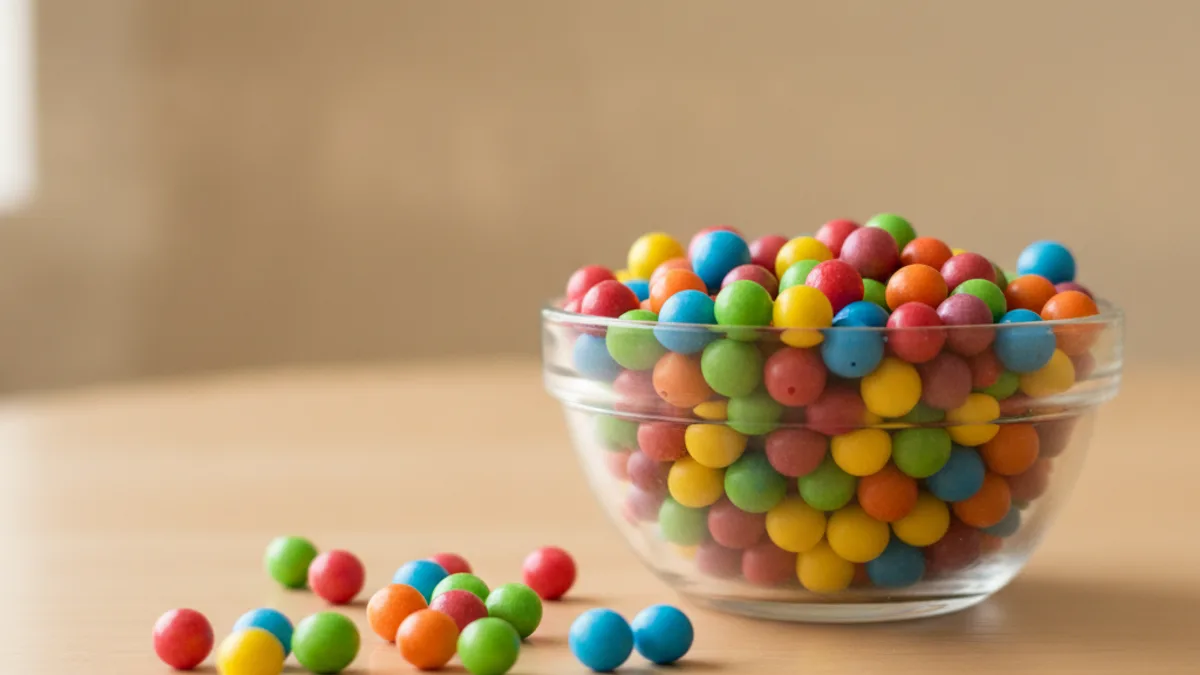
The color of food carries information: it is used to judge ripeness, freshness, and taste even before the first bite. Manufacturers know this, and a dye solves not a decorative task, but a quite practical one — to restore color lost during processing or to set expectations for taste. Some dyes have been restricted over the last decades for various reasons.
Why food is colored
- To restore what was lost. Heating, sterilization, and storage destroy natural pigments: juice becomes cloudy, and vegetables in canned goods fade.
- To ensure batch consistency. Raw materials change with the seasons, but the consumer expects the same color every time.
- To set taste expectations. Pink is read as raspberry, yellow as lemon—before the product is even tasted.
- To color products that have no color. Dragees, glazes, water-based drinks.
The first two reasons are technological, the latter two are marketing-driven. You cannot distinguish them by the ingredient list: the code is the same.
Natural and synthetic
| Group | Examples | Characteristics |
|---|---|---|
| Natural | Curcumin E100, carmine E120, chlorophylls E140, caramel E150, carotenes E160 | Less resistant to light and heat, provide a more muted tone |
| Synthetic | Tartrazine E102, azorubine E122, ponceau 4R E124, brilliant blue E133 | Stable, vibrant, inexpensive, required in small quantities |
| Mineral | Titanium dioxide E171, iron oxides E172 | Provide an opaque white or matte shade |
"Natural" here refers to origin, not safety: carmine is derived from insects and can cause allergic reactions, while caramel color comes in different types with different safety assessments. The general framework for discussing additives is in our article on myths about additives and GMOs.
Warning regarding children's attention
In the EU, products containing six specific food colors must carry a separate warning about potential adverse effects on activity and attention in children. These are tartrazine E102, quinoline yellow E104, sunset yellow E110, azorubine E122, ponceau 4R E124, and allura red E129.
The basis for this was a study known as the Southampton study. EFSA reviewed it separately: the agency concluded that the results provided limited evidence and did not justify revising the acceptable daily intake of these substances. However, the labeling requirement was introduced as a precautionary measure, not as a conclusion of proven harm.
The practical consequence for the consumer in Russia: such a label does not exist here, but the dyes themselves are present. You have to look for them by their codes in the ingredient list.
Titanium dioxide: a special case
E171 was used as a white opaque pigment in glazes, chewing gum, and confectionery coatings. In 2021, EFSA concluded that it can no longer be considered safe as a food additive, and its use was discontinued in the EU. More details can be found in our article on titanium dioxide.
Where dyes are most commonly found
Confectionery and dragees, carbonated and powdered drinks, ice cream and desserts, sauces and marinades, ready-made creams and glazes, some sausages and semi-finished products, and children's breakfast cereals.
A general rule: the further a product is from its original raw state, the more likely it contains a dye. This is the same principle underlying the classification discussed in our article on ultra-processed food.
How to read the ingredient list
- Look for the word "color" — the function must be stated before the name or code.
- Remember ingredients without a code. Beet juice concentrate, paprika extract, and spinach powder provide color but are not considered additives—this technique is analyzed in our article on how additives are hidden.
- Do not equate "natural" with "harmless." Carmine is of natural origin and is one of the most notable allergens among food dyes.
- Check the code in a reference guide. The assessment of each according to regulations and EU lists can be found in our E-additive guide.
Frequently asked questions
- Why are dyes added to food?
- To restore color lost during heating and storage, to standardize batches of raw materials, to set flavor expectations, and to color products that lack their own color. The first two reasons are technological, the latter two are marketing-related, and they cannot be distinguished by their ingredients.
- What does the warning about the effect on children's attention mean?
- In the EU, products containing six colorants — E102, E104, E110, E122, E124, E129 — must carry such a label. EFSA concluded that the data provided limited grounds and did not revise the acceptable daily intake; the label was introduced as a precautionary measure.
- Are natural colorants safer than synthetic ones?
- Origin does not imply safety. Carmine is derived from insects and is one of the most notable allergens among colorants, while caramel color comes in different types with varying assessments.
- What happened to titanium dioxide?
- In 2021, EFSA concluded that E171 could no longer be considered safe as a food additive, and its use was discontinued in the EU. It was used as a white opaque colorant in glazes and confectionery coatings.
- How can you tell if a product is colored if there's no code in the ingredients list?
- Some ingredients impart color but are not considered additives: beet juice concentrate, paprika extract, spinach powder, turmeric. They are listed as regular ingredients, without the word 'colorant' and without a code.
Read next
- Titanium dioxide E171: an additive allowed for decades and then banned — Titanium dioxide has been used as a food coloring for decades and was considered one of the most inert additives: it does not dissolve, is not absorbed to any significant degree, and is chemically extremely stable.
- How manufacturers hide additives in the ingredient list — A short ingredient list sells better than a long one, and manufacturers know it.
- Myths about food additives and GMOs — Two things on packaging cause the most fear: codes with the letter E and the acronym "GMO.
This article is for general information. It is not medical advice, a diagnosis, or a prescription for treatment or a diet, and it does not replace a consultation with your doctor. If you have a health condition, are pregnant, take medication, or follow a diet prescribed to you, decisions about food belong with your doctor.
Figures from regulations, guidelines and studies are given as they stood when this article was prepared and may since have changed; check them against the primary sources. This article is not advertising, an offer, or individual advice, and neither the author nor the site owner is responsible for decisions taken on the basis of it.