Additives in baby food: what is prohibited and why the rules are stricter
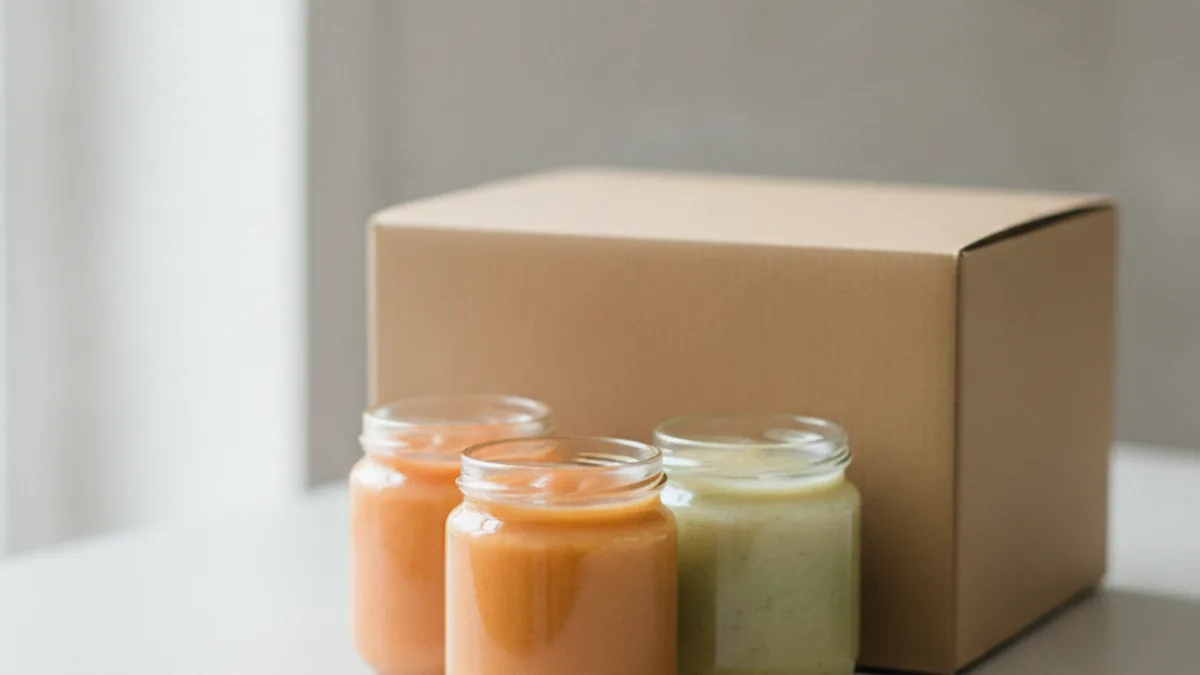
There is a separate, significantly narrower list of permitted additives for baby food. The reason is not that the others are harmful, but rather three characteristics of the child's body that necessitate a more cautious approach. It is also important to distinguish between a baby food product and a product that simply features a child on the packaging.
Why the rules are stricter
Lower body mass. The acceptable daily intake is calculated per kilogram of body weight. The same portion for a 15 kg child represents four times the load compared to a 60 kg adult.
Monotonous diet. Adults get small amounts of additives from dozens of products; a young child eats only a few items, so the contribution of each is higher.
Immature excretion systems. A young child's liver and kidneys function differently, and what an adult excretes quickly stays in their system longer.
This is precisely why EFSA assessments regularly state that estimated intake is exceeded in children earlier than in adults—this was the case, for example, during the re-evaluation of nitrites.
What cannot be in baby food
The list is defined by technical regulations and is significantly shorter than the general one. Of practical importance:
- Synthetic dyes — most are not allowed in baby food;
- Flavor enhancers, including glutamate and its group; for more on the substance itself, see our article on monosodium glutamate;
- Nitrites and nitrates; for their role in meat products, see our article on nitrites;
- Sweeteners — in products for young children;
- A number of preservatives permitted in adult products.
What remains: a limited set of acidity regulators, thickeners, emulsifiers, and antioxidants, for which separate, lower limits have been established.
The main difference: a baby food product vs. a product for children
This is why you should read the packaging.
| Baby food product | Product with child-oriented design | |
|---|---|---|
| Rules | Separate narrow list of additives | General rules for everyone |
| Age indication | Present: "from 6 months", "for children from 3 years" | Usually absent |
| Raw material requirements | Separate, stricter | General |
| Front of package | Category indication | Cartoon character, the word "kids" in the name |
A yogurt with a cartoon character, "Kids" sausages, bear-shaped cookies — these fall into the second column. The word "kids" in a brand name does not move a product into the baby food category; it is a marketing name, and general rules apply to it. An analysis of similar tactics can be found in our article on packaging labels.
It is simple to distinguish: a genuine baby food product will have the recommended age indicated on the packaging.
What parents should look for
- Age indication. If present, it is a baby food category; if not, it is a regular product.
- Sugar content. It is not as strictly limited as additives, and it is often high in children's products; see the names in our article on hidden sugar.
- Salt. The same logic applies — see our article on salt in ready-made food.
- Allergens. These must be disclosed regardless of the amount — see our article on mandatory allergens.
- Proportion of main ingredients. In meat purees and baby sausages, this is indicated as a percentage.
Disclaimer
Questions regarding the introduction of foods, timing, and quantities belong to pediatrics, not label reading: the timing of complementary feeding, the suitability of specific products, and a child's diet are determined by a doctor. This article only covers what is visible on the packaging.
Frequently asked questions
- Why is there a separate list of additives for baby food?
- Due to lower body mass, where the same portion places a greater load per kilogram of weight, a monotonous diet where the contribution of each product is higher, and the immaturity of excretion systems in a young child.
- Which additives are not allowed in baby food?
- Most synthetic dyes, flavor enhancers, nitrites and nitrates, sweeteners in products for early childhood, and a number of preservatives permitted in adult products.
- Are "Children's" sausages considered baby food?
- No, unless the packaging specifies the age for which the product is intended. The word "children's" in a brand name does not change the rules: general requirements apply to such a product.
- How to identify a genuine baby food product?
- By the age indication on the packaging: "from 6 months," "for children from 3 years old." This is a sign that it belongs to a category subject to a separate, narrow list of additives and stricter requirements for raw materials.
- What else should a parent look at besides additives?
- At sugar and salt—they are not as strictly limited as additives, and they are often present in high amounts in children's products—at mandatory allergens, and at the proportion of the main raw material, which is indicated as a percentage.
Read next
- Nitrites in sausage: why they are there and what is known about them — Sodium nitrite is an additive with the worst reputation and one of the most clear-cut functions.
- "Sugar-free," "fitness," "eco": what these labels actually mean — The front of a package speaks in short words: "light," "fitness," "sugar-free," "eco.
- Allergens that must be on the label — Manufacturers are required to disclose certain allergens at all times—even when their proportion is negligible and even when they entered the product as part of another ingredient.
This article is for general information. It is not medical advice, a diagnosis, or a prescription for treatment or a diet, and it does not replace a consultation with your doctor. If you have a health condition, are pregnant, take medication, or follow a diet prescribed to you, decisions about food belong with your doctor.
Figures from regulations, guidelines and studies are given as they stood when this article was prepared and may since have changed; check them against the primary sources. This article is not advertising, an offer, or individual advice, and neither the author nor the site owner is responsible for decisions taken on the basis of it.