The Kovalkov diet: stages, a day's menu and how many calories it has
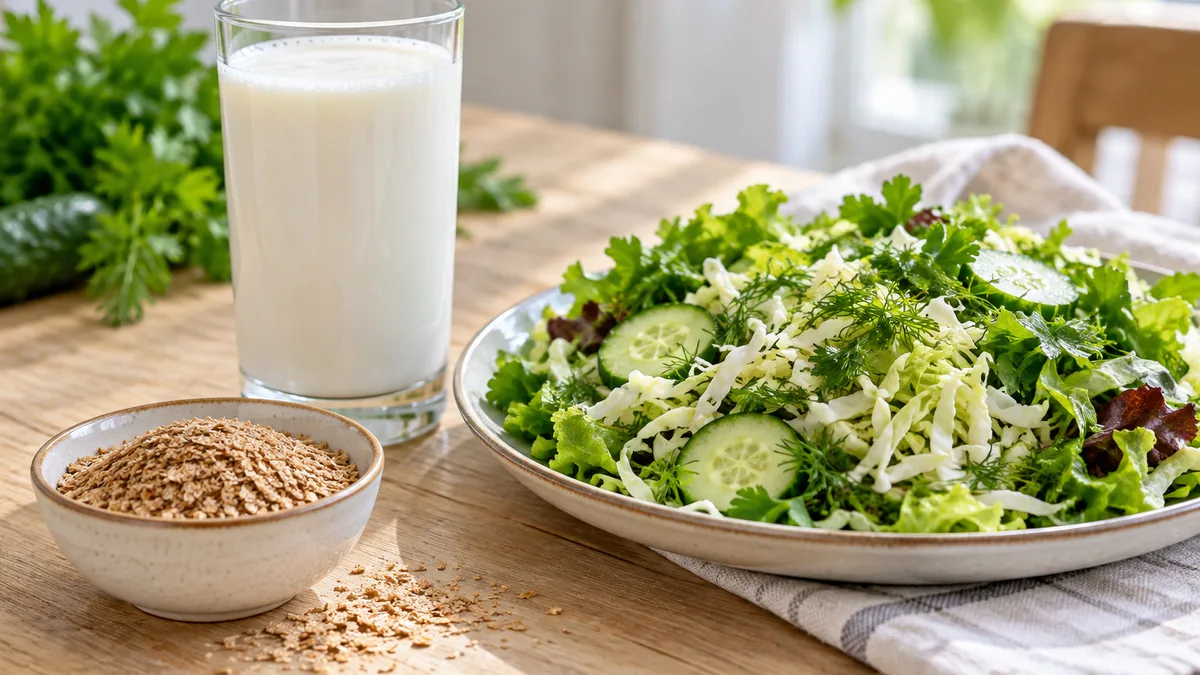
The method of Russian dietitian Alexei Kovalkov has three stages: preparation, weight loss and consolidation. Its basis is giving up sugar, white flour and other foods with a high glycaemic index. A typical weight-loss-stage day from retellings provides about 930 kcal and 120 g of protein, which NICE would classify as a low-calorie diet.
Where the method comes from and how many stages it has
Alexei Kovalkov is a Moscow physician and dietitian. He described his method in the books "Victory over Weight" (2010) and "Lose Weight Wisely! Dr Kovalkov's Method" (2012). In the publisher's blurb for the latest Eksmo edition of the second book, the method is divided into three stages: preparation, weight loss and consolidation (book listing, as of October 24, 2026).
The exact food lists and stage lengths are only in the books. Magazine retellings differ on the details, and some count four stages by splitting weight loss in two. Below is what all the retellings agree on.
The stages in outline
| Stage | Goal | What changes in the diet |
|---|---|---|
| Preparation | Get used to the new way of eating | Out go sugar, sweets, sugary drinks, white bread and pastries, white rice, potatoes and alcohol. The basis is vegetables, fruit, pulses, whole grains and water. A daily walk is added. |
| Weight loss | Reduce weight | The diet becomes stricter: kefir with bran, non-starchy vegetables, lean protein — eggs, fish, poultry, cottage cheese. Portions get smaller. |
| Consolidation | Keep the result | Grains, wholegrain bread and other foods gradually return, but without going back to sweets and white flour. |
This is a low glycaemic index diet with a calorie limit. What the glycaemic index is and where it falls short is covered in the article on the glycaemic index.
How many calories in a typical weight-loss-stage day
Below is a day built from the foods most often mentioned in retellings of the weight-loss stage. The figures come from the FoodGPT food table, compiled from the USDA FoodData Central database and the Skurikhin tables. Meat and fish are by raw weight.
| Meal | What | kcal | Protein |
|---|---|---|---|
| Breakfast | 1% kefir, 250 g, and 2 tablespoons of wheat bran (16 g) | 135 | 10.1 g |
| Lunch | Chicken breast 150 g, salad of 200 g cabbage, 150 g cucumber and 150 g tomato with a spoon of olive oil | 359 | 40.4 g |
| Snack | Apple, 150 g | 78 | 0.4 g |
| Dinner | Cod 200 g and broccoli 200 g | 232 | 41.2 g |
| Evening | Fat-free cottage cheese, 180 g | 128 | 29.7 g |
| Total | 931 | 121.8 g |
This day has about 23 g of fibre, close to the EFSA figure of 25 g, and that is a strong point of the scheme: two spoons of bran provide a third of it. Protein is sufficient too.
Calories, though, are low. The British obesity guideline NICE NG246 calls diets of 800–1,200 kcal low-calorie and recommends them only within a programme with a specialist and long-term support. If your portions at this stage are bigger, the total rises; you can compare it with your own expenditure using the article on daily calorie needs.
What research says about low glycaemic index diets
The Cochrane review by Chekima and colleagues (2023) pooled 10 randomised trials lasting from 8 weeks to 18 months. Diets with a low glycaemic index or load were compared with diets with a higher index.
The difference in weight loss averaged 0.82 kg in favour of the low index, and the confidence interval included zero. The authors write that such diets "probably result in little to no difference". So people lose weight on the method mainly by eating fewer calories, and giving up sugar and white flour helps them do it.
Who should see a doctor first
- Diabetes treated with insulin or sulfonylureas: with a sharp cut in carbohydrate and calories, NIDDK warns of the risk of hypoglycaemia.
- Gallstone disease: rapid weight loss raises the risk of gallstones, according to NIDDK.
- Stomach, bowel, kidney and liver conditions for which a doctor has set your diet.
- Pregnancy and breastfeeding.
- Under 18.
- A current or past eating disorder; the warning signs are in the article on calorie counting risks.
How to check your own day
Kefir with bran is easy to count from the label; salad and fish for dinner are harder. FoodGPT counts calories, protein and carbohydrate from a photo of the plate, so you can compare your own day on the method with the calculation above. How different diets were compared in trials is covered in the article on types of diets.
Frequently asked questions
- How many stages does the Kovalkov diet have?
- In the book "Lose Weight Wisely! Dr Kovalkov's Method" there are three: preparation, weight loss and consolidation. Some retellings split weight loss in two, which makes four.
- What is not allowed on the Kovalkov diet?
- Every retelling of the method removes sugar and sweets, sugary drinks, white bread and pastries, white rice, potatoes and alcohol. The exact lists by stage are in the author's books.
- How many calories a day on the Kovalkov diet?
- Retellings of the method do not give a calorie figure. A typical weight-loss-stage day from them — kefir with bran, chicken with vegetable salad, an apple, cod with broccoli and cottage cheese — provides about 930 kcal and 120 g of protein.
- How many calories are in kefir with bran?
- 250 g of 1% kefir with two tablespoons of wheat bran (16 g) provide about 135 kcal, 10 g of protein and almost 7 g of fibre.
- Does a low glycaemic index diet work?
- Weight comes down, but on average no more than on other diets: in the 2023 Cochrane review the difference was 0.82 kg, which the authors consider little to no difference. Weight is lost mainly by eating fewer calories.
Read next
- Types of diets — When comparing diets in studies, an inconvenient result emerges: the difference between them is smaller than the difference between the people who follow them and those who do not.
- Glycemic index: what it measures and when it is useless to use — Glycemic index tables look like a list of allowed and forbidden foods: buckwheat has one number, potatoes have another, and it seems straightforward from there.
- Buckwheat and kefir diets: how many calories they provide and where the lost kilograms come from — A day of buckwheat with a kilogram of 1% kefir provides about 930–1,210 kcal, and a day on one and a half kilograms of kefir about 570.
This article is for general information. It is not medical advice, a diagnosis, or a prescription for treatment or a diet, and it does not replace a consultation with your doctor. If you have a health condition, are pregnant, take medication, or follow a diet prescribed to you, decisions about food belong with your doctor.
Figures from regulations, guidelines and studies are given as they stood when this article was prepared and may since have changed; check them against the primary sources. This article is not advertising, an offer, or individual advice, and neither the author nor the site owner is responsible for decisions taken on the basis of it.