Why you feel hungrier in the evening
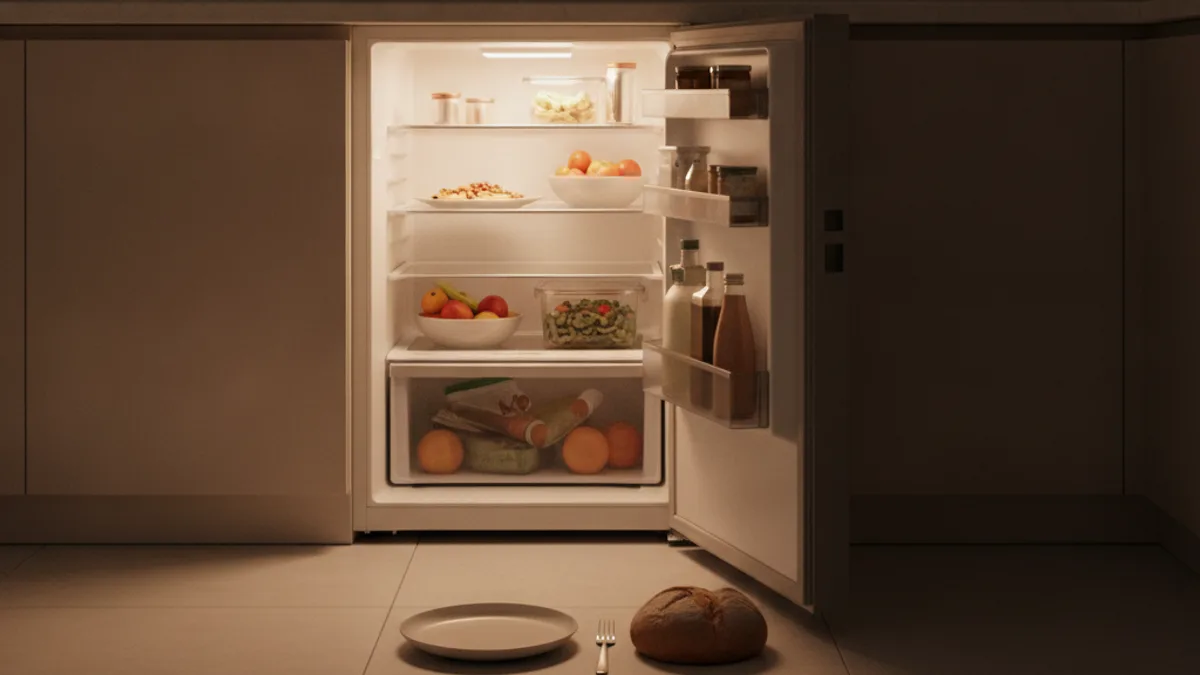
You manage to eat moderately during the day, but after eight o'clock, it starts. This is not a lack of willpower: by evening, four different mechanisms converge, and each requires a different approach.
Reason one: not enough eaten during the day
This is the most common and simplest reason. Coffee for breakfast, something on the run instead of lunch — and by evening, a deficit of a thousand kilocalories accumulates, which the body demands to be filled. It does get filled, just not with buckwheat.
This can be verified by keeping a record for a week: if you consume less than half of your daily allowance before six in the evening, the cause is found. How to interpret such a week — separately.
It is treated not in the evening, but in the morning: a full breakfast with protein and a lunch that is actually a lunch, not a snack. What to include in breakfast — here, what to assemble dinner from — here.
Reason two: decision fatigue
During the day, refusing a cookie is one decision among many. By evening, the supply of decisions is exhausted: the ability to choose decreases as they accumulate throughout the day, and this applies not only to food.
It follows that it is useless to rely on choice in the evening. It is not choice that works, but the environment: things that do not require a decision. The cookies are not on the table, but in the cupboard; a ready-made protein snack is in the fridge; the dishes are put away, the kitchen is closed. This is not willpower, this is reducing the number of decisions.
Reason three: circadian rhythm
Appetite follows a circadian rhythm, and an evening peak is a normal part of it, not a malfunction. Ghrelin, the hunger hormone, rises at the usual time of eating, and if you have been eating at nine in the evening for years, you will want to eat at nine in the evening.
At the same time, the body processes carbohydrates less effectively at night: the same food causes a higher and longer glucose spike than during the day. The mechanism is analyzed in the article on circadian rhythms and meal timing.
Nothing can be done about the rhythm itself, but you can move meaningful food there instead of random snacks. A hearty dinner in this window is handled better than a salad at seven and cookies at ten.
Reason four: it is not hunger
Evening is the time when food stops being food and becomes a way to end the day: a TV show with something to eat, silence after the children, a reward for a hard day. There may be no physical hunger at all.
A simple question helps to distinguish it: would I eat a plate of plain boiled buckwheat right now? If not, but you wouldn't refuse chocolate — this is appetite, and it is not satisfied by food. The difference between these mechanisms is analyzed in the article hunger and appetite, and food as a way to cope with a state — in the analysis of emotional eating.
How to understand your reason
| Sign | Most likely |
|---|---|
| Less than half of the daily allowance eaten by evening | Undereating during the day |
| Hunger is real, would eat anything | Undereating during the day |
| Craving something specific: sweets, chips | Appetite, not hunger |
| Starts after a certain action — sat on the couch, turned on a show | Habit and environment |
| Worse on days of sleep deprivation and stress | Sleep and state, not diet |
| Eating every evening at about the same time | Circadian rhythm |
What to do
Redistribute, do not forbid. If you want to eat in the evening, it means you should leave a significant part of your daily caloric intake for the evening. The rule of "not eating after six" works exactly the opposite here; why it is not about weight at all — analysis.
Protein at dinner. 30–40 g keeps you full until sleep more reliably than any amount of salad.
A pre-decided evening snack. Not "I will try not to eat," but "after dinner — yogurt with berries." The decision is made during the day when you are capable of choosing.
Sleep. Sleep deprivation increases the craving for high-calorie food measurably and reproducibly — analysis. Of the entire list, this is the only point that changes both appetite and the ability to resist it at once.
Remove the trigger, do not endure it. An open pack on the table is a signal, not a character test.
When it is not about habits
There is a separate condition — night eating syndrome, in which a significant part of the daily caloric intake occurs after dinner and during night awakenings, and there is no appetite in the morning. If this describes you and has been going on for months, this is a matter for a doctor, not a regimen: it is addressed along with sleep and mood, not with a list of foods.
Frequently asked questions
- Why do I feel hungrier in the evening?
- Four reasons combine: undereating calories during the day, decision fatigue, the circadian rhythm of appetite, and the habit of eating in front of a screen. Each has its own solution.
- Will not eating after six help?
- Usually the opposite. If you feel like eating in the evening, the deficit intensifies by night and ends with a snack. It is more reasonable to shift a significant part of your daily caloric intake to dinner and add protein to it.
- How to tell if it's not hunger, but a habit?
- Ask yourself if you would eat a plate of plain boiled buckwheat right now. If not, but you wouldn't refuse something sweet, then it's appetite: it's not satisfied by food and is usually tied to an action — the couch, a TV series, the end of the day.
Read next
- Hunger and appetite: how they differ — These are two different mechanisms, and they are constantly confused.
- What happens to food eaten after six — The "no eating after six" rule has outlived dozens of diets and continues to serve as the primary advice for weight loss.
- Stress eating: why it works and what to do instead — Food really does reduce tension—this is not a character flaw, but a functional mechanism, which is why it becomes a habit.
This article is for general information. It is not medical advice, a diagnosis, or a prescription for treatment or a diet, and it does not replace a consultation with your doctor. If you have a health condition, are pregnant, take medication, or follow a diet prescribed to you, decisions about food belong with your doctor.
Figures from regulations, guidelines and studies are given as they stood when this article was prepared and may since have changed; check them against the primary sources. This article is not advertising, an offer, or individual advice, and neither the author nor the site owner is responsible for decisions taken on the basis of it.