Hunger and appetite: how they differ
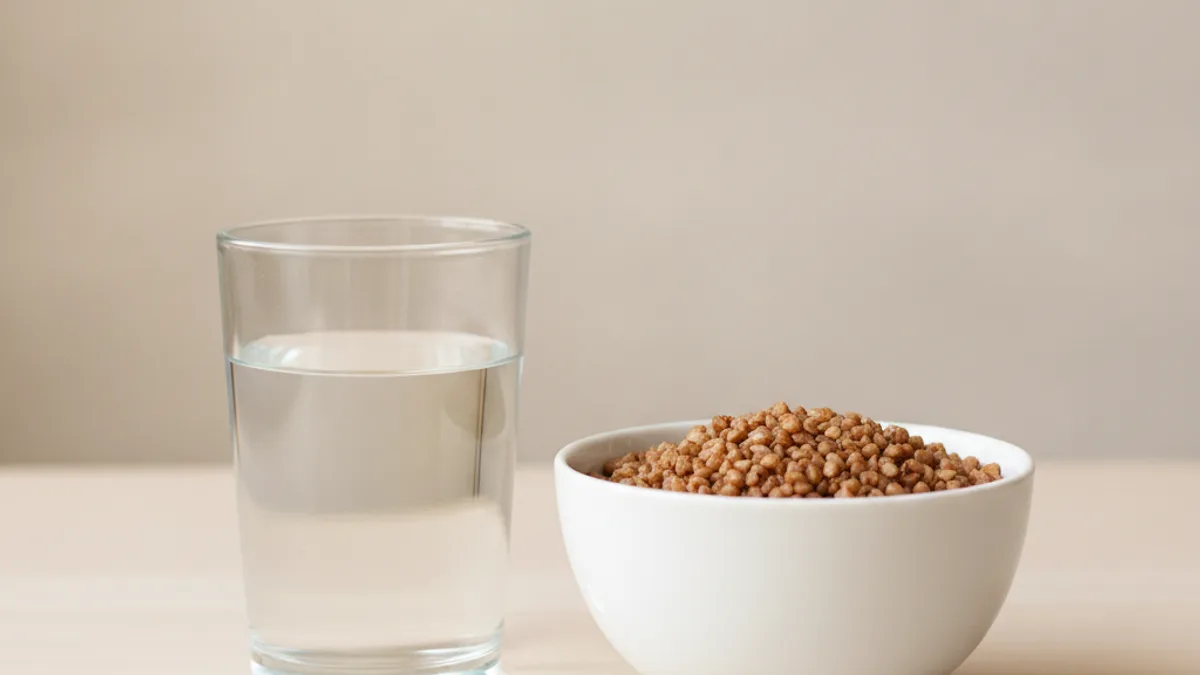
These are two different mechanisms, and they are constantly confused. Hunger signals that the body needs energy. Appetite signals that there's a cookie nearby. The first is satisfied by any food, the second only by the specific food in question.
A simple way to distinguish
Ask yourself: would I eat a plate of plain boiled buckwheat right now? If yes, that's hunger. If no, but I wouldn't mind some chocolate, that's appetite.
Distinguishing between them is useful not for self-discipline, but because the solutions are different. Hunger is cured by food. Appetite is not cured by food: it either passes on its own or returns an hour later, regardless of how much you've eaten.
What controls hunger
Ghrelin is produced in the stomach and rises before the usual mealtime, then falls afterward. Hence an important consequence: hunger largely follows a schedule. If you've been having lunch at one o'clock for years, you'll feel like eating at one o'clock, regardless of how much you had for breakfast.
Leptin is produced by adipose tissue and signals the brain about the size of fat stores. This is not a fast signal: it operates on a scale of weeks and months, not a single meal. In obesity, there is a lot of leptin, but sensitivity to it is reduced – this is called leptin resistance. Leptin does not become "broken" in this process, and there are no food-based medications that fix this sensitivity.
Gut hormones — GLP-1, PYY, cholecystokinin — are released in response to food intake and are responsible for satiety within a single meal. Modern weight loss drugs act on the first of these: analysis.
Why satiety is delayed
Signals of stomach fullness and nutrient absorption do not reach the brain instantly — this takes about fifteen to twenty minutes. Everything eaten during this time is eaten "blindly."
From this, two practical consequences emerge that work better than any food lists: eat slower and don't add a second serving immediately. After twenty minutes, a refill is needed significantly less often than it seemed.
What provides satiety with fewer calories
| What | Why it works |
|---|---|
| Protein | Satiates longer than fats and carbohydrates at equal caloric value |
| Food volume | Stomach distension is an independent signal, not dependent on caloric value |
| Fiber | Slows stomach emptying and adds volume — analysis |
| Water content in food | Soup is more satiating than the same set of products without broth |
| Solid food versus liquid | Calories from drinks are almost not accounted for by the satiety mechanism |
The last row explains why sugary drinks are so easily overlooked: 250 kcal in a glass of juice barely reduces appetite for lunch. The general mechanism is discussed in the energy density analysis.
What increases appetite besides food
Lack of sleep. The most measured factor on the list: short sleep increases cravings for high-calorie food, and this is reproducible in controlled experiments — analysis.
Stress. Works not as an increase in hunger, but as a search for quick relief; there is a separate article on this mechanism.
Alcohol. Reduces discernment and disinhibits — the effect is noticeable from the first glass.
Environment. The sight and smell of food, plate size, an open package on the table. This isn't about willpower: appetite is triggered by an external signal, and removing the signal is easier than resisting it.
Too strict a deficit. Hunger intensifies proportionally to how severely the diet is restricted, and at some point, it becomes unmanageable. Reasonable limits are discussed in the how to lose weight correctly analysis.
What to do about it
- Don't confuse thirst with hunger. A glass of water and ten minutes answer this question for free.
- Maintain regularity. A missed meal returns in the evening with interest — ghrelin works on a schedule.
- Prioritize protein. Not "more," but at least 25–30 g with each meal.
- Remove signals, don't tolerate them. Cookies in the cupboard, not on the table — this is working with the environment, not with character.
- Distinguish habit from hunger. Movies without popcorn and tea without candy seem incomplete the first few times, but not after that.
And separately: if the feeling of hunger stops appearing altogether or, conversely, doesn't go away after eating, this is a reason to see a doctor, not to adjust your diet.
Frequently asked questions
- How to distinguish hunger from appetite?
- Ask yourself if you would eat a plate of plain boiled buckwheat right now. If yes, that's hunger, and it will pass with any food. If you crave something specific, that's appetite, and food won't satisfy it.
- How long does it take to feel full?
- Signals of stomach fullness and absorption reach the brain in approximately fifteen to twenty minutes. Everything eaten during this time is consumed before satiety sets in.
- Why don't sweet drinks lead to satiety?
- The satiety mechanism barely accounts for calories from liquids: they quickly leave the stomach and provide neither volume nor delay. A glass of juice with 250 kcal hardly reduces appetite for lunch.
Read next
- Energy density: why the same calorie count can mean different amounts of food — Energy density is calories per gram, and it is already printed on every package: that very line "per 100 g" that people usually overlook while searching for the per-serving figure.
- How sleep loss affects appetite and weight — Sleep usually turns up in the last paragraph of a weight-loss article, phrased vaguely enough to be safe.
- Stress eating: why it works and what to do instead — Food really does reduce tension—this is not a character flaw, but a functional mechanism, which is why it becomes a habit.
This article is for general information. It is not medical advice, a diagnosis, or a prescription for treatment or a diet, and it does not replace a consultation with your doctor. If you have a health condition, are pregnant, take medication, or follow a diet prescribed to you, decisions about food belong with your doctor.
Figures from regulations, guidelines and studies are given as they stood when this article was prepared and may since have changed; check them against the primary sources. This article is not advertising, an offer, or individual advice, and neither the author nor the site owner is responsible for decisions taken on the basis of it.