What to eat for dinner
For most people, dinner is the largest meal of the day, and this is not a mistake in their routine. Mistakes begin when they try to make it «light» at any cost.
Dinner can be substantial
The common rule «eat breakfast yourself, give dinner to your enemy» is not supported: comparisons of diets with different calorie distribution throughout the day yield similar results for the same total. An analysis of the myth about evening eating itself is here.
Practically, this means there's no need to adjust dinner to someone else's schedule. If you are busy all day and your main meal is in the evening, this is a working scheme, not something that needs to be corrected.
What it consists of
| Component | Amount | Examples |
|---|---|---|
| Protein | 25–40 g | Chicken, fish, cottage cheese, eggs, legumes, tofu |
| Vegetables | Half a plate | Fresh, stewed, baked, frozen |
| Grains or potatoes | For remaining calories | Buckwheat, rice, bulgur, potatoes |
| Fat | A spoon | Oil in dressing or for cooking |
The order here is not accidental: protein and vegetables are placed first because satiety depends on them, while the side dish makes up the necessary calorie content. The reverse order — a plate of pasta with a spoonful of sauce — provides the same number of calories and half the satiety.
Why protein in the evening is more important than it seems
Two reasons. The first is satiety: protein maintains it longer than fats and carbohydrates for the same calorie content, and whether there will be a late-night trip to the refrigerator depends precisely on the evening meal.
The second is daily distribution. Muscle protein synthesis responds to each meal separately, not to the daily total, and a typical diet is poorly structured: almost no protein in the morning, a little in the afternoon, and all in the evening. Dinner is usually not the problem; breakfast is. The mechanism is analyzed separately — protein and muscle protein synthesis, and options for morning protein are in the breakfast analysis.
A too-light dinner
The most common mistake is not eating too much in the evening, but eating too little — a salad, kefir, «something light» — and two hours later, overeating begins.
The mechanics are simple: unconsumed calories don't disappear; they return later and in a worse form. A late-night snack almost always consists of something that requires no cooking, such as pastries, cheese, and chocolate. More details on this scenario — why you want to eat more in the evening.
Timing
The only things dinner timing measurably affects are sleep and reflux, not weight.
- 2–3 hours before sleep. A heavy meal immediately before bed worsens falling asleep and sleep quality.
- For heartburn — 3 hours before and do not lie down immediately. A horizontal position on a full stomach increases reflux.
- If dinner is late according to your schedule, it is wiser to make it smaller and add a full lunch than to not eat at all.
Three meal ideas
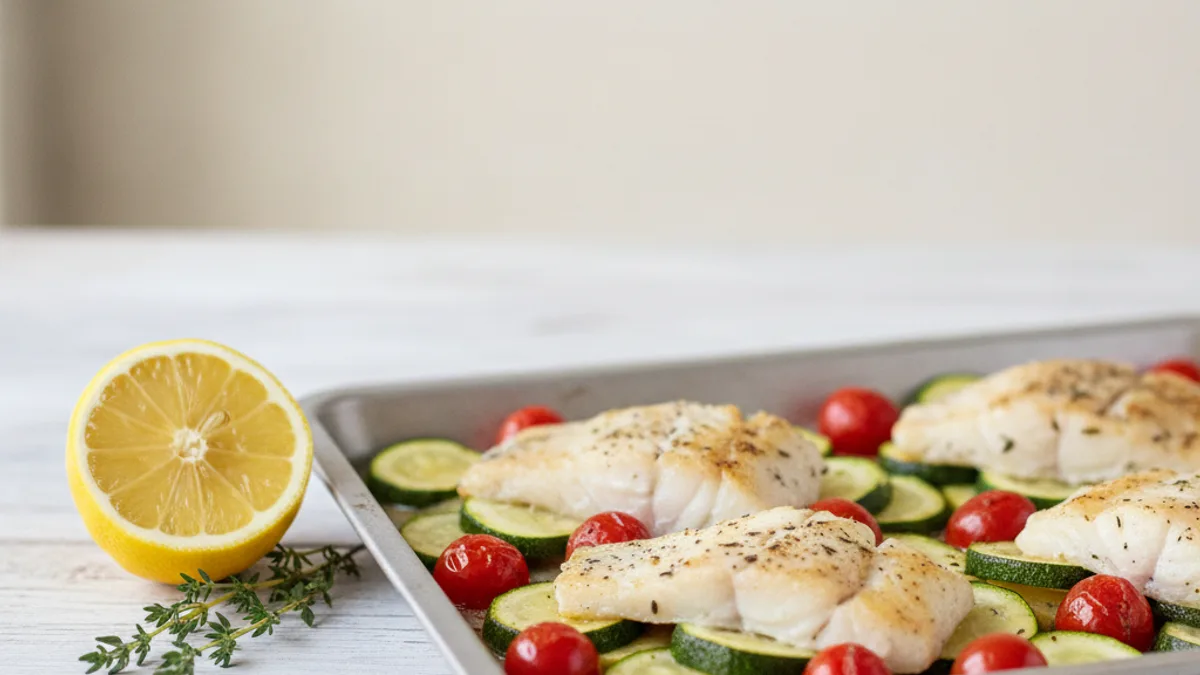
Fish with vegetables. A 180 g piece of white fish, vegetables on a baking sheet, a teaspoon of oil. Approximately 400 kcal, about 35 g of protein. Cooked in the oven on one baking sheet.
Chicken with buckwheat. 150 g chicken breast, 60 g dry buckwheat, cucumber and tomato salad. Approximately 550 kcal, about 40 g of protein.
Cottage cheese and vegetables when there's nothing to cook. 200 g of 5% cottage cheese, a tomato, greens, a spoon of olive oil, a slice of rye bread. Approximately 450 kcal, about 38 g of protein.
All three are assembled from common products and do not require a separate trip to the store. More options without a stove — in the article food without a kitchen.
What about alcohol
It most often turns a reasonable dinner into an unreasonable one: 7 kcal per gram of ethanol, plus reduced discernment in food choices. A 150 ml glass of dry wine — about 120 kcal, half a liter of beer — 200–250. Analysis — calorie content of alcohol.
Frequently asked questions
- What should dinner be like?
- Protein 25–40 g, vegetables for half a plate, grains or potatoes for the remaining calories, and a spoon of fat. Protein and vegetables determine satiety; the side dish makes up the calorie content.
- What is the best time for dinner?
- 2–3 hours before sleep. Time does not affect weight — the total daily intake matters — but a heavy meal before bed worsens sleep, and in cases of heartburn, it intensifies reflux.
- Why do you want to eat at night after a light dinner?
- Calories not consumed at dinner return later. A late-night snack usually consists of items that require no cooking, such as pastries, cheese, and chocolate.
Read next
- What to eat for breakfast and is it necessary at all — Breakfast is called the most important meal of the day, and the justification is usually linked to weight: those who skip breakfast overeat in the evening.
- What happens to food eaten after six — The "no eating after six" rule has outlived dozens of diets and continues to serve as the primary advice for weight loss.
- Why you feel hungrier in the evening — You manage to eat moderately during the day, but after eight o'clock, it starts.
This article is for general information. It is not medical advice, a diagnosis, or a prescription for treatment or a diet, and it does not replace a consultation with your doctor. If you have a health condition, are pregnant, take medication, or follow a diet prescribed to you, decisions about food belong with your doctor.
Figures from regulations, guidelines and studies are given as they stood when this article was prepared and may since have changed; check them against the primary sources. This article is not advertising, an offer, or individual advice, and neither the author nor the site owner is responsible for decisions taken on the basis of it.