Calories in alcohol: how many calories are in beer, wine, and spirits
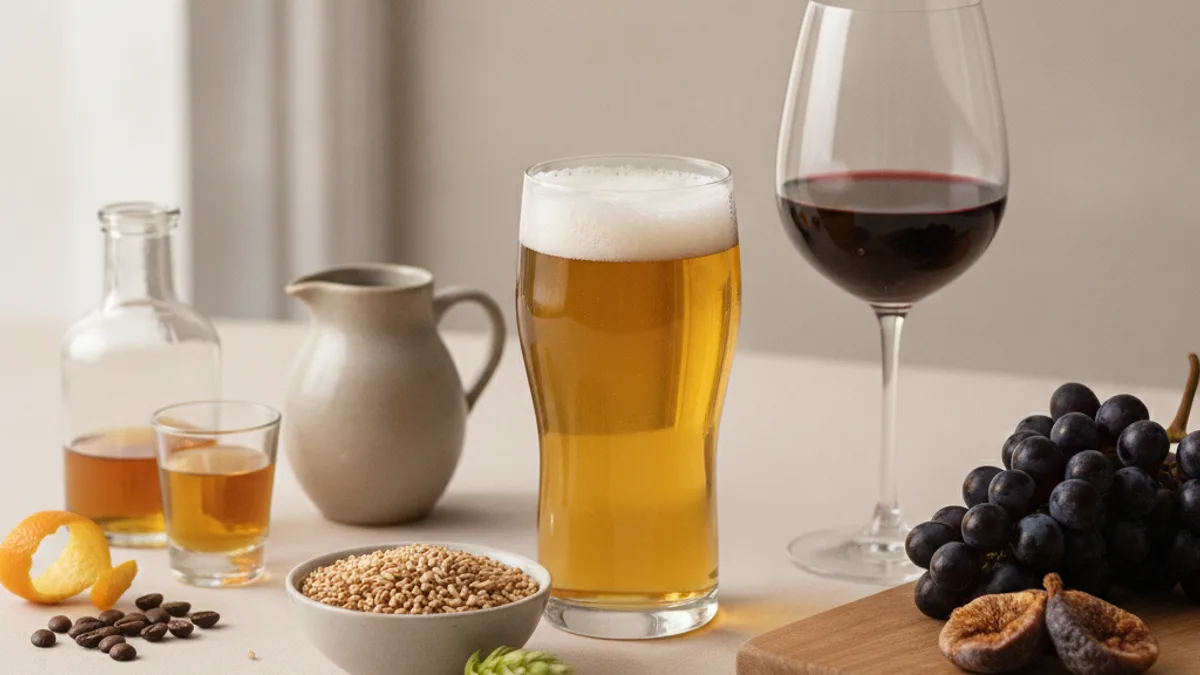
Alcohol is the only category that almost everyone skips when counting calories. This is not a lecture, but arithmetic: the numbers are higher than people usually think.
How much energy is in the alcohol itself
A gram of ethanol provides 7 kcal. This is more than protein and carbohydrates, which have four, and almost as much as fat, which has nine. In addition to this, everything else in the drink is counted: sugar in wine and liqueurs, and carbohydrates in beer.
| Drink | Serving | Approx. kcal |
|---|---|---|
| Light beer, 4–5% | 0.5 L | 200–250 |
| Dry wine, 12% | 150 ml | 100–130 |
| Semi-sweet wine | 150 ml | 140–170 |
| Spirits, 40% | 50 ml | 110–120 |
| Cocktail with syrup or juice | 250 ml | 250–400 |
These values are approximate: they depend on the alcohol content and residual sugar. The order of magnitude is more important than precision. Three glasses of wine in an evening is a dinner that a person does not count as food; a liter of beer is roughly a daily deficit erased in an hour.
Why it is not just about calories
The body perceives ethanol as a substance that must be eliminated first, and it switches to processing it. While this is happening, fat oxidation is slowed down—meaning the energy from snacks is more likely to be stored as fat.
The second part of the mechanism is known to everyone: alcohol lowers control over food intake. Portions increase, the choice shifts toward fatty and salty foods, and late-night eating is added to what has already been consumed during the day. Usually, this part, rather than the drink itself, accounts for the main weight gain of the evening.
Third is sleep. Alcohol speeds up falling asleep but impairs the second half of the night, and lack of sleep increases appetite the next day. This creates a vicious cycle lasting two days.
How it looks over a week
Two meetings with a bottle of wine shared between two people is about 500–650 kcal per week, not counting snacks; a liter of beer on Fridays adds the same amount. With a deficit of 500 kcal per day, the weekly reserve is 3500, and alcohol consumes a fifth to a quarter of it. Together with snacks and a late dinner, it consumes the whole thing. This is where the confusion comes from: everything was followed during the week, but the weight remains the same.
What to do if you do not want to give it up
- Count drinks as food. Record them alongside your meals. This alone is usually enough to reduce the amount consumed.
- Choose dry instead of sweet. The difference between dry and semi-sweet wine is a third of the calories, and it is all in the sugar.
- Dilute and pace yourself. Spirits with soda instead of cola and syrup remove half the calories of a cocktail.
- Eat before, not after. A proper dinner beforehand eliminates most of the subsequent overeating.
About the "healthy glass"
The idea of the benefits of moderate doses was based on observational studies that were found to have systemic flaws: the non-drinking group included people who had quit for health reasons, making the drinkers look healthier by comparison. With more careful accounting, this effect largely disappears.
The WHO position is direct: no safe level of alcohol consumption has been established in terms of cancer risk—ethanol is classified as a Group 1 carcinogen. This is not a call to action or a prohibition, but something to know when making your own decision.
How to account for alcohol in your tracking
The easiest way is to record it immediately, before the evening continues. Using a photo for tracking helps with snacks: a glass provides an estimate based on volume and strength, but a cheese platter or a plate of shashlik is exactly the case where visual estimation is most prone to error.
Frequently asked questions
- How many calories are in a gram of alcohol?
- 7 kcal — between carbohydrates with their 4 and fat with 9. Everything else in the drink is added to this: sugar in wine and liqueurs, carbohydrates in beer.
- How many calories are in a glass of wine and a bottle of beer?
- Approximately 100–130 kcal in 150 ml of dry wine and 200–250 kcal in 0.5 l of light beer. Semi-sweet wine is about a third higher in calories than dry wine due to sugar, while cocktails with syrup are significantly higher.
- Does alcohol hinder weight loss?
- It hinders it in three ways at once: it provides calories that are not counted as food; it pauses fat oxidation while the body processes ethanol; and it lowers control over food intake, which usually leads to an extra meal at the end of the evening. Plus, it impairs the second half of the night, and lack of sleep increases appetite the next day.
- Which alcohol is the lowest in calories?
- Per serving, dry wine and spirits without sweet additives. However, the difference between drinks is smaller than the difference between two and five servings, so it makes sense to count the total amount rather than choosing a "diet" option.
Read next
- Calorie deficit: how to calculate it and how to hold it — A calorie deficit is the one thing without which weight does not come down.
- Artificial sweeteners: are they harmful, and do they help you lose weight? — Arguments about sweeteners are conducted as though the choice were between them and plain water.
- How sleep loss affects appetite and weight — Sleep usually turns up in the last paragraph of a weight-loss article, phrased vaguely enough to be safe.
This article is for general information. It is not medical advice, a diagnosis, or a prescription for treatment or a diet, and it does not replace a consultation with your doctor. If you have a health condition, are pregnant, take medication, or follow a diet prescribed to you, decisions about food belong with your doctor.
Figures from regulations, guidelines and studies are given as they stood when this article was prepared and may since have changed; check them against the primary sources. This article is not advertising, an offer, or individual advice, and neither the author nor the site owner is responsible for decisions taken on the basis of it.