Plant-based and cultivated meat: what is in their composition
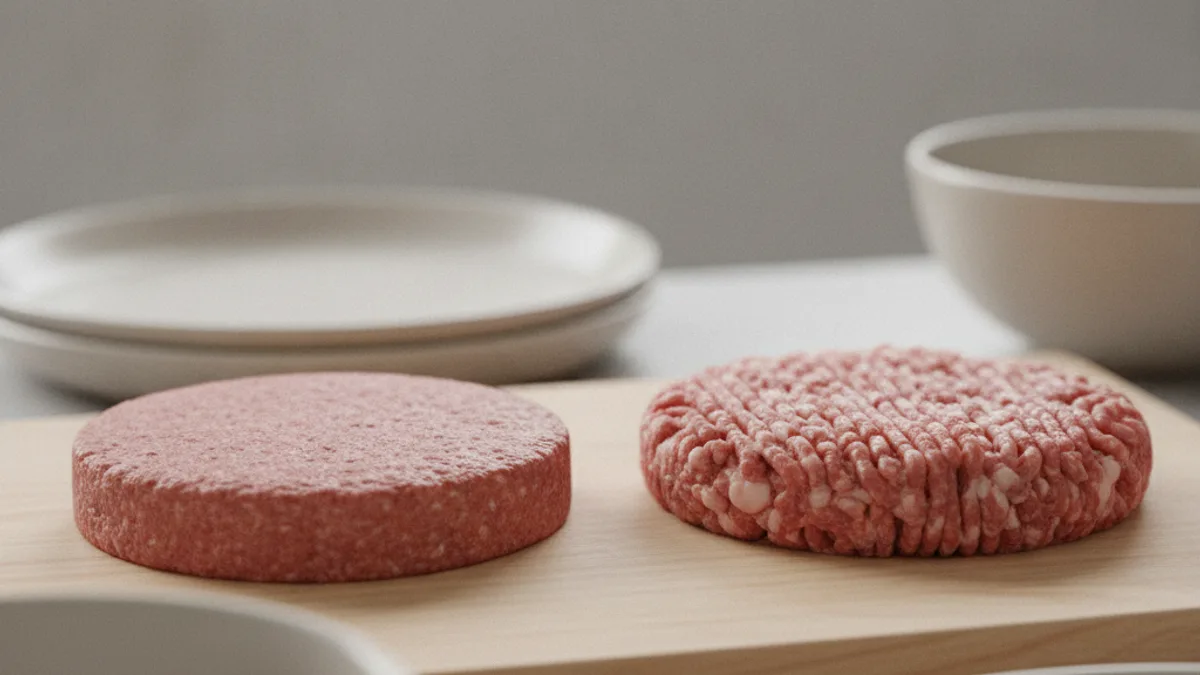
A pea-based patty and a beef patty look the same and sit side-by-side on the shelf, but they are different products in terms of composition. The difference is not about whether it is "natural or not": it is measurable and comes down to a few lines on the label, of which protein, saturated fat, and sodium are the most important.
How plant-based analogs are made
The base consists of protein from peas, soy, wheat, or beans. On its own, powdered protein does not resemble meat in any way, so it is passed through an extruder: a mixture of protein and water is heated, forced through a die under pressure, and then the pressure is suddenly released. During this process, protein molecules align along the flow and stick together into fibers, creating a texture that can be chewed like meat.
Next, ingredients that make the product recognizable are added: fat—usually coconut or sunflower oil—salt, flavorings, colorings, and binders. These components determine how the finished product differs from the raw materials.
According to the NOVA classification, such a product falls into the ultra-processed category—what this category means and what lies behind it is analyzed in the article about ultra-processed food. Being in this category is not a verdict in itself, but it explains why comparisons should be based on ingredients rather than the name.
What composition comparisons show
Differences have been measured across large samples of products on store shelves.
A comparison of meat products and their plant-based analogs shows the following: analogs generally have less total fat, saturated fat, and protein, but more fiber, carbohydrates, and sugars.
Sodium was measured separately, and the gap there is the most noticeable: when compared with beef, the average sodium content in plant-based alternatives was about 660 mg per 100 g versus approximately 60 mg in beef, while the average protein content was about 17 g versus approximately 20 g. The same study noted that about 60% of analogs had good protein quality, but only about 12% were fortified with key micronutrients—vitamin B12 or iron.
Summarizing this for practical use:
| Metric | How the plant-based analog compares |
|---|---|
| Saturated fat | Usually lower—but it depends on whether coconut or sunflower oil is used |
| Fiber | Higher; meat contains none at all |
| Protein | Slightly lower, and quality depends on the source |
| Sodium | Significantly higher |
| B12 and iron | Present only if the product is fortified |
Sodium is the only metric here where the gap is significant, and it is exactly what you should look for on the label. Why this is more important than it seems is analyzed in the article about salt in processed food.
A note on protein
"Less protein" is not the whole story. Amino acid composition also matters: individual plant sources are usually less complete than meat, but in mixtures—for example, peas with wheat—it balances out. This is why, in the cited comparison, most analogs received a good protein quality rating.
For someone tracking their daily protein intake, a difference of three grams per hundred is not a deciding factor: it can be covered by a serving. What proves decisive is digestibility and the overall composition of the diet.
Cultivated meat
This is a fundamentally different product: not an imitation made from plant protein, but animal cells grown in a bioreactor in a nutrient medium. Mass is grown from selected cells and then molded.
The safety of such products has been reviewed at the international level: a joint FAO and WHO report conducted a hazard identification and concluded that most are the same as those in conventional food production, and that regulators should focus on materials, media, and equipment specific to this method.
The practical situation today: production is expensive, volumes are small, and market authorization is decided by each country individually. Such products are not currently on Russian shelves, and the question of their composition remains theoretical—the composition will depend on what tissue and fat content can be grown.
How to choose on the shelf
- Check the sodium. It is the only metric where the gap compared to meat is significant.
- Check the fat source. Coconut oil results in high saturated fat, which eliminates the advantage over meat in this category.
- Check for fortification. If the product regularly replaces meat in your diet, B12 and iron are important; they are not present everywhere.
- Read the ingredients list to the end. The order of rules by which it is written is analyzed in the article about reading labels.
- Compare with what you are replacing. It makes sense to compare a sausage analog with a sausage, not with a piece of boiled chicken breast: the difference between those two is greater than between plant-based and meat versions.
And the general context: the calorie content of an analog and meat is most often comparable, so switching to plant-based versions does not in itself lead to weight loss. For information on what actually leads to it, see the article about calorie deficit.
Frequently asked questions
- Is plant-based meat healthier than conventional meat?
- It varies by product. In comparisons, plant-based alternatives typically have lower total and saturated fat and higher fiber, but lower protein and significantly higher sodium—around 660 mg per 100 g compared to approximately 60 mg in beef. The composition does not provide a definitive answer.
- How much protein is in a plant-based alternative?
- On average, about 17 g per 100 g compared to approximately 20 g in beef and pork. The difference is small and can be offset by portion size; the amino acid profile, which is balanced in plant protein blends, is more important.
- How is plant-based meat made?
- Pea, soy, or wheat protein is mixed with water and pushed through an extruder under heat and pressure. The molecules align into fibers, creating a chewy texture. Then, fat, salt, flavorings, colorings, and binders are added.
- What is cultivated meat and is it for sale?
- This is animal cells grown in a bioreactor, not an imitation made from plant protein. A joint FAO and WHO safety report concluded that most identified hazards are common to standard food production. This product is not available on Russian shelves.
- Does switching to plant-based alternatives help with weight loss?
- Not on its own: the caloric content of the alternative and the meat product is most often comparable. Weight loss is determined by the overall energy balance, not by replacing one product with another of similar caloric value.
Read next
- Ultra-processed food: what lies behind the NOVA classification — There is a lot of writing about ultra-processed food right now as if the matter is settled: there is bad industrial food and good homemade food.
- Salt in processed food: where it is most abundant and why the salt shaker is not the culprit — The WHO recommendation is less than five grams of salt per day, but the actual intake is about twice that.
- How to read the ingredients list on a label: the rules governing its writing — A label looks like a list of words from which everyone reads something different: one person considers a long list of ingredients a red flag, another looks for E numbers.
This article is for general information. It is not medical advice, a diagnosis, or a prescription for treatment or a diet, and it does not replace a consultation with your doctor. If you have a health condition, are pregnant, take medication, or follow a diet prescribed to you, decisions about food belong with your doctor.
Figures from regulations, guidelines and studies are given as they stood when this article was prepared and may since have changed; check them against the primary sources. This article is not advertising, an offer, or individual advice, and neither the author nor the site owner is responsible for decisions taken on the basis of it.