Tvorog: how to distinguish it from a tvorog product
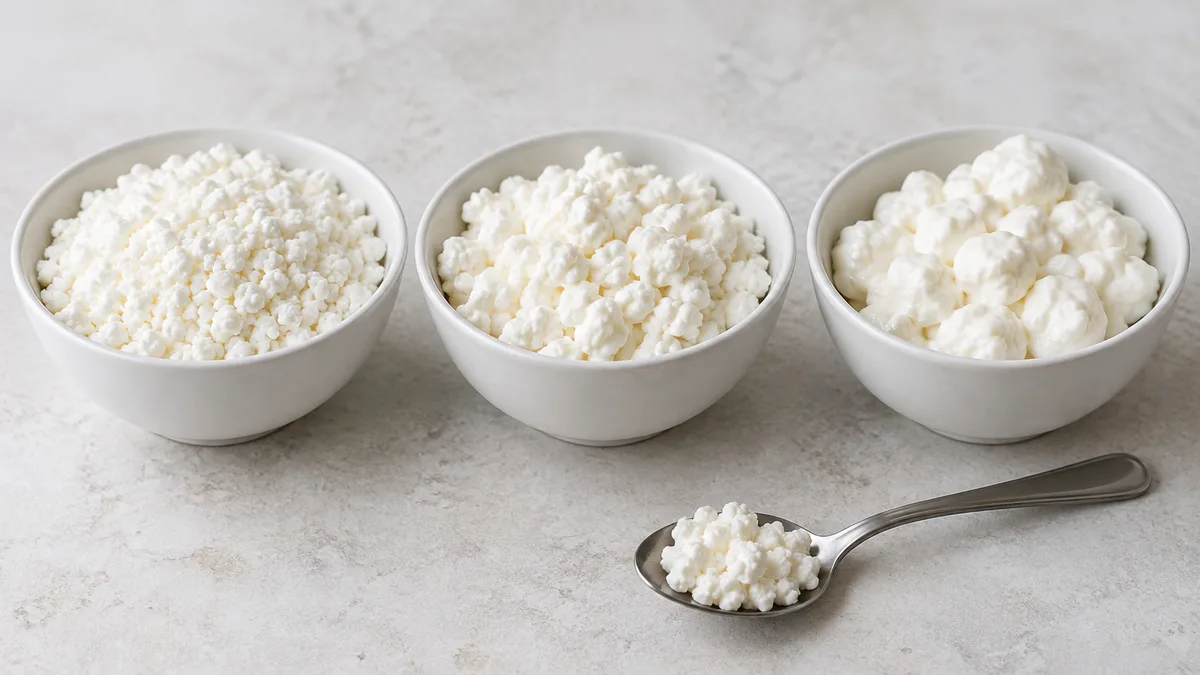
On the tvorog shelf, there are four different products, and the difference between them is specified in the regulation. You can distinguish them by their name — the line in small print next to the net weight, not by the large inscription on the front.
Four names that should not be confused
Technical Regulation TR CU 033/2013 on milk and dairy products defines each of them separately.
| Name | What it is according to the regulations |
|---|---|
| Tvorog (cottage cheese) | A fermented milk product made from milk, fermented with starter microflora, with whey removed. No non-dairy fats |
| Tvorog mass | A product made from tvorog with butter, cream, sugar, or salt, or without them. Non-dairy components are only those that do not replace dairy ones |
| Tvorog product | Made using tvorog technology, but non-dairy fats and non-dairy proteins are permitted |
| Milk-containing product with a milk fat replacer, produced using tvorog technology | Milk fat is partially replaced with vegetable fat. This is the full name that such a product is required to bear |
The main practical consequence of this is: a product containing palm oil or other vegetable fat cannot be called tvorog. It must be called otherwise, and this name will take up three lines on the packaging—the manufacturer will not make it large, but is required to include it.
Therefore, checking comes down to a single action: turn the package over and read the name next to the net weight. Everything printed in large letters on the front—"homemade", "rustic", "tender"—is not defined by the regulations and can mean anything.
What to look for in the ingredients
Real tvorog has a short ingredient list: milk (sometimes standardized or skimmed) and starter culture, sometimes an enzyme preparation or calcium chloride—they are needed for coagulation.
Two items mean that what you have in front of you is not tvorog.
- Any oil or fat in the ingredient list. Palm oil, coconut oil, "milk fat replacer", "vegetable fats"—by definition, they cannot be present in tvorog.
- Starch, gums, thickeners. They have no business being in tvorog: density there is provided by protein. They are permitted in tvorog mass and products, and this is another sign that what you have is not tvorog. What each group of additives does is covered in the "clean label" guide.
The difference between GOST and the manufacturer's own technical specifications (TU) works the same way here as in other products: TU does not mean "worse", it means "the recipe was written by the manufacturer". The standard for tvorog is GOST 31453-2013; a new edition was adopted in 2025, taking effect on January 1, 2027, with the right of early application.
Fat content: 0, 5, 9, 18
The number on the package is the mass fraction of fat in the finished product. For tvorog, this is a regular percentage of weight, and there is no confusion with cheese here: for cheese, fat content is calculated in dry matter, and 45% on a cheese label is not 45 grams of fat per hundred.
Typical values per 100 grams. Exact numbers vary between manufacturers, and the final word always belongs to the table on the package.
| Fat content | Kcal | Protein | Fat |
|---|---|---|---|
| Skimmed | 71 | 16.5 g | 0.6 g |
| 5% | 121 | 17.2 g | 5 g |
| 9% | 159 | 16.7 g | 9 g |
| 18% | 232 | 14 g | 18 g |
What follows from this table.
Protein hardly depends on fat content. The difference between skimmed and nine percent is about half a gram per hundred, while calories are twice as high. According to the amount of protein per calorie, skimmed tvorog is one of the best products in the store.
It does not follow from this that skimmed is better. Along with the fat, vitamins A and D dissolved in it depart, and satiety from a fatty product comes faster and lasts longer. If a pack of skimmed tvorog is finished in one sitting while the nine-percent one lasts for two, the calorie advantage disappears.
Eighteen percent is a different product by purpose. Two hundred thirty kilocalories per hundred grams, less protein: this is closer to a dessert than to a protein source.
Why vegetable fat cannot be checked at home
Determining the origin of fat is a laboratory task: fatty acid composition and the ratio of sterols are examined. It cannot be determined by taste, appearance, or behavior in a frying pan.
Specifically regarding the most popular home test: iodine is colored by starch, not fat. A drop of iodine on tvorog will turn blue if starch has been added to it, and will say nothing about whether the fat in the product is milk fat or palm oil. The test answers the wrong question for which it is performed.
Therefore, the only available tool for the buyer is the name on the packaging. A manufacturer who has replaced the fat is obliged to state this in the name; someone who wrote "tvorog" but put vegetable fat in it is violating regulations—and this is already a matter for supervisory authorities to check, not home experiments.
Grainy tvorog and tvorog mass
Grainy tvorog is curd grains with cream, and salt is usually added to it. Therefore, with a similar nutritional value table, its taste is noticeably different: softer and saltier.
Tvorog mass is tvorog to which sugar, butter, or cream has been added, often with raisins or dried apricots. The product is legitimate and honest, but you cannot count it as tvorog when tracking intake: sugar and fat double the table values, and a hundred grams of sweet mass can cost as much as two hundred grams of tvorog.
The same applies to glazed curd bars: chocolate glaze is fat and sugar, and in calories they provide more than the tvorog inside.
A ten-second choice
If you have no time to read everything:
- Turn the package over and read the name next to the net weight: the word "tvorog"—and nothing after it.
- Scan the ingredients: milk and starter culture. No oil, fat, or starch.
- Check the fat content and match it to why you are buying it: protein — 0–5%, satiety — 9%, dessert — 18%.
- Check the shelf life: for tvorog without preservatives, it is short, and a long shelf life usually means heat treatment after fermentation.
Flavor additives are best handled at home: berries and a spoonful of honey in regular tvorog provide less sugar than ready-made sweet mass and allow you to measure it yourself. The same principle works on the neighboring shelf — with yogurt.
Frequently asked questions
- How does cottage cheese product differ from cottage cheese?
- According to regulations, non-dairy fats and non-dairy proteins are allowed in a cottage cheese product, but not in cottage cheese. If milk fat is replaced with vegetable fat, the product must bear the full name "milk-containing product with a milk fat substitute produced using cottage cheese technology" and cannot be called "cottage cheese".
- Which cottage cheese is better in terms of protein: fat-free or full-fat?
- They contain almost equal amounts of protein: about 16.5 g per 100 g in fat-free and 17 g in five-percent. The difference is in calories: 71 versus 121. However, vitamins A and D are removed along with the fat, and satiety from high-fat food lasts longer, so the choice depends on how the package will be consumed.
- Can cottage cheese be tested with iodine?
- No. Iodine reacts with starch, not fat: the test will show added starch, if any, and will reveal nothing about the origin of the fat. The fatty acid composition is determined in a laboratory.
Read next
- Yogurt: how to choose based on ingredients — In the yogurt aisle, there are three different products with similar names, and the difference between them is defined by law, not by advertising.
- Cheese: what "45% fat" means on the label — Cheese labeled "45%" does not contain 45 grams of fat per hundred, but rather about 27.
- Where to find the most protein per calorie — A food being "high in protein" and a food "providing a lot of protein per calorie" are not the same thing.
- GOST and TU: what is actually behind these letters — GOST is often read as a mark of quality, while TU is seen as permission to do whatever one wants.
This article is for general information. It is not medical advice, a diagnosis, or a prescription for treatment or a diet, and it does not replace a consultation with your doctor. If you have a health condition, are pregnant, take medication, or follow a diet prescribed to you, decisions about food belong with your doctor.
Figures from regulations, guidelines and studies are given as they stood when this article was prepared and may since have changed; check them against the primary sources. This article is not advertising, an offer, or individual advice, and neither the author nor the site owner is responsible for decisions taken on the basis of it.