Protein cookies, cottage cheese, and bars: how much protein is actually inside
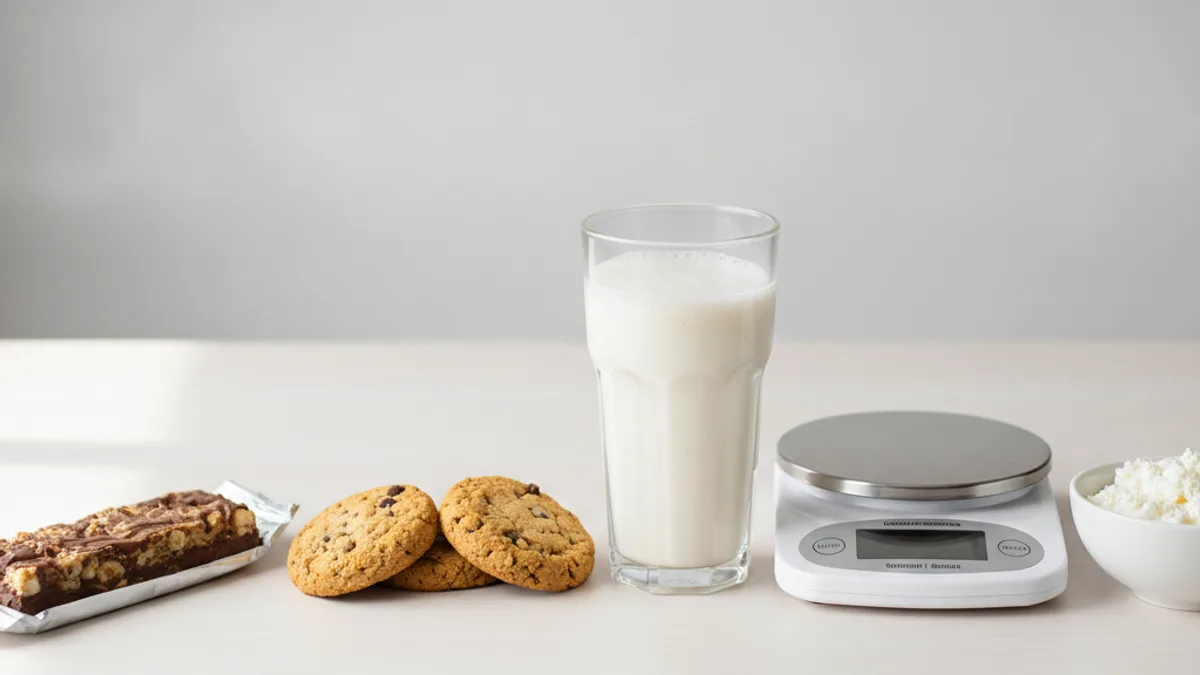
The word "protein" on packaging is not regulated, but "source of protein" and "high protein" are, and they have specific requirements. The difference between the claim on the front and the numbers on the back is what you are overpaying for in this category.
What the regulations allow to be stated about protein
The conditions are listed in Annex 5 to TR CU 022/2011:
| Label | Requirement |
|---|---|
| Source of protein | protein provides at least 12% of the product's caloric value, and at least 5% of the daily requirement per 100 g |
| High protein content | protein provides at least 20% of the product's caloric value |
The daily requirement used to calculate these percentages is also set by the regulation — Annex 2: 2500 kcal and 75 g of protein. This means a "source of protein" must contain at least 3.75 g of protein per 100 g of product.
The key here is that the condition is formulated in terms of caloric share, not grams. A bar with 20 g of protein and 400 kcal per 100 g derives 80 of its 400 kcal from protein — exactly 20%, making the label compliant. The same bar, but with chocolate coating and 480 kcal, no longer meets the threshold, even though it contains the same amount of protein.
How to calculate: protein per 100 kcal
The most useful metric for this shelf is how many grams of protein are in 100 kcal of the product. It immediately shows what you are buying: protein or a sweet treat with protein.
| Product | Protein / 100 kcal (reference) |
|---|---|
| Cottage cheese 2% | about 17 g |
| Boiled chicken breast | about 20 g |
| Protein drink | 8–14 g |
| Protein bar | 5–8 g |
| Protein cookie | 3–6 g |
The numbers for a specific package are taken from its nutrition facts table: divide the protein by the caloric value and multiply by 100. The rules for how this table is compiled and the permissible discrepancies are analyzed in the article on nutrition facts on packaging.
What they dilute it with
Three tricks visible directly in the ingredients list:
- Fat and sugar alcohols instead of sugar. The caloric value remains that of a confection, but the "sugar-free" label appears. Sugar alcohols are calculated at 2.4 kcal/g and require a warning about a laxative effect.
- Collagen and gelatin as cheap protein. In the nutrition facts table, they are counted as protein on par with dairy protein, but in a study on muscle protein synthesis, collagen supplementation, unlike dairy protein, did not result in increased synthesis.
- Small serving size. "12 g of protein per serving" with a serving size of 35 g is 34 g per 100 g only on paper; you need to look at both columns at once.
What else manufacturers do with the ingredients list is analyzed in the article on how additives are hidden.
The price of a gram of protein
The only honest comparison in this category is how much a gram of protein costs, not the package. It is calculated as follows: price ÷ (package weight in grams × protein per 100 g ÷ 100).
It usually turns out that a protein bar is several times more expensive than cottage cheese while having a twice-worse protein-to-calorie ratio. This is not an argument against bars — they have a different purpose; they stay in your bag and don't spoil. But that purpose is not "protein source," but "a snack that doesn't go bad." How to calculate unit price in general is in the article on price per kilogram, and alternatives to bars are in the article on snacks.
When such products are actually appropriate
- When you cannot meet your protein requirement through regular food. How much you actually need is in the article on protein requirements.
- On the road or at work, where there is nowhere to store cottage cheese.
- When weight and volume matter. A bar takes up less space than a container.
And the flip side: if your diet already has enough protein, a protein version of a regular product provides nothing but an extra cost. It is most convenient to check a specific package with a scanner — the caloric value, protein, and ingredients will be pulled from the database, and you won't have to rewrite the numbers manually.
Frequently asked questions
- What does the "high protein content" label mean?
- According to Annex 5 to TR CU 022/2011, it means that protein provides at least 20% of the product's caloric value. For the "source of protein" label, the threshold is lower: 12% of caloric value and at least 5% of the daily requirement per 100 g, which is 3.75 g.
- How much protein is actually in a protein bar?
- Usually 5–8 g of protein per 100 kcal, compared to about 17 g in 2% cottage cheese and 20 g in boiled chicken breast. The absolute number on the package looks impressive due to the serving size and total caloric content.
- Is collagen in the ingredients considered protein?
- In the nutrition facts table, yes, along with the rest of the protein. However, in studies of muscle protein synthesis, collagen supplementation, unlike dairy protein, did not result in an increase in synthesis.
- How to calculate if a protein product is a good value?
- Divide the price by the amount of protein in the package: price ÷ (weight × protein per 100 g ÷ 100). This figure is comparable between cottage cheese, powder, and a bar, whereas the price per package is not.
- Is protein cookie healthier than a regular one?
- In terms of calories and fat, it usually remains a cookie: regulatory thresholds only apply to the proportion of protein in the caloric content. There is a difference, but it is smaller than the price difference.
Read next
- Calories and macros on the label: why the numbers don't match reality — The same buckwheat in three different apps gives three different calorie counts, and the package shows a fourth.
- Protein and gainer: how they differ and if they are needed at all — Protein powder is dried milk or plant protein, not a separate class of substances with unique properties.
- Snack instead of a bar: what to bring so you don't have to buy — People buy a bar not because it's delicious, but because it's at the checkout and there's nothing in their bag.
This article is for general information. It is not medical advice, a diagnosis, or a prescription for treatment or a diet, and it does not replace a consultation with your doctor. If you have a health condition, are pregnant, take medication, or follow a diet prescribed to you, decisions about food belong with your doctor.
Figures from regulations, guidelines and studies are given as they stood when this article was prepared and may since have changed; check them against the primary sources. This article is not advertising, an offer, or individual advice, and neither the author nor the site owner is responsible for decisions taken on the basis of it.