Cheaper protein: what 20 g costs in different foods
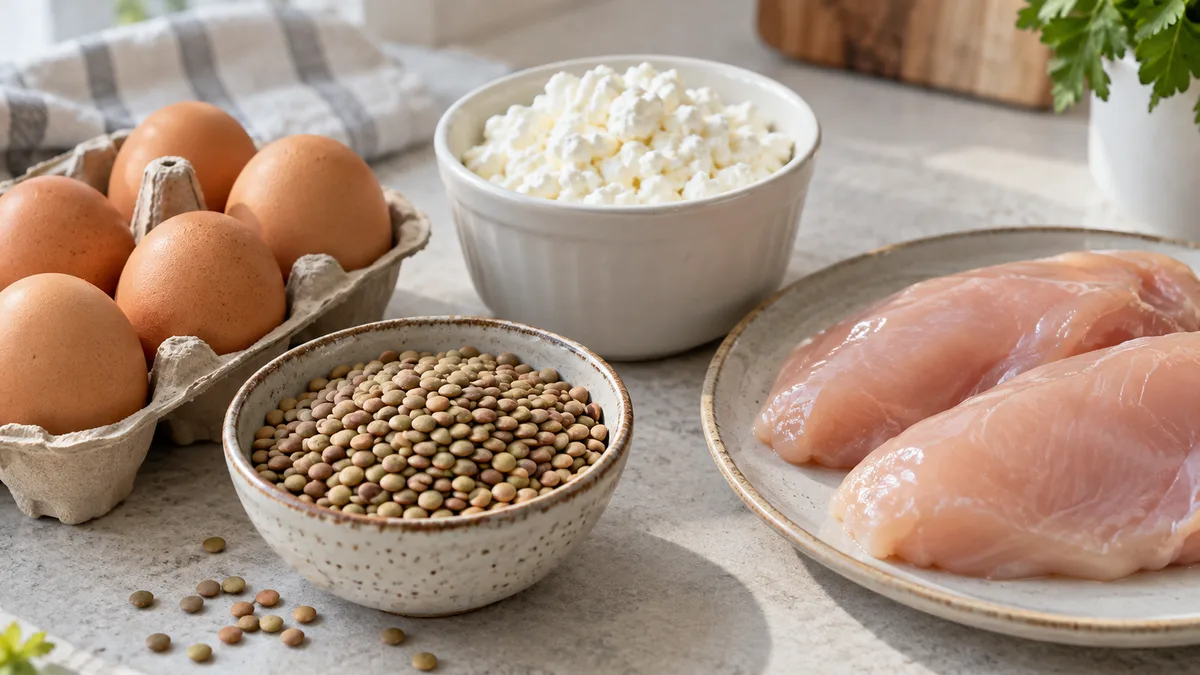
To compare protein costs, divide the pack price by the protein it contains. In the product listings below, 20 g of declared protein costs about 14 rubles in dry split peas and 75 rubles in a small pack of cottage cheese. Buying, preparing and eating these foods involves different steps.
What 20 g of protein costs: a product comparison
Prices and nutrition values come from public VkusVill listings checked on 9 October 2026 without selecting a delivery address. The calculations use the regular price, excluding personal discounts, promotion codes and delivery. The retailer notes that prices vary by region and store format, and that the label gives the values for the actual batch. Table links lead to the products used.
| Food | Price and weight | Protein per 100 g | Weight for 20 g protein | Cost of 20 g protein |
|---|---|---|---|---|
| Dry split peas | 78 ₽ / 500 g | 23 g | 87 g | 13.6 ₽ |
| Dry red lentils | 137 ₽ / 450 g | 24–26 g | 77–83 g | 23.4–25.4 ₽ |
| Raw chicken breast fillet | 656 ₽ / kg | 18.3–22.8 g | 88–109 g | 57.5–71.7 ₽ |
| 5% cottage cheese, 400 g pack | 198 ₽ / 400 g | 16 g | 125 g | 61.9 ₽ |
| 5% cottage cheese, 180 g pack | 108 ₽ / 180 g | 16 g | 125 g | 75 ₽ |
Costs are rounded to one decimal ruble and weights to whole grams. This is the cost of the portion used: you still pay 78 rubles for the full bag of peas at checkout. Dry pulses and raw fillet need cooking; the weights shown do not describe a cooked side dish or fried chicken.
The lentil and chicken listings name several suppliers with different nutrition values. The table therefore gives a range. For your pack, use its manufacturer's value. The product name alone does not give an exact answer.
A formula for any pack
You need the pack price, its weight in grams and protein per 100 g. Protein in the pack = weight × protein per 100 g ÷ 100. Cost of 20 g protein = pack price × 20 ÷ protein in the pack.
For example, 400 g of cottage cheese with 16 g of protein per 100 g contains 400 × 16 ÷ 100 = 64 g of protein. At 198 rubles, the calculation is 198 × 20 ÷ 64 = 61.875 rubles, or 61.9 after rounding.
For a price per kilogram, use the shorter formula: price per kg × 2 ÷ protein per 100 g. Chicken with 20 g of protein per 100 g at 656 rubles per kg gives 65.6 rubles. A batch with a different declared composition changes that number.
Why a smaller pack can cost more
Both cottage cheese listings declare 16 g of protein per 100 g, but their prices per weight differ. The large pack costs 495 rubles per kg; the small one costs 600. Equal amounts of protein therefore cost 61.9 versus 75 rubles.
This describes two specific listings rather than every pack size. If part of a larger pack goes uneaten, compare the cost of the part you use. Before making it a regular purchase, check how much cottage cheese you finish between shopping trips.
Keep dry and cooked weights separate
The 87 g of peas in the table means dry peas. Weighing 87 g of cooked peas and applying the dry product's 23 g of protein per 100 g describes a different portion. Raw versus cooked weight explains weighing before and after cooking.
For a dish with several ingredients, calculate the total ingredient cost and declared protein in each component first, then divide between portions. Include oil, sauce and other additions in the dish cost; use their label protein values where given.
Protein cost and lunch cost answer different questions
Here, 20 g is a comparison unit, not a recommendation for a meal. The table counts declared grams of protein. It does not assess absorption, prescribe a diet or compare every nutrient.
You can also compare serving calories, ingredients, preparation and checkout cost. For protein relative to calories, see protein per calorie. Price per kilogram explains shelf prices.
Repeat the comparison in your own shop
- Photograph the price tag and nutrition table for the same pack.
- Check its weight, manufacturer and state: dry, raw or ready to eat.
- Use your price and protein value in the formula. Compare both the cost of 20 g of protein and the full purchase cost.
- Record the portion eaten separately from the shopping calculation. See the step-by-step label comparison.
Frequently asked questions
- How do I calculate the cost of 20 g of protein?
- Multiply pack weight in grams by protein per 100 g and divide by 100. Then multiply the pack price by 20 and divide by the resulting protein amount.
- Which food in this table has the cheapest protein?
- Dry split peas: about 13.6 rubles for 20 g of declared protein at 78 rubles per 500 g. This applies to the listing checked on 9 October 2026, not every shop.
- Why does chicken breast have a protein cost range?
- The listing names several suppliers declaring 18.3 to 22.8 g of protein per 100 g. At the same price per kilogram, that changes the calculation. Use the values on your pack.
- Can I use the weight of cooked lentils?
- Yes, if the nutrition values also describe cooked lentils. Do not apply dry-product nutrition values to a cooked serving weight.
- Should I eat 20 g of protein at each meal?
- The 20 g in this article is only a cost comparison unit. It is not an individual requirement or meal target.
Read next
- Where to find the most protein per calorie — A food being "high in protein" and a food "providing a lot of protein per calorie" are not the same thing.
- Price per kilogram: the only comparable figure on a price tag — There are two numbers on a price tag.
- How to compare two products by their labels: six steps with a worked example — Two nutrition tables are comparable only when they describe the same weight, the same state of the product and the same units.
- Raw or cooked weight: how to count grains, pasta, and meat — "100 g of buckwheat" can mean 346 kcal or 92, depending on the state of the grain.
This article is for general information. It is not medical advice, a diagnosis, or a prescription for treatment or a diet, and it does not replace a consultation with your doctor. If you have a health condition, are pregnant, take medication, or follow a diet prescribed to you, decisions about food belong with your doctor.
Figures from regulations, guidelines and studies are given as they stood when this article was prepared and may since have changed; check them against the primary sources. This article is not advertising, an offer, or individual advice, and neither the author nor the site owner is responsible for decisions taken on the basis of it.