Promotions and yellow price tags: how they work and when they are worth it
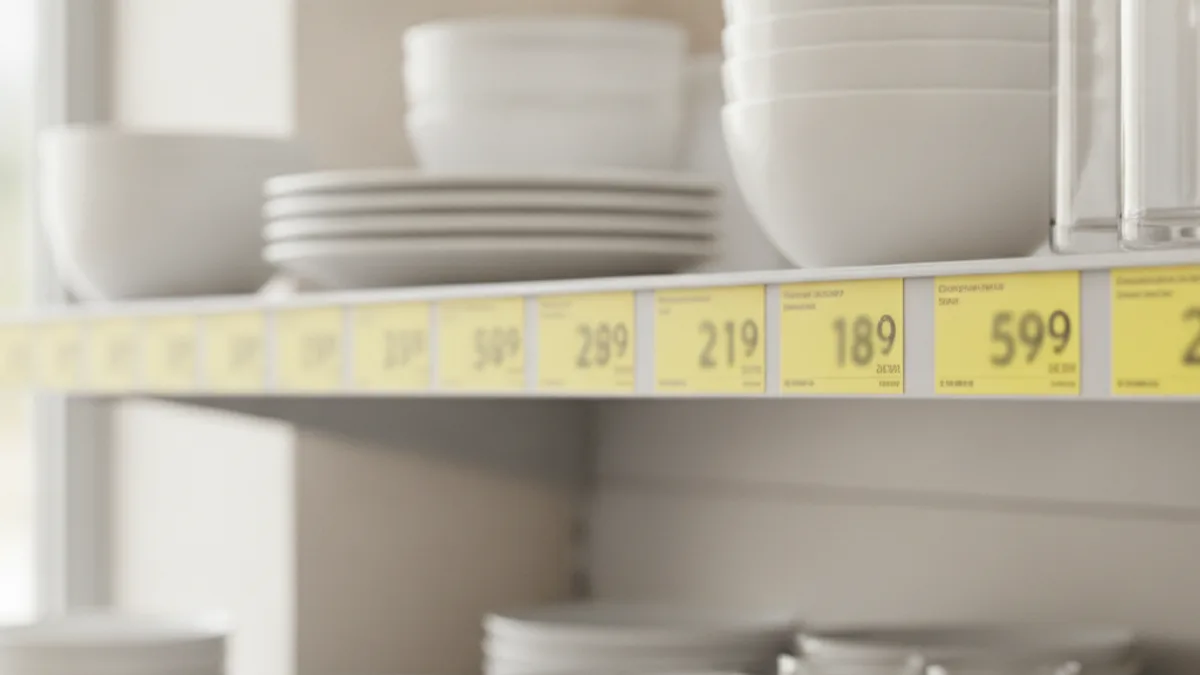
A yellow price tag works not because the price is low, but because it is high-contrast: the eye finds it before it reads the number. Then, a comparison with the crossed-out price kicks in, which the shopper assumes is the standard price. You can verify the actual value with one simple action, and it has nothing to do with the discount percentage or the color of the tag.
How a discount is calculated
It is calculated from the price the store set itself. It is neither the market average nor a competitor's price, so "minus 40%" tells you nothing about the value relative to a neighboring brand.
The only meaningful comparison is the price per kilogram or liter of the promotional item versus the price per kilogram of a non-promotional item sitting next to it. How to use this is explained in the article on price per kilogram.
A common situation: an item with a 30% discount remains more expensive per kilogram than a neighboring item without a discount.
Types of mechanics and what is behind them
| Mechanic | What happens |
|---|---|
| Direct price reduction | The most honest: compare the price per kilogram |
| Second item at a discount | Value only if you need the second one |
| Three for the price of two | Same; discount per unit is about 33% |
| Loyalty card discount | The non-card price is inflated relative to the standard |
| Large pack is "cheaper" | Verified by price per kilogram, sometimes incorrect |
| Expiring shelf life | A real discount if you eat it today |
The second and third rows are the most common trap: the discount is real, but only on the condition that you need the second or third item. For perishables, this condition is rarely met, and the excess ends up in the trash, nullifying the savings.
The last row, conversely, is underrated: an item with an expiring shelf life is often the best deal in the store if you have a plan for it. What happens to a product after the date is explained in the article on shelf life.
Why promotions change what you eat
This is a less noticeable effect than overpaying, but a more important one. Promotions most often apply to items with high markups and long shelf lives: snacks, confectionery, soda, and processed foods. Fresh vegetables, grains, and meat are featured in promotions less frequently.
The result: shopping "by promotions" shifts your cart toward processed foods. This trend and its consequences are analyzed in the article on ultra-processed food.
Tactics that drive volume
- Time limits. "Today only" shifts the decision from comparison to haste.
- Quantity limits. "No more than four per customer" creates a sense of scarcity.
- Placement. Promotional end-caps and checkout zones are the most expensive spots, and the items there are not necessarily cheap.
- Large crossed-out price. Sets a reference point from which any new number seems low.
None of these are deceptive. They all work to ensure that decisions are made faster, and a fast decision is worse at comparing.
What to do
- Check the price per kilogram for both the promotional and the neighboring item.
- Ask yourself if you would buy it without the discount. If not, the discount is not a saving, but an expense.
- Count "buy one get one" only when you need both.
- Look for items with an expiring shelf life if you are cooking today.
- Go with a list. It does more for your cart than any calculations at the shelf; the assembly scheme is in the article on weekly meal planning.
Frequently asked questions
- What is the discount on a yellow price tag calculated from?
- From the price the store set itself. It is not related to the market average or a competitor's price, so the discount percentage does not indicate value relative to a neighboring brand.
- How to check if the value is real?
- Compare the price per kilogram or liter of the promotional item with the price per kilogram of a non-promotional item sitting next to it. An item with a 30% discount often remains more expensive per kilogram than a neighboring item without a discount.
- Are "buy one get one" promotions worth it?
- Only if you need a second one. For perishable products, this condition is rarely met, and the surplus ends up in the trash, nullifying any savings.
- Is it worth buying products with an expiring shelf life?
- If you have a plan to eat it today, it is often the best deal in the store. Such discounts are legal, and the product remains within its stated properties until the expiration date.
- Why do promotional purchases ruin your diet?
- Promotions are more common for items with high markups and long shelf lives: snacks, confectionery, soda, and processed foods. Fresh vegetables, grains, and meat are included less often, causing your shopping basket to shift toward processed items.
Read next
- Price per kilogram: the only comparable figure on a price tag — There are two numbers on a price tag.
- Expiration dates: "best before" and "use by" are not the same — The date on packaging is perceived as a boundary between "safe" and "unsafe," although it means different things for different products.
- Shrinkflation: the package got smaller, but the price stayed the same — A liter of milk has turned into 900 milliliters, a dozen eggs into nine, and a chocolate bar has shrunk from 100 grams to 85.
This article is for general information. It is not medical advice, a diagnosis, or a prescription for treatment or a diet, and it does not replace a consultation with your doctor. If you have a health condition, are pregnant, take medication, or follow a diet prescribed to you, decisions about food belong with your doctor.
Figures from regulations, guidelines and studies are given as they stood when this article was prepared and may since have changed; check them against the primary sources. This article is not advertising, an offer, or individual advice, and neither the author nor the site owner is responsible for decisions taken on the basis of it.