Protein bars: how to compare ingredients and protein
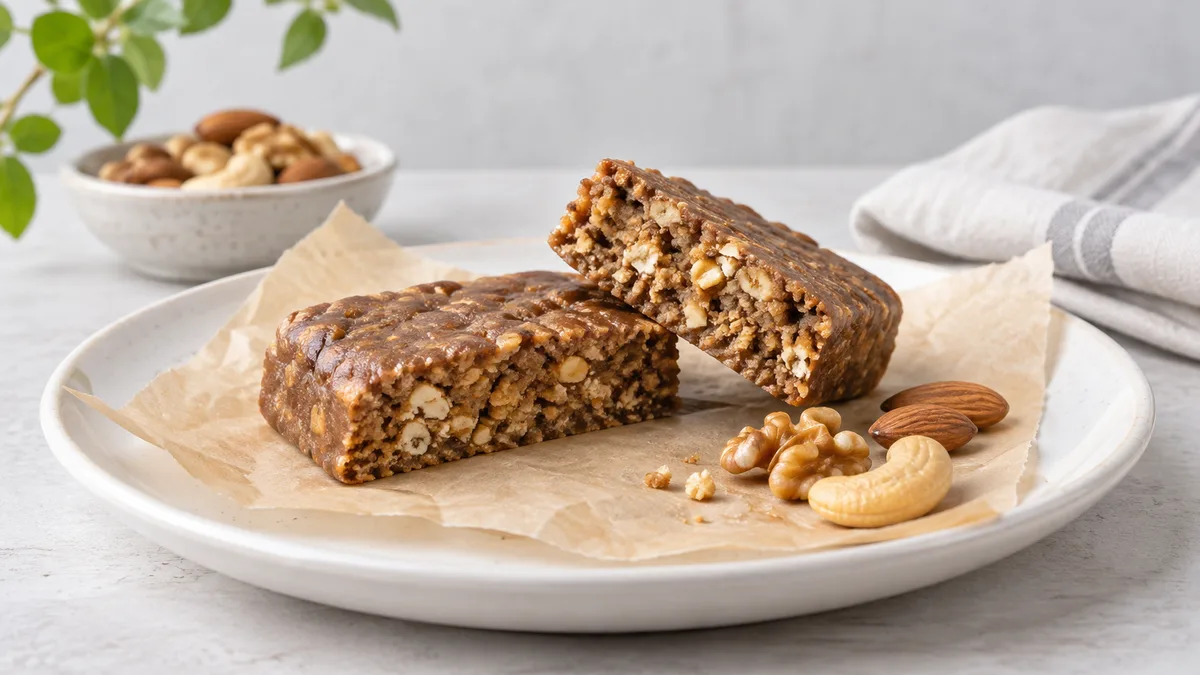
To choose a protein bar, compare protein and calories per pack, read the ingredients and check storage instructions: the word “protein” does not replace the label.
Two bars: protein per 100 g and per bar
These two VkusVill listings were viewed on 13 November 2026 without selecting a delivery address. Prices and recipes may change; the figures do not describe every bar.
| Product | Weight | Protein per 100 g | Protein per bar | Calories per bar | Price |
|---|---|---|---|---|---|
| Raspberry | 40 g | 25 g | 10 g | 144 | ₽125 |
| Coconut | 60 g | 33 g | 19.8 g | 185 | ₽187 |
Protein and calories per pack are calculated from the nutrition tables and rounded to tenths of a gram and whole calories. Prices are for the whole pack. The coconut listing's description and ingredient list name different sweeteners; check your pack.
Calculate your own serving
Multiply the per-100 g value by the bar's weight and divide by 100. At 25 g of protein per 100 g, a 40 g bar contains 10 g. Calories are calculated the same way: 361 × 40 ÷ 100 ≈ 144 kcal.
Divide the pack price by protein per bar and multiply by 10 to compare the cost of 10 g protein: in these examples it is ₽125 and about ₽94.4. That comparison does not measure taste or storage convenience; check the actual price and ingredients.
Read the ingredients
Bars use different proteins, including milk, whey, soy and pea. If you have an allergy, check the ingredients and manufacturer warnings on each pack: an app record may be incomplete or outdated.
“No added sugar” does not mean no carbohydrates or calories. Sweeteners and fibre vary, and larger amounts of some sugar alcohols may have a laxative effect. See the guide to polyols.
Convenience matters too
Check the expiration date, storage temperature and intact packaging when buying a snack for a trip. Compare a bar with yogurt, tvorog or a sandwich by protein and price, keeping their different storage requirements in mind. See the protein product overview.
Frequently asked questions
- How do I calculate protein per bar?
- Multiply protein per 100 g by the bar weight and divide by 100.
- Does a bar without added sugar have no calories?
- No. Check the nutrition table and ingredients on that pack.
- How do I compare prices?
- Divide the pack price by protein per pack and multiply by 10 to compare the cost of 10 g protein.
Read next
- Protein cookies, cottage cheese, and bars: how much protein is actually inside — The word "protein" on packaging is not regulated, but "source of protein" and "high protein" are, and they have specific requirements.
- Snack instead of a bar: what to bring so you don't have to buy — People buy a bar not because it's delicious, but because it's at the checkout and there's nothing in their bag.
- Maltitol, xylitol, erythritol: polyol sweeteners — Polyols sit between sugar and intense sweeteners: they are less sweet, contain calories, yet the packaging still says "sugar-free.
This article is for general information. It is not medical advice, a diagnosis, or a prescription for treatment or a diet, and it does not replace a consultation with your doctor. If you have a health condition, are pregnant, take medication, or follow a diet prescribed to you, decisions about food belong with your doctor.
Figures from regulations, guidelines and studies are given as they stood when this article was prepared and may since have changed; check them against the primary sources. This article is not advertising, an offer, or individual advice, and neither the author nor the site owner is responsible for decisions taken on the basis of it.