What to eat with a cold: broth, honey, vitamin C and appetite
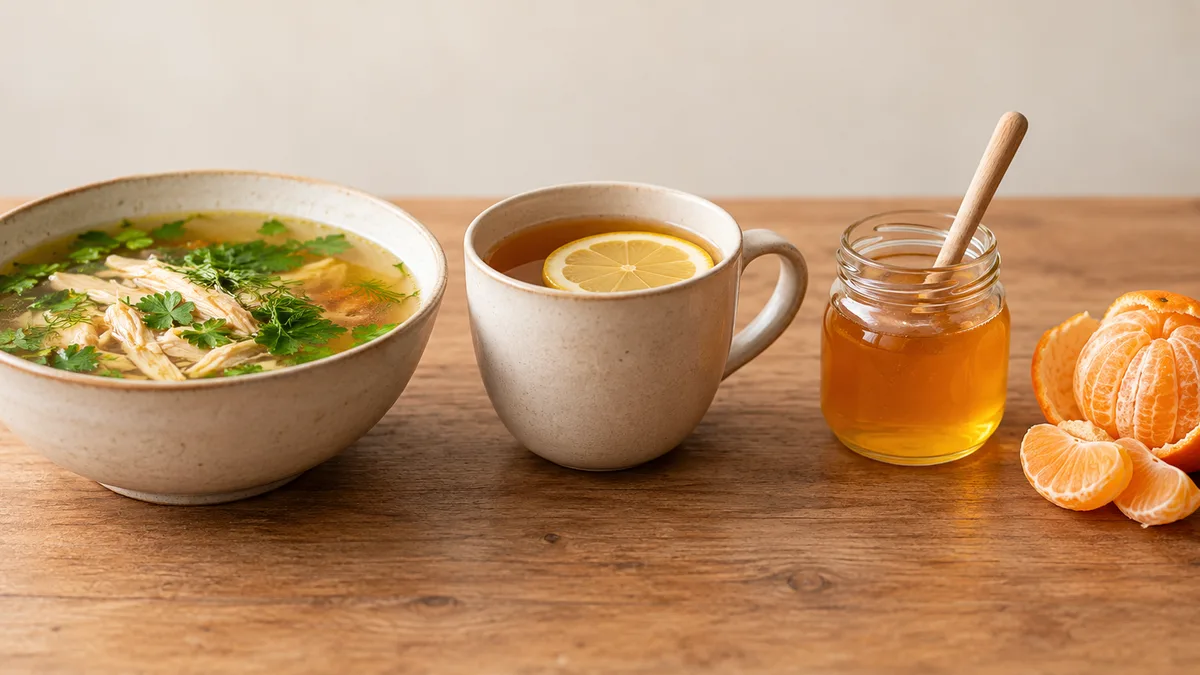
There is no special diet for a cold. The main thing is to drink enough and eat what you can manage. Of the home remedies, honey for cough in children over one year is the best studied; vitamin C slightly shortens colds only in people who were taking it regularly before falling ill; and for chicken broth there are mostly laboratory data.
What doctors advise
The NHS page on the common cold lists what you can do at home: get plenty of rest, drink lots of fluid such as water to avoid dehydration, and eat healthy food. It also notes that small children commonly lose their appetite for a few days. A cold usually gets better within one to two weeks.
These recommendations contain no special eating plan. If you do not feel like eating, start with drinks and light food you can manage: soup, porridge, yoghurt, fruit.
Hot drinks and chicken broth
On hot drinks there is a small experiment by Saketkhoo and colleagues (Chest, 1978). 15 healthy people drank hot water, hot chicken soup and cold water. Five minutes after hot water and soup, nasal mucus moved faster, slightly more so with the soup. After 30 minutes everything returned to baseline, while cold water slowed it down. Nasal airflow resistance did not change in any version. The study was done on healthy people without a cold.
The second well-known study is by Rennard and colleagues (Chest, 2000). Homemade chicken soup in a test tube suppressed the movement of neutrophils — cells involved in inflammation. The authors suggested that a mild anti-inflammatory effect might explain the soup's reputation, but they tested this in the laboratory, not in sick people. Shop-bought soups in the same experiment varied widely.
Hot broth is fluid, salt and a little protein, and for a short time it eases a blocked nose. It is not a cure for a cold. Calories in different soups are compared in the article on soup calories.
Honey for cough
Honey is the only home remedy with a systematic review. The 2018 Cochrane review pooled six randomised trials with 899 children aged one to 18 years with acute cough. Honey probably relieved cough better than no treatment, placebo and the antihistamine diphenhydramine, and about as well as dextromethorphan, an ingredient of cough syrups. Most children received honey for one night, which is a limitation of the review.
Honey must not be given to children under one year. It may contain spores of the bacterium that causes infant botulism. Both the Cochrane authors and the NHS warn about this.
For a sore throat the NHS suggests a warm drink of water, half a lemon and one to two teaspoons of honey. Honey is almost entirely sugar: according to USDA FoodData Central (SR Legacy 169640), 100 g of honey has 82 g of sugars and 304 kcal. How to measure and log honey accurately is covered in the article on honey and syrup in spoons.
Vitamin C: it helps, but not the way it is sold
It is one of the best-studied supplements. The Cochrane review by Hemilä and Chalker (2013) looked at doses of 0.2 g a day or more:
- regular intake did not reduce the number of colds in the general population — 29 comparisons, 11,306 participants;
- in marathon runners, skiers and soldiers on subarctic exercises the risk of a cold was halved — 5 trials, 598 people;
- in people taking vitamin C regularly, colds were 8% shorter in adults and 14% shorter in children;
- taking it only after the first symptoms gave no consistent effect.
By these data, starting vitamin C once you are already ill is of no use. The NHS says there is little evidence that vitamin C, echinacea or garlic prevent colds or help you get better more quickly.
Vitamin C is easy to get from food. A medium tangerine has about 23 mg, a clementine about 36 mg. More in the article on tangerine calories.
Zinc
In the 2024 Cochrane review, zinc taken for prevention made little or no difference: it did not reduce the number of colds and probably did not shorten the illness if a cold was caught. Zinc started during a cold may have shortened it by about two days, but confidence in this result is low. Side effects — altered taste and stomach upset — were more common with zinc. Zinc supplements are best discussed with a doctor or pharmacist.
Calorie counting while you are ill
While you are ill, counting can wait. A few days of different appetite barely affect the monthly total. If you do keep a diary, log the drinks too: tea with honey, fruit drinks, juice, sweet cold-remedy powders. They often contain more calories than the food you manage to eat.
When to see a doctor
The NHS advises seeing a GP if:
- you have had a high temperature for more than three days;
- your symptoms get worse;
- your temperature is very high, or you feel hot, cold or shivery;
- you feel short of breath or have chest pain;
- your cold does not get better after 10 days, or you have a cough for more than three weeks;
- you have a long-term condition — diabetes, a heart, lung or kidney condition — or a weakened immune system;
- you are worried about your child's symptoms.
Antibiotics do not treat colds: colds are caused by viruses. A pharmacist can advise on medicines for temperature and a blocked nose; not all of them suit children, pregnant women and people with long-term conditions.
Frequently asked questions
- What is best to eat with a cold?
- There is no special diet. The NHS advises rest, plenty of fluids and healthy food. If you have no appetite, start with drinks and light food: soup, porridge, yoghurt, fruit.
- Does chicken broth help with a cold?
- Hot broth briefly speeds up nasal mucus, and in a test tube it suppressed inflammatory cells. There are no studies in sick people proving a treatment effect.
- Does honey help a cough?
- In children aged one to 18, honey relieved cough better than no treatment and placebo, according to a 2018 Cochrane review. Honey must not be given to children under one year because of the risk of infant botulism.
- Should I take vitamin C when I have a cold?
- Started after the first symptoms, vitamin C gave no consistent effect in studies. Regular intake before illness shortened colds in adults by about 8% but did not reduce how many colds people caught.
- When does a cold need a doctor?
- If you have had a high temperature for more than three days, feel short of breath, have chest pain, your symptoms get worse or do not improve after 10 days, a cough lasts more than three weeks, or you have a long-term condition.
Read next
- Soup calories: what broth, sautéed vegetables, cream and bowl size change — A soup name does not have one calorie count.
- Honey, syrup and oil in a spoon: measure and count — Do not automatically record a tablespoon as 15 g of food.
- Multivitamins: what large trials have shown — Multivitamins have been tested in randomized trials involving tens of thousands of people—a rare case in nutrition where we have experiments with placebos rather than just observations.
This article is for general information. It is not medical advice, a diagnosis, or a prescription for treatment or a diet, and it does not replace a consultation with your doctor. If you have a health condition, are pregnant, take medication, or follow a diet prescribed to you, decisions about food belong with your doctor.
Figures from regulations, guidelines and studies are given as they stood when this article was prepared and may since have changed; check them against the primary sources. This article is not advertising, an offer, or individual advice, and neither the author nor the site owner is responsible for decisions taken on the basis of it.