Beef tallow instead of vegetable oil: what the trend claims and what the data show
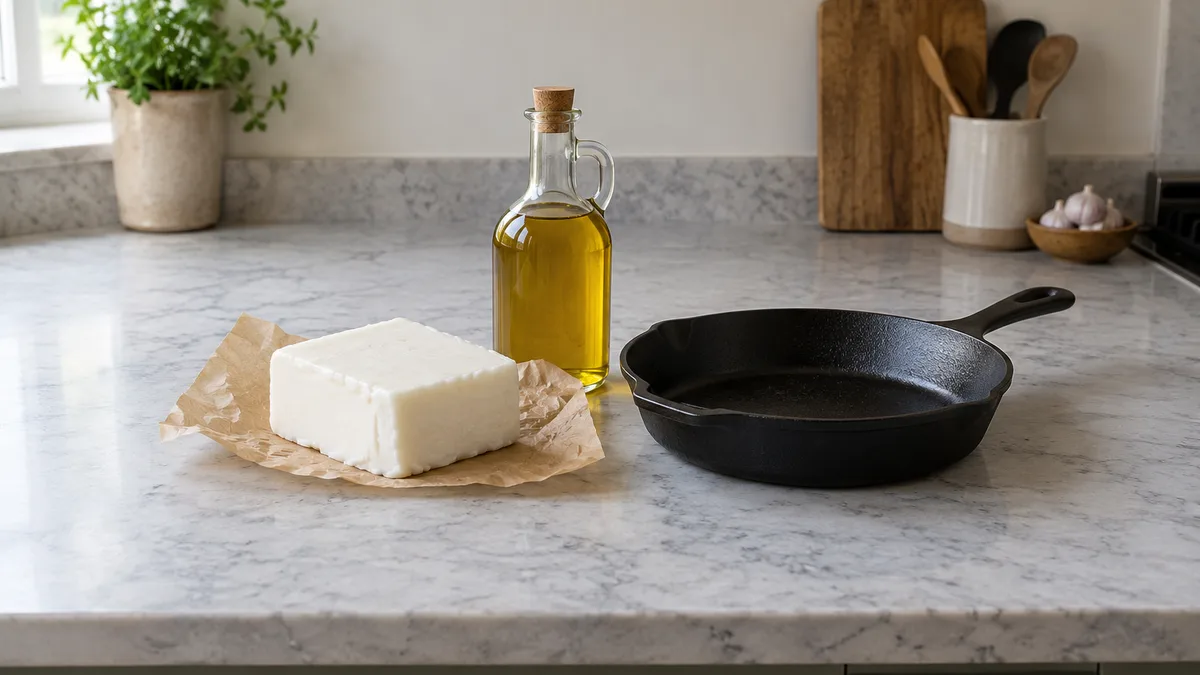
As of 5 October 2026, beef tallow remains one of the visible food trends: Whole Foods put the “tallow takeover” first in its 2026 forecast, and the new US Dietary Guidelines list it as an option for cooking. The data do not show that it is healthier than vegetable oils: it holds about 50 g of saturated fat per 100 g, and the guideline limit is unchanged at no more than 10% of calories.
Where the trend comes from
On 8 October 2025, Whole Foods Market published its food trend forecast for 2026. First on the list is “Tallow Takeover”: the company describes beef tallow as a “nourishing and nostalgic fat” and says restaurants have been trading traditional oils for tallow in fries and pastries.
In January 2026 the Dietary Guidelines for Americans 2025–2030 came out. In the fats section they say to prioritize oils with essential fatty acids, such as olive oil, and that “other options can include butter or beef tallow”. The same passage keeps the old ceiling: saturated fat should not exceed 10% of total daily calories. The Harvard T.H. Chan School of Public Health pointed to a contradiction: the examples of “healthy fats” mix foods high and low in saturated fat without saying which to choose more often.
What is in it
USDA FoodData Central values per 100 g:
| Fat | Energy, kcal | Saturated fat, g |
|---|---|---|
| Beef tallow | 902 | 49.8 |
| Butter, unsalted | 717 | 50.5 |
| Lard | 902 | 39.2 |
| Olive oil | 884 | 13.8 |
| Sunflower oil (linoleic, about 65%) | 884 | 10.3 |
| Canola oil | 884 | 7.4 |
Pure fats are almost equal in energy: 884–902 kcal per 100 g. Choosing a fat for the pan does not save calories. The difference is composition.
In the USDA entry a tablespoon of beef tallow weighs 12.8 g. That is about 115 kcal and 6.4 g of saturated fat. A tablespoon of olive oil (13.5 g) gives about 119 kcal and 1.9 g.
What the limits are
In its 2023 update, the WHO advises that saturated fat provide no more than 10% of energy, replaced with unsaturated fat. The American Heart Association goes further: under 6% of calories, about 13 g on 2,000 kcal.
At 2,000 kcal, ten percent is 200 kcal, about 22 g of saturated fat. One tablespoon of tallow uses roughly 29% of that, and about half of the cardiologists' limit. Milk, cheese, meat and eggs in the same day add their share. So the question is not a “dangerous” spoonful but how much saturated fat adds up across the day.
What trials show
The review “A Clinician’s Guide for Trending Cardiovascular Nutritional Controversies in 2026” in JACC: Advances (February 2026) takes up exactly this dispute. It cites trials in which LDL cholesterol rose about 9.3% after a meal containing beef tallow; in a crossover study of 14 participants with raised LDL, the mean was 140 mg/dL on beef tallow and 124 mg/dL on corn oil. The authors conclude that no compelling data support beef tallow as healthier than seed oils.
Broader work on saturated fat points the same way:
- A 2020 Cochrane review of 15 trials (56,675 participants): cutting saturated fat for at least two years reduced combined cardiovascular events by 17% (risk ratio 0.83; 95% CI 0.70–0.98). The benefit came from replacing it with polyunsaturated fat or starchy foods.
- The American Heart Association’s 2017 advisory: in randomized trials, replacing saturated fat with polyunsaturated vegetable oil cut cardiovascular events by about 30%. It names beef tallow among the main sources of saturated fat.
These are conclusions about saturated fat in general, not a trial of tallow against oil in a frying pan.
What about “inflammatory seed oils”
The trend usually brings a second claim: seed oils are inflammatory. The same JACC: Advances review says that in human trials there is no sign of pro-inflammatory effects from these oils and documents benefits for lipids and glucose. It also cautions that oils should not be overheated or reused, as often happens in commercial kitchens. More in our article on seed oils.
What to do in the kitchen
Frying in tallow now and then is not a misstep, and no food is off limits here. The test is simple: how much saturated fat adds up in a day, and what it replaces. If you use the fat for flavor, a spoonful in a dish breaks nothing; if it has pushed olive or canola oil out of every meal, saturated fat will rise. People with raised cholesterol, and anyone taking cholesterol-lowering medication, should settle the choice of fat with their doctor.
For calorie counting something else matters more: fat in the pan is 115 kcal a tablespoon, and it is easy to leave unlogged. Weigh the fat before frying and again after, and log the difference as oil in the dish. More in our articles on cooking oil and healthy fats.
Frequently asked questions
- Is beef tallow healthier than vegetable oil?
- There is no data that it is. A 2026 JACC: Advances review reports that beef tallow raises LDL cholesterol more than oils higher in unsaturated fat and finds no compelling evidence for an advantage.
- How much saturated fat is in beef tallow?
- By the USDA entry, 49.8 g per 100 g, about 6.4 g in a tablespoon.
- Do the new US guidelines approve beef tallow?
- They name it as one option for cooking, but keep the 10% of calories limit on saturated fat and put oils with essential fatty acids, such as olive oil, first.
- Does beef tallow have fewer calories than oil?
- No. Beef tallow has 902 kcal per 100 g; olive and sunflower oils have 884 kcal.
Read next
- Which fats are healthy and which are not — Dividing fats into "healthy" and "unhealthy" is convenient for a headline but almost useless at the grocery shelf: a single product usually contains all types at once, and the difference between them is not about general health benefits, but about specific effects.
- Cooking oil: smoke point and what matters more — The smoke point is usually cited as the main criterion for choosing a cooking oil.
- Seed oils: are sunflower, rapeseed, and soybean oils harmful? — For the past couple of years, sunflower, rapeseed, and soybean oils have been labeled as sources of inflammation and the primary cause of everything.
- How much fat do you need per day and what happens if you don't get enough — People usually only know the upper limit for fat.
This article is for general information. It is not medical advice, a diagnosis, or a prescription for treatment or a diet, and it does not replace a consultation with your doctor. If you have a health condition, are pregnant, take medication, or follow a diet prescribed to you, decisions about food belong with your doctor.
Figures from regulations, guidelines and studies are given as they stood when this article was prepared and may since have changed; check them against the primary sources. This article is not advertising, an offer, or individual advice, and neither the author nor the site owner is responsible for decisions taken on the basis of it.