Nutrition during pregnancy: how many calories to add, what to avoid, and what to check with your doctor
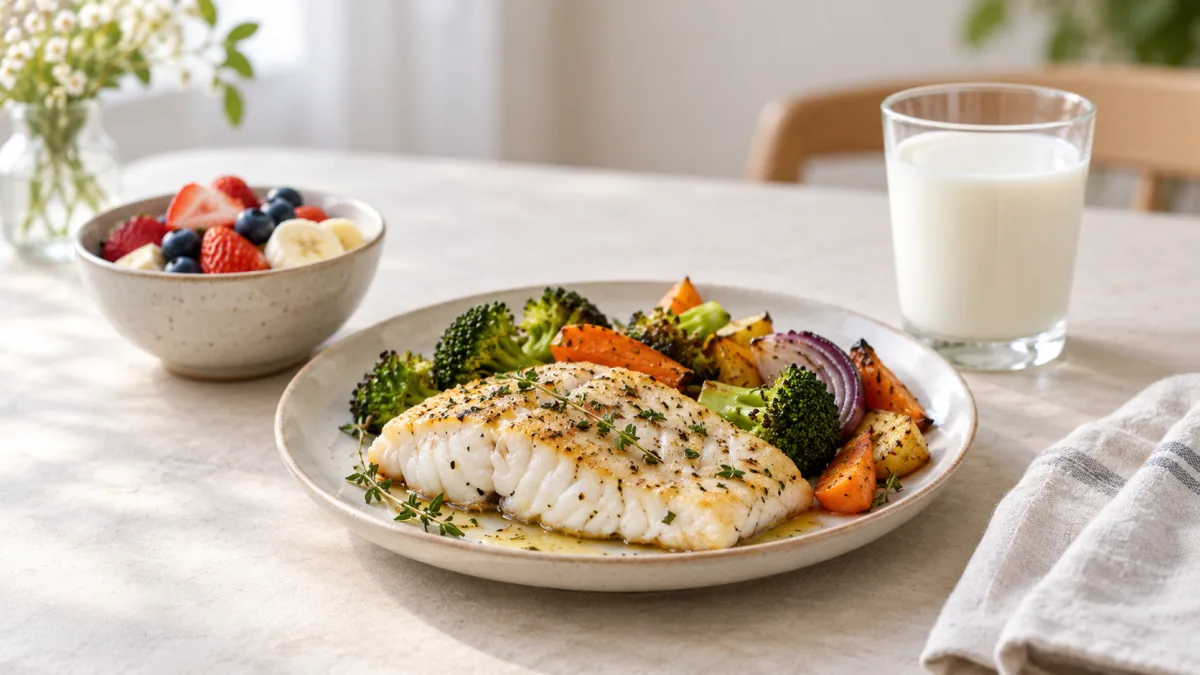
You don’t need to eat for two: in the first trimester, extra calories are usually unnecessary; in the second, ACOG recommends about 340 kcal per day; in the third, about 450. Alcohol is completely excluded, while caffeine, high-mercury fish, and certain cheeses and meats are limited. Weight gain and supplements are determined by your doctor.
How many extra calories to add
The American College of Obstetricians and Gynecologists (ACOG) provides figures for singleton pregnancies in its patient FAQ “Nutrition During Pregnancy,” citing the 2009 report from the U.S. Institute of Medicine (Institute of Medicine and National Research Council, “Weight Gain During Pregnancy: Reexamining the Guidelines”).
| Period | Additional daily calories according to ACOG |
|---|---|
| First trimester | Usually not required |
| Second trimester | 340 kcal |
| Third trimester | about 450 kcal |
| Twin pregnancy, entire term | about 600 kcal |
ACOG compares 340 kcal to a glass of skim milk and half a sandwich. This is an addition to your usual diet, not a reason to double portion sizes: the same FAQ explicitly states that eating twice as much as usual is dangerous.
Russia’s Ministry of Health clinical guidelines “Normal Pregnancy” (2023, approved February 2024) do not specify calorie numbers. Instead, they state that the diet should provide sufficient calories, adequate protein, vitamins, and minerals, and include a variety of foods: vegetables, meat, fish, legumes, nuts, fruits, and whole grains. If you need to estimate what’s on your plate, reading nutrition labels (KBZHU) can help.
The figures above apply to uncomplicated pregnancies. In cases of diabetes, gestational diabetes, or pre-pregnancy underweight or overweight, a physician determines appropriate caloric intake; for guidance on tracking food with gestational diabetes, see our separate article: gestational diabetes food diary.
Alcohol: complete avoidance, no exceptions
CDC: no safe amount of alcohol during pregnancy is known, nor is there a safe time to drink; all types—including wine and beer—are harmful. Alcohol is linked to increased risks of miscarriage, preterm birth, stillbirth, and sudden infant death syndrome (SIDS), and causes fetal alcohol spectrum disorders (FASD). Stopping at any point is beneficial: according to the CDC, cessation improves the baby’s condition even late in pregnancy.
Russian guidelines state the same: advise complete abstinence from alcohol because adverse effects occur regardless of dose. For information on beverage calories, see our article on calories in alcohol, but during pregnancy, the issue isn’t about calories.
What to limit and why
| What | Why | What sources say |
|---|---|---|
| Unpasteurized milk, soft cheeses, pâtés | Listeriosis | Russia’s Ministry of Health: avoid unpasteurized milk, ripened soft cheeses, and pâté |
| Deli meats, unheated sausages, ready-to-eat salads, refrigerated smoked seafood, raw sprouts | Listeria | CDC: do not consume unless heated until steaming hot (165 °F, about 74 °C) or substitute with safer options |
| Undercooked meat and eggs | Salmonellosis | Russia’s Ministry of Health: avoid inadequately cooked meat and eggs |
| Liver and liver-based products | Excess vitamin A | Russia’s Ministry of Health: reduce consumption |
Listeriosis is rare, but pregnant individuals are at higher risk. Russia’s Ministry of Health reports a listeriosis incidence of 12 cases per 100,000 among pregnant people versus 0.7 per 100,000 in the general population. The CDC specifically notes that hard cheeses made from pasteurized milk and cottage cheese from pasteurized milk are safe, while cheeses like queso fresco are safe only after heating until steaming. A full list appears on the CDC’s listeriosis prevention page.
Caffeine: two thresholds in guidelines
ACOG: moderate caffeine intake—less than 200 mg per day—does not appear to significantly increase the risk of miscarriage or preterm birth; effects on fetal growth restriction remain unclear (Committee Opinion No. 462, 2010). WHO, in its 2016 antenatal care recommendations (A.10), advises reducing intake for those consuming high amounts (>300 mg/day) to lower risks of pregnancy loss and low birth weight. Russian guidelines cite a limit of less than 300 mg per day.
In practice, it’s safer to follow the lower threshold and confirm the exact amount with your doctor. Caffeine occurs not only in coffee but also in tea, chocolate, energy drinks, and soda. For amounts in various beverages, see our article on safe coffee consumption.
Fish: beneficial, but not all types
FDA and EPA recommend fish during pregnancy for its omega-3 fats, iron, iodine, and choline. For pregnant and breastfeeding individuals, the advice is: 2–3 weekly servings from the “Best Choices” list or one serving from “Good Choices,” with a serving size of about 110 g (4 ounces). The “Choices to Avoid” list—highest in mercury—included king mackerel, marlin, orange roughy, shark, swordfish, bigeye tuna, and Gulf of Mexico tilefish.
Russian guidelines identify tuna, shark, swordfish, and mackerel as high in methylmercury. If fish is caught locally by friends or family, FDA recommends checking local mercury advisories; if none exist, eat only one serving that week and no other fish on those days. Canned fish options are detailed in our article on canned fish.
Folic acid and iodine: determined by your doctor
Russia’s Ministry of Health clinical guidelines include folic acid and potassium iodide supplementation when planning pregnancy and during pregnancy. Dosage is based on individual risk factors and prescribed by a physician. Self-adjusting doses is prohibited: ACOG specifically warns that doubling or tripling certain vitamin components—such as vitamin A—can cause birth defects.
CDC explains why folic acid is needed beforehand: neural tube defects develop in the first weeks, often before a woman knows she’s pregnant. For iodine requirements and iodized salt composition, see our article on iodine and salt; for differences between dietary supplements and medications, see our piece on supplements vs. medicines.
Weight gain: range depends on pre-pregnancy BMI
The 2009 NASEM (Institute of Medicine) guidelines, reproduced in a PMC review, and Russia’s Ministry of Health clinical guidelines provide identical ranges for singleton pregnancies:
| Pre-pregnancy BMI | Total weight gain, kg |
|---|---|
| Below 18.5 | 12.5–18 |
| 18.5–24.9 | 11.5–16 |
| 25.0–29.9 | 7–11.5 |
| 30.0 and above | 5–9 |
During the first trimester, per these same guidelines, weight gain should not exceed 0.5–2 kg. Russia’s Ministry of Health clarifies that part of this increase is fluid retention—typical pregnancy-related edema. Both excessive and insufficient weight gain are linked to complications, so weight is measured at every visit.
This table describes population averages, not individual cases. The NASEM report states that ranges should be applied alongside clinical assessment and discussion of diet and physical activity with a physician. This article does not address weight-loss diets during pregnancy: weight management decisions are made with a doctor, not from a table.
When not to wait for a scheduled appointment
Nausea is common in pregnancy: Russia’s Ministry of Health cites data showing it affects one in three women, and with normal progression, vomiting occurs no more than two or three times daily without worsening overall health. The patient FAQ in the same guidelines lists signs requiring immediate medical attention:
- vomiting more than 5 times per day;
- weight loss exceeding 3 kg over 1–1.5 weeks;
- elevated blood pressure;
- blurred or flashing vision;
- severe headache;
- abdominal pain;
- swelling of face, hands, or legs;
- fever above 37.5°C.
Individuals with diabetes, high blood pressure, food allergies, or persistent nausea should have their diet tailored by a physician. How to distinguish allergy from intolerance is explained in our article on allergy vs. intolerance.
Frequently asked questions
- How many extra calories does a pregnant person need?
- ACOG states that for singleton pregnancy, additional calories are generally not required in the first trimester, about 340 kcal per day in the second trimester, and about 450 kcal in the third. Russian Ministry of Health clinical guidelines do not specify exact numbers, only noting that diet should provide sufficient caloric intake. Individual needs are determined by a physician.
- Is any amount of alcohol safe during pregnancy?
- No. The CDC states that no safe amount or safe timing is known, and Russian clinical guidelines advise abstaining from alcohol regardless of dose. If alcohol was consumed before pregnancy was known, it should be stopped immediately and discussed with a physician.
- How much coffee can a pregnant person have?
- ACOG: moderate intake—less than 200 mg of caffeine per day—does not appear to cause miscarriage or preterm birth. WHO recommends reducing caffeine if intake exceeds 300 mg per day; Russian guidelines cite a threshold of less than 300 mg. Caffeine is also found in tea, chocolate, and energy drinks. Acceptable amounts should be confirmed with a physician.
- Which fish should be avoided during pregnancy?
- The FDA classifies king mackerel, marlin, orange roughy, shark, swordfish, bigeye tuna, and Gulf of Mexico tilefish as fish with the highest mercury levels. Russian guidelines list tuna, shark, swordfish, and mackerel. The FDA recommends consuming all other fish in 2–3 servings per week.
- How much weight can you gain during pregnancy?
- According to the 2009 NASEM guidelines and the table in Russian clinical recommendations, the range depends on pre-pregnancy BMI: from 12.5–18 kg for BMI under 18.5 to 5–9 kg for BMI of 30 or higher. This is a guideline for singleton pregnancy; the specific target is determined by a physician.
Read next
- Coffee: how much you can drink and what adds calories — There are three questions about coffee, and they are different: how much caffeine is safe, does coffee harm your health, and why a latte with syrup costs as much as a full meal.
- Iodine: how much is needed and why it is added to salt — Iodine is necessary for the thyroid gland to synthesize hormones, and the daily requirement is measured in micrograms—but it is not always easy to obtain from a standard diet.
- Calories in alcohol: how many calories are in beer, wine, and spirits — Alcohol is the only category that almost everyone skips when counting calories.
- Gestational diabetes: food diary and carbohydrate counting — A diary for gestational diabetes is not about self-discipline or “try writing things down.
This article is for general information. It is not medical advice, a diagnosis, or a prescription for treatment or a diet, and it does not replace a consultation with your doctor. If you have a health condition, are pregnant, take medication, or follow a diet prescribed to you, decisions about food belong with your doctor.
Figures from regulations, guidelines and studies are given as they stood when this article was prepared and may since have changed; check them against the primary sources. This article is not advertising, an offer, or individual advice, and neither the author nor the site owner is responsible for decisions taken on the basis of it.