Mitochondria: what lies behind the term "cellular energy" in supplement marketing
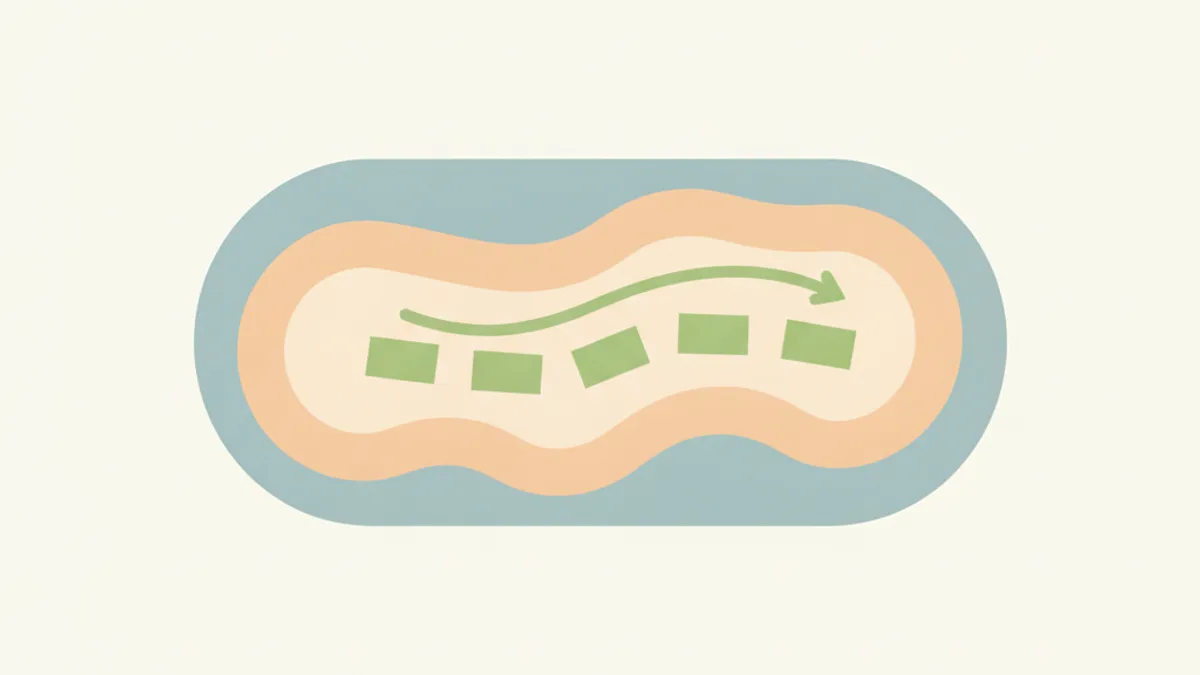
Mitochondria are organelles where oxygen and nutrients are converted into ATP. The term is convenient: it explains fatigue, justifies a supplement, and sounds scientific. It cannot be verified in advertising because the "state of mitochondria" in a living person cannot be measured by anything currently on the market.
What they do
Breakdown products of carbohydrates, fats, and some amino acids converge in the mitochondria. The Krebs cycle delivers electrons to the respiratory chain, where they pass through protein complexes, and ATP is synthesized based on this potential difference. Reactive oxygen species are formed as a byproduct—these are linked to both damage and signaling functions.
Mitochondria have their own DNA, inherited maternally, and they constantly divide, fuse, and are recycled. A review of the role of PGC-1α—the main regulator of mitochondrial biogenesis—examines how this process is controlled in Applied Physiology, Nutrition, and Metabolism.
What is known about the stimulus
The primary studied stimulus for increasing the mitochondrial capacity of muscle is exercise. The mechanism is described: muscle contraction increases the AMP to ATP ratio and calcium levels, activating AMPK and calcium-dependent kinases, followed by PGC-1α, and then the synthesis of mitochondrial proteins.
It is important to note here that the stimulus is work, not a substance. A separate study showed that PGC-1α regulates mitochondrial properties more broadly than just their quantity—American Journal of Physiology. For information on which intensity distribution matters and which does not, see the article on zone 2.
Coenzyme Q10 and MitoQ
Coenzyme Q10 is the best-selling "mitochondrial" product. A systematic review with meta-analysis showed that supplementation reliably increases its concentration in the blood, but the impact on athletic performance is limited and inconsistent. Review in British Journal of Nutrition.
A separate review with a GRADE assessment analyzed markers of muscle damage, performance, and oxidative stress—Clinical Nutrition ESPEN. Another one—on damage markers in athletes—Complementary Therapies in Clinical Practice.
MitoQ is an antioxidant chemically modified to accumulate inside mitochondria. A systematic review with a meta-analysis of eight studies on 188 participants showed an interesting divergence: MitoQ did indeed reduce oxidative damage after exercise (standardized effect −1.33), but it did not improve performance with either single or long-term intake (−0.50 with a confidence interval including zero). Review in Sports Medicine Open.
This is the essence of the problem in one study: the biochemical marker shifted significantly, but the reason the supplement is purchased—did not.
Why an antioxidant might interfere
A separate twist on the topic. Reactive oxygen species that form during exercise also act as a signal that triggers adaptation. Hence the discussed hypothesis that large doses of antioxidants can blunt the training response.
Data on this issue are heterogeneous, and nothing definitive can be stated here. But the very possibility destroys the "more antioxidants is better" logic upon which a significant portion of sales is built. For more on this in a different phrasing, see the article on antioxidants.
What cannot be measured
"Mitochondrial function" in research is measured by muscle biopsy with high-resolution respirometry, isotopic methods, or magnetic resonance spectroscopy. None of these methods are sold as a service to "check mitochondria," and no blood test replaces them.
The consequence: the claim that "your mitochondria are suffering" in marketing is not based on any measurement. It is the same tactic as with "slags" (toxins), analyzed in the article on detox and toxins.
Where the word is used correctly
Mitochondrial diseases exist—these are severe hereditary conditions with mutations in mitochondrial or nuclear DNA; they are diagnosed genetically and in specialized centers. They have nothing to do with fatigue after a work week, and borrowing their name to describe ordinary tiredness is a marketing tactic, not a medical term.
Frequently asked questions
- What do mitochondria do?
- Inside them, breakdown products of carbohydrates, fats, and some amino acids go through the Krebs cycle and the respiratory chain, and ATP is synthesized based on the potential difference. Reactive oxygen species are formed as a byproduct, which act as both a damaging factor and a signal.
- Does coenzyme Q10 help with performance?
- A systematic review showed that supplementation reliably increases blood coenzyme Q10 levels, but the effect on athletic performance is limited and inconsistent. For MitoQ, a meta-analysis of eight studies involving 188 participants recorded a reduction in oxidative damage, but no improvement in physical performance.
- What strengthens mitochondria most reliably?
- The most studied stimulus for increasing mitochondrial capacity in muscle is physical exercise. Muscle contraction changes the AMP to ATP ratio and calcium levels, which triggers the synthesis of mitochondrial proteins via AMPK and PGC-1α.
- Can antioxidants interfere with training?
- This hypothesis is being discussed: reactive oxygen species generated during exercise serve as a signal for adaptation, and high doses of antioxidants may blunt this signal. The data are inconsistent, and there is no definitive answer.
- Is it possible to check the state of one's mitochondria?
- In research, this is done via muscle biopsy with respirometry, isotopic methods, or magnetic resonance spectroscopy. There is no commercial test that replaces these.
Read next
- Sports supplements: creatine, glutamine, lecithin — The sports nutrition shelf is arranged so that expensive and useless products stand next to cheap and effective ones.
- Zone 2: where the trend for slow cardio came from and what comparisons have shown — Zone 2 is an intensity at which you can speak in full sentences and blood lactate levels barely rise.
- Longevity supplements: NMN, resveratrol and what human trials measured — This shelf has the best story of any: a molecule, ageing cells, mice that lived longer.
- Red light and photobiomodulation: where the trials are, and where it's just a lamp — Photobiomodulation is the application of red and near-infrared light.
This article is for general information. It is not medical advice, a diagnosis, or a prescription for treatment or a diet, and it does not replace a consultation with your doctor. If you have a health condition, are pregnant, take medication, or follow a diet prescribed to you, decisions about food belong with your doctor.
Figures from regulations, guidelines and studies are given as they stood when this article was prepared and may since have changed; check them against the primary sources. This article is not advertising, an offer, or individual advice, and neither the author nor the site owner is responsible for decisions taken on the basis of it.