Cortisol cocktail: what is in it, and can it lower cortisol?
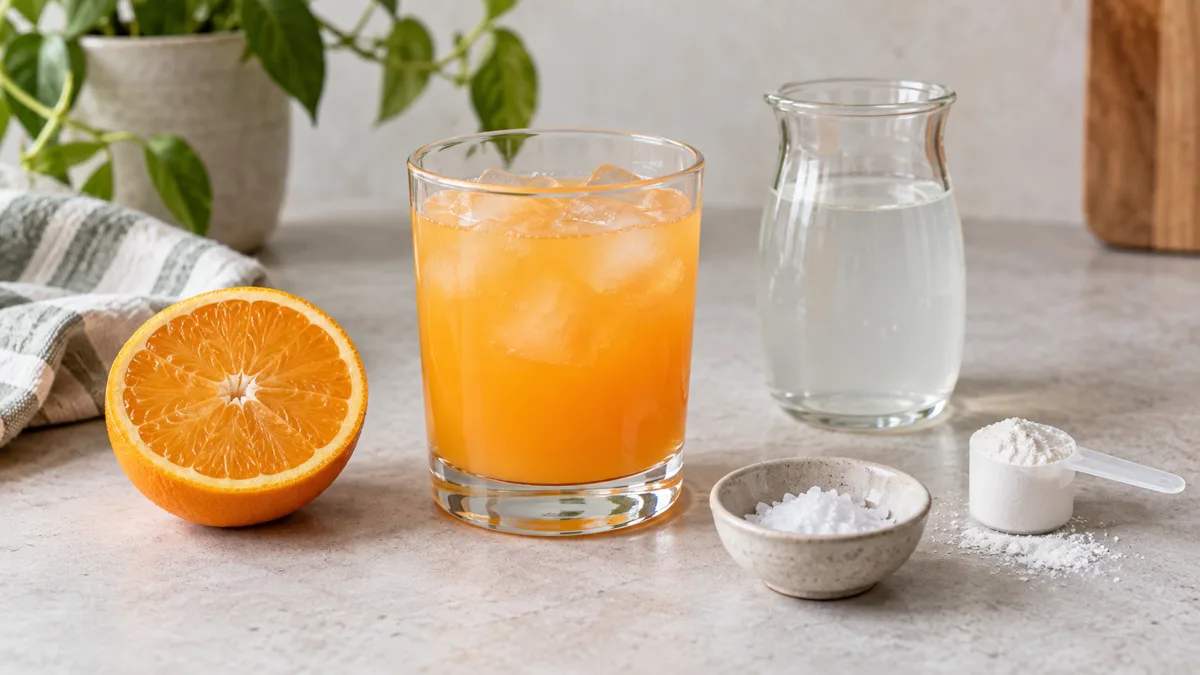
There is no evidence that a “cortisol cocktail” lowers cortisol or treats the effects of stress. It has no standard recipe: versions commonly mix juice, coconut water, salt, and sometimes magnesium. The result is a drink containing carbohydrate and electrolytes, not a treatment for a hormone disorder.
What is a cortisol cocktail?
Different recipes circulate under the same name. They may contain orange juice, coconut water, table or sea salt, and magnesium powder or a capsule. Some add lemon, sparkling water, or a sweetener. There is no shared dose, nutritional profile, or predictable effect.
The name is tied to the idea of “adrenal fatigue”: the claim that prolonged stress exhausts the glands and that vitamin C and electrolytes restore them. The Endocrine Society says there is no scientific proof that this condition exists, and tests sold for it are not supported by good studies. Adrenal insufficiency is a different, genuine disease that requires diagnosis and treatment by a clinician.
For cortisol’s relationship with weight, Cushing syndrome, and testing, see our separate guide to cortisol and weight. A drink cannot replace assessment for muscle weakness, unexplained weight change, low blood pressure, fainting, or persistent illness.
The drink itself has not been tested
As of 25 September 2026, a PubMed search for the exact term “cortisol cocktail” finds no clinical trial of this mixture. Studies of individual substances do not establish that the recipe works: the dose, formulation, participants, and outcome are different.
| Ingredient | What was studied | Why it does not prove the drink works |
|---|---|---|
| Vitamin C | In a 14-day randomised trial, 120 healthy adults were assigned to 3,000 mg of ascorbic acid per day or placebo; 108 remained in the analysis after exclusions. After a laboratory stress test, cortisol returned to baseline faster in the vitamin C group, but the overall cortisol response was not smaller. | The trial tested a high-dose preparation, not juice or a cocktail. |
| Magnesium | A post-hoc analysis of a randomised trial compared 350 mg of magnesium per day with placebo for 24 weeks in 49 adults with overweight. Urinary cortisol excretion was 32 nmol per 24 hours lower than with placebo. | This was a small post-hoc analysis of a supplement. It did not test the drink, how people felt after it, or treatment for stress. |
| Salt | In a crossover intervention involving 630 adults, a diet providing 4,600 mg sodium per day produced higher 24-hour urinary free cortisol than a diet providing 230 mg. | Adding salt did not demonstrate lower cortisol. A change in a urine measure is not a measure of stress relief. |
| Coconut water | It provides fluid, carbohydrate, and potassium; the exact amounts are on the product’s label. | The presence of electrolytes does not establish an effect on cortisol. |
A sweet drink enjoyed in a quiet moment may taste good and quench thirst. That experience cannot reveal a hormone level or the effect of each ingredient.
How to count sugar and calories
Use the values on the juice and coconut-water labels and scale them to the amount poured. If a juice lists 45 kcal per 100 ml and a coconut water lists 20 kcal per 100 ml, combining 100 ml of each gives 65 kcal before other additions. Use the same calculation for sugars and total carbohydrate.
“No added sugar” does not mean that juice contains no sugars. The World Health Organization includes sugars naturally present in fruit juice in its definition of free sugars. Juice is not therefore a forbidden food; it is simply a source of carbohydrate to account for. Our article on fruit and blood sugar explains how whole fruit differs from juice.
With diabetes, serving size and total carbohydrate are particularly relevant. The CDC notes that fruit juice is a source of simple carbohydrate that can raise blood glucose quickly and advises choosing whole fruit more often. Agree a personal way to count the drink with the clinician or dietitian managing your diabetes.
Count salt, potassium, and magnesium separately
Salt. A pinch is not a reliable unit: crystal sizes and the amount picked up vary. If sodium matters, weigh the salt or use a measuring spoon and the package information. For context, the FDA Daily Value for sodium is 2,300 mg. This is a reference value for US food labels, not an individual prescription.
Potassium. Both orange juice and coconut water provide it; the amount depends on the products and serving. Healthy kidneys usually remove excess dietary potassium. It can accumulate with chronic kidney disease or some medications: the NIH specifically lists ACE inhibitors, angiotensin receptor blockers, and potassium-sparing diuretics.
Magnesium. On a supplement label, look for the amount of elemental magnesium rather than the weight of the whole compound. According to the NIH, the adult upper limit for magnesium from supplements and medicines is 350 mg per day; magnesium naturally present in food is not included in that limit. High supplemental doses can cause diarrhoea, nausea, and abdominal cramping. Magnesium also interacts with some antibiotics and bisphosphonates.
Who should not improvise this drink?
- People with kidney disease. Fluid, potassium, and sodium targets depend on kidney function and blood results. The NIDDK advises setting them with a clinician or renal dietitian and lists orange juice among higher-potassium juices.
- People with heart failure. A care team may limit salt and total fluid intake, as the US National Heart, Lung, and Blood Institute explains. A glass of the cocktail counts toward that fluid intake.
- People with diabetes. Juice and sweetened coconut water provide carbohydrate. Count them by label and volume, not by the drink’s wellness name.
- People taking regular medication. Potassium can conflict with some treatments, and magnesium can alter absorption of certain medicines. Show the ingredients and supplement dose to a doctor or pharmacist before trying it.
Without these restrictions, the drink can be treated like any other food: choose it for taste, count the serving, and do not expect it to correct a hormone level. Water also treats thirst; added salt and a mineral supplement are not automatically necessary.
Frequently asked questions
- Does a cortisol cocktail lower cortisol?
- The cocktail itself has not been tested in a clinical trial. Studies of high-dose vitamin C and magnesium do not establish that a mixture of juice, coconut water, and salt works.
- What is in a cortisol cocktail?
- There is no standard recipe. Common versions mix orange juice, coconut water, and salt; some add magnesium, lemon, sparkling water, or a sweetener.
- Can you drink a cortisol cocktail with diabetes?
- Juice and some coconut waters contain carbohydrate and can raise blood glucose. Count the serving from the label and agree an individual approach with the clinician or dietitian managing your diabetes.
- Who should be cautious with a cortisol cocktail?
- Discuss the ingredients first if you have kidney disease, heart failure, or diabetes, or take medicines that affect potassium or interact with magnesium.
Read next
- Cortisol and weight: what it really does — Cortisol is blamed for stubborn belly fat, a puffy face, and the inability to lose weight, and solutions are sold in a bottle.
- Magnesium: why blood tests reveal little and what the trials have shown — Magnesium is a substance with a reputation as a universal answer: from calf cramps to anxiety and poor sleep.
- Low-sodium salt: what replaces sodium, and who should be careful? — Low-sodium salt usually replaces some sodium chloride with potassium chloride.
This article is for general information. It is not medical advice, a diagnosis, or a prescription for treatment or a diet, and it does not replace a consultation with your doctor. If you have a health condition, are pregnant, take medication, or follow a diet prescribed to you, decisions about food belong with your doctor.
Figures from regulations, guidelines and studies are given as they stood when this article was prepared and may since have changed; check them against the primary sources. This article is not advertising, an offer, or individual advice, and neither the author nor the site owner is responsible for decisions taken on the basis of it.