Ozempic, Mounjaro and their Russian versions: how they differ
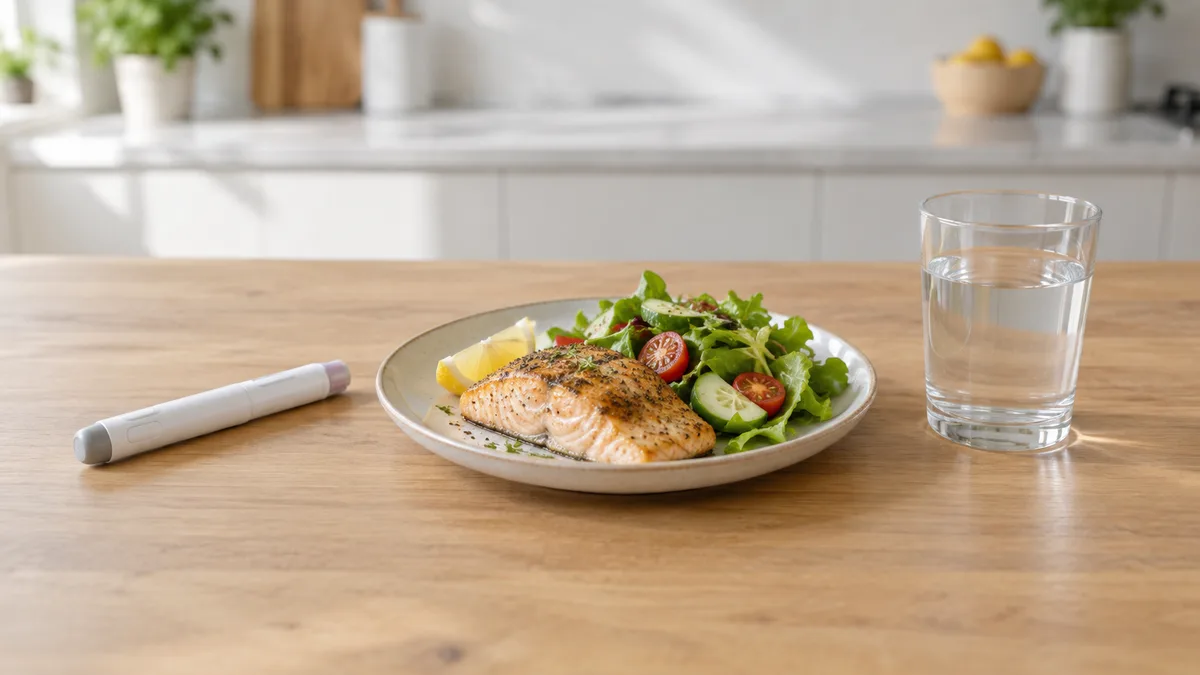
Behind Ozempic, Mounjaro and the Russian-made drugs there are only two active substances: semaglutide and tirzepatide. The name on the box tells you the manufacturer, the pen and the indications in the label; the substance tells you how the drug works. Below is what is registered in Russia as of September 2026 and what the trials found. The choice of drug, the dose and whether treatment is needed at all are for a doctor to decide: these are prescription medicines.
Two substances behind a dozen names
Semaglutide is an analogue of GLP-1, a gut hormone released after a meal. It acts on the brain centres that regulate hunger and fullness. Tirzepatide is more complex: it acts on the receptors of two hormones at once, GLP-1 and GIP. Both are injected under the skin once a week.
| Substance | Original | Russian-made drugs |
|---|---|---|
| Semaglutide | Ozempic — for type 2 diabetes, registered in Russia. Wegovy — for weight loss, not registered in Russia | Semavic, doses 0.25–1 mg, and Semavic Next for weight management (Geropharm); Queensenta for type 2 diabetes, Velgia for weight management, Semaltara tablets for type 2 diabetes (Promomed) |
| Tirzepatide | Mounjaro — not registered in Russia | Tirzetta for type 2 diabetes and obesity (Promomed), Sejaro for obesity (Geropharm) |
The table is not exhaustive: Russia has more semaglutide products, and the list keeps growing. The full list with registration numbers is kept in the State Register of Medicines of the Russian Ministry of Health.
Sources by row: the labels of Ozempic and Queensenta in the Vidal reference, the manufacturers' pages for Semavic Next and Velgia, and the registration announcements for Tirzetta (January 2025), Sejaro (April 2025) and Semaltara (November 2025). All pages are in Russian.
Why one substance has different indications
Indications are set by the registration of a specific product, not by the substance. Ozempic and Queensenta are registered for type 2 diabetes, and their dose range stops at 1 mg a week. The weight-management products, Semavic Next and Velgia, extend the range to 2.4 mg, the dose used in the semaglutide obesity trials.
According to its label, Semavic Next is indicated for adults, alongside a reduced-calorie diet and physical activity, with a body mass index of 30 or more, or 27 or more with a weight-related condition. The same thresholds were entry criteria in the STEP 1 and SURMOUNT-1 trials described below.
How a Russian version differs from the original
The active substance is the same. The manufacturer, the pen, the dose range and the list of indications in the label differ. Manufacturers state equivalence to the original: Geropharm, for example, describes Sejaro as bioequivalent to Mounjaro.
The semaglutide patent belongs to the maker of the original. A Russian government order of 19 December 2025, No. 3885-r, allowed Promomed to produce semaglutide without the patent holder's consent.
What the trials showed
The most quoted figures come from three large randomised trials in adults with obesity or overweight and without diabetes.
| Trial | Who and how long | Change in body weight |
|---|---|---|
| STEP 1 | 1,961 people, 68 weeks, semaglutide 2.4 mg vs placebo | −14.9% vs −2.4% |
| SURMOUNT-1 | 2,539 people, 72 weeks, tirzepatide 5, 10 and 15 mg vs placebo | −15.0%, −19.5% and −20.9% vs −3.1% |
| SURMOUNT-5 | 751 people, 72 weeks, tirzepatide vs semaglutide head to head | −20.2% vs −13.7% |
These are group averages, not a forecast for one person, and the spread within groups is wide. In STEP 1 half of those on semaglutide lost 15% or more, while some lost less than 5%.
All three trials used the original drugs.
Side effects and contraindications
Gastrointestinal reactions are the most common: in STEP 1 these were mainly nausea and diarrhoea. They were mostly mild to moderate and occurred during the period when the dose is gradually increased. In STEP 1, 4.5% of people on semaglutide and 0.8% on placebo stopped treatment because of gastrointestinal events.
According to the Ozempic label, semaglutide is contraindicated with a personal or family history of medullary thyroid cancer, with multiple endocrine neoplasia type 2 and with type 1 diabetes. It is not used in pregnancy, while breastfeeding or under 18. These conditions need to be raised with a doctor before the prescription, not after.
What happens after stopping
Most of the lost weight comes back. In the STEP 1 extension, 327 participants were followed for a year after stopping: those who had lost an average of 17.3% on semaglutide regained two thirds of it.
Tirzepatide shows the same picture. In SURMOUNT-4, 670 people were split into two groups after 36 weeks of treatment: those who continued lost a further 5.5%, while those switched to placebo gained 14% over the following year.
The SURMOUNT-4 authors conclude that stopping leads to substantial regain, while continuing treatment maintains the result. What to do afterwards is worth discussing with a doctor before starting.
Counterfeits
In June 2024 WHO warned about falsified semaglutide. Such pens may contain no active substance or a different one, such as insulin, with unpredictable consequences. WHO advises getting these medicines on a prescription, not buying them from unfamiliar or unverified sources including online ones, checking the packaging and expiry date, and keeping injectable semaglutide in the refrigerator.
Eating on this treatment
Appetite drops, and the main nutritional task is not to lose muscle along with fat: getting enough protein when you do not feel like eating. There is a separate article on this — eating on weight-loss medication. For other medicines that change body weight, see medications that affect weight.
Frequently asked questions
- How is Ozempic different from Mounjaro?
- By the active substance. Ozempic contains semaglutide, which acts on GLP-1 receptors. Mounjaro contains tirzepatide, which acts on the receptors of two hormones, GLP-1 and GIP. In the SURMOUNT-5 trial, body weight fell by an average of 20.2% on tirzepatide and 13.7% on semaglutide over 72 weeks.
- Which Russian versions of Ozempic are registered?
- Semaglutide products include Semavic and Semavic Next (Geropharm), and Queensenta, Velgia and Semaltara tablets (Promomed). Their indications differ: some are registered for type 2 diabetes, others for weight management. The full list is kept in the State Register of Medicines.
- Is there a Russian version of Mounjaro?
- Yes, tirzepatide products: Tirzetta (Promomed, registered in January 2025) and Sejaro (Geropharm, April 2025). Mounjaro itself is not registered in Russia.
- Does the weight come back after stopping?
- In the trials, largely yes. In the STEP 1 extension, participants regained two thirds of the lost weight within a year of stopping semaglutide. In SURMOUNT-4, weight rose by 14% over a year after stopping tirzepatide, while those who continued lost a further 5.5%.
- Can I start without a doctor?
- No. These are prescription drugs with contraindications, including a family history of medullary thyroid cancer, pregnancy and type 1 diabetes. WHO has also warned about counterfeits and advises against buying these drugs from unverified sources.
Read next
- Nutrition while on weight loss medication: how to maintain muscle mass — In published observations, lean tissue accounted for between one-quarter and forty percent of total weight lost.
- Medications that affect weight — Weight that begins to increase without changes in diet or activity is sometimes explained not by metabolism, but by a medication started a couple of months prior.
- How much protein do you need per day — There are two opposing figures regarding protein: the official recommendation of about 0.
This article is for general information. It is not medical advice, a diagnosis, or a prescription for treatment or a diet, and it does not replace a consultation with your doctor. If you have a health condition, are pregnant, take medication, or follow a diet prescribed to you, decisions about food belong with your doctor.
Figures from regulations, guidelines and studies are given as they stood when this article was prepared and may since have changed; check them against the primary sources. This article is not advertising, an offer, or individual advice, and neither the author nor the site owner is responsible for decisions taken on the basis of it.