Condensed milk and "milk-containing product": where is the line drawn
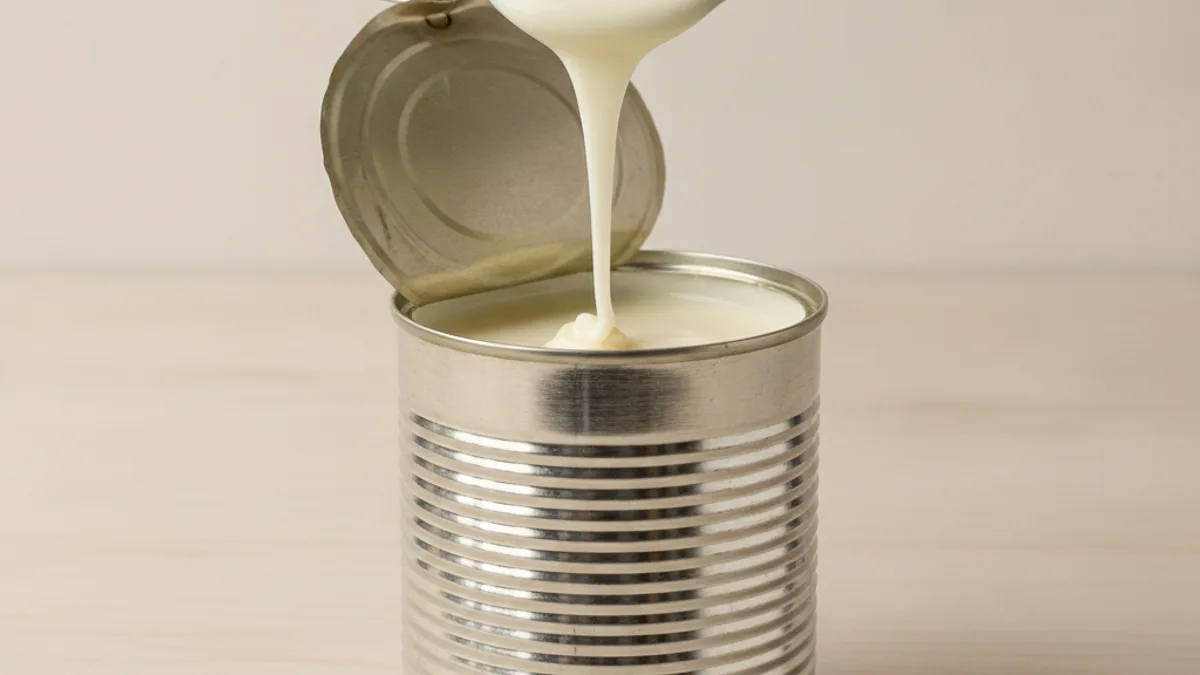
Condensed milk is a product made of two ingredients: milk and sugar. Everything else on the shelf next to it belongs to other categories, and they differ in what part of the milk has been replaced. The names are chosen so that the difference is not immediately obvious, and the composition is listed so that it can be seen.
What can be called condensed milk
Sweetened condensed milk is milk from which a portion of the water has been evaporated, plus sugar. The fat is milk fat, the protein is milk protein, and no third-party ingredients are required.
A typical composition consists of two lines: "whole milk, sugar" or "whole milk, skim milk, sugar." The mass fraction of fat is indicated—usually 8.5%.
If vegetable fats, starch, or thickeners appear in the ingredients, the product moves into a different category and must be named accordingly.
Related categories
| Name | What it means |
|---|---|
| Sweetened condensed milk | Milk and sugar, milk fat |
| Milk-containing product with milk fat substitute | Part of the milk fat is replaced by vegetable fat |
| Condensed milk with vegetable fat | Essentially the same, the name varies |
| Boiled condensed milk | Condensed milk that has undergone prolonged heating |
| Confectionery filling "boiled condensed milk" | Often not a milk product at all |
The last line is where the discrepancy with expectations is greatest: a filling with the flavor of boiled condensed milk may be based on sugar, vegetable fat, and flavoring. The requirement for an accurate name is set by the TR CU 022/2011 regulation, but large text on the front of the package is not subject to it as strictly—an analysis of this technique can be found in the article about package labeling.
How to distinguish in five seconds
- Read the name, not the brand. It is nearby, but in smaller print.
- Check the ingredients. Two lines mean milk; if vegetable fats appear, it is a different category.
- Look for the words "milk fat substitute" or "MFS." This is a direct indication.
- Check the fat content. For classic condensed milk, it is stated and corresponds to the standard.
The same logic applies to other dairy categories—see the article about butter and spreads.
Why this is noticeable in cooking
The difference is not just formal: products behave differently during cooking and heating.
Real condensed milk thickens and darkens during prolonged heating due to the reaction of sugars with milk proteins—the same reaction that creates a crust on baked goods. The result is a dense, viscous mass.
A product with vegetable fat often remains more liquid or separates when boiled: there is less protein, so there is nothing for the reaction to occur with.
Hence the practical observation from home cooks: "it used to boil well, but now it doesn't" usually refers to a change in the product category, not a spoiled process.
About calorie content
The difference here is small: both condensed milk and its milk-containing analog provide about 320–340 kcal per 100 g, more than half of which comes from sugar—about 55 g per 100 g of product.
This is worth keeping in mind separately from the discussion about substitutions: a tablespoon of condensed milk is about 60 kcal, and it goes unnoticed in coffee or tea. For more on such unnoticed calories, see the articles about coffee and about hidden sugar.
About boiling the can
Boiling a sealed tin can at home is a technique where pressure builds up inside. The can must be completely covered with water the entire time it is boiling, and the water level must be topped up. Commercially produced boiled condensed milk solves the same task without this risk.
Frequently asked questions
- What is the difference between condensed milk and a milk-containing product?
- By the composition of the fat phase. In condensed milk, the fat is milk fat, and the ingredients are milk and sugar. If part of the milk fat is replaced with vegetable fat, the product moves into a different category and must be labeled differently.
- How to distinguish them in the store?
- Read the product name next to the brand, which is in smaller print, and check the ingredients: two lines indicate real condensed milk, while vegetable fats and the words "milk fat substitute" indicate a different category.
- Why does condensed milk no longer thicken when boiled?
- Most often, this is due to a change in product category. Real condensed milk thickens and darkens due to the reaction between sugars and milk proteins, whereas a product with vegetable fat contains less protein and remains liquid or separates.
- How many calories are in condensed milk?
- About 320–340 kcal per 100 g, more than half of which comes from sugar — about 55 g per 100 g of product. A tablespoon is approximately 60 kcal, and they go unnoticed in tea or coffee.
- What is "boiled condensed milk" confectionery filling?
- Often this is not a dairy product: the filling may be based on sugar, vegetable fat, and flavoring. The product name and ingredients are listed on the packaging, but the large text on the front does not necessarily reflect them.
Read next
- Butter and spread: how to distinguish them and why they are different products — Butter and spread sit side by side, look the same, and cost different amounts.
- "Sugar-free," "fitness," "eco": what these labels actually mean — The front of a package speaks in short words: "light," "fitness," "sugar-free," "eco.
- Hidden sugar: under what names it appears in ingredients — The word "sugar" appears in ingredients less often than sugar itself does in a product: it has a dozen legal names, and the manufacturer has every right to use any of them.
This article is for general information. It is not medical advice, a diagnosis, or a prescription for treatment or a diet, and it does not replace a consultation with your doctor. If you have a health condition, are pregnant, take medication, or follow a diet prescribed to you, decisions about food belong with your doctor.
Figures from regulations, guidelines and studies are given as they stood when this article was prepared and may since have changed; check them against the primary sources. This article is not advertising, an offer, or individual advice, and neither the author nor the site owner is responsible for decisions taken on the basis of it.