Matcha: how much caffeine it has and how it compares with coffee
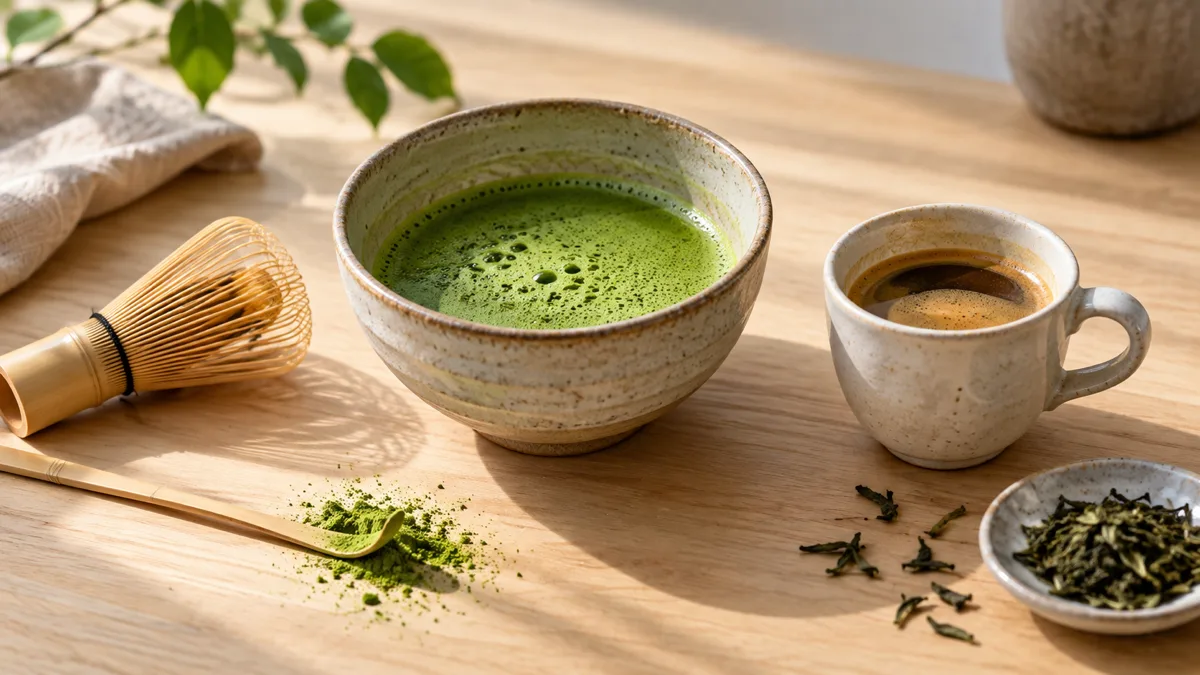
Matcha contains caffeine. With 2 g of powder, measurements from different samples suggest roughly 35–70 mg per drink. For comparison, a 200 ml cup of filter coffee has about 90 mg, but both figures depend on the product and serving.
How much caffeine is in matcha?
Matcha is powdered tea leaf whisked into water and consumed with it. With ordinary loose-leaf tea, the leaves are removed after brewing. Japan’s Ministry of Agriculture describes this preparation.
In a laboratory study of 15 commercially available green teas, the matcha samples contained 17.74–35.01 mg of caffeine per gram of dry powder. Using 2 g would give roughly 35–70 mg. This is a calculation from the products tested, not a precise figure for every matcha. To estimate your drink, you need the weight of the powder and information about that product.
More water or milk dilutes the flavour but does not, on its own, change the amount of caffeine added with the powder. Another scoop of powder does.
Matcha versus coffee: compare the servings
| Drink and serving | Caffeine | Basis |
|---|---|---|
| Matcha made with 2 g powder | roughly 35–70 mg | calculated from tested samples |
| Filter coffee, 200 ml | about 90 mg | EFSA estimate |
| Espresso, 60 ml | about 80 mg | EFSA estimate |
The coffee figures come from the European Food Safety Authority (EFSA). In these examples, matcha made with 2 g of powder usually has less caffeine than 200 ml of filter coffee. A drink made with more powder may match or exceed it. Compare recipes and servings rather than drink names. For more coffee types and daily intake guidance, see our coffee article.
Why matcha may feel different
Matcha contains L-theanine as well as caffeine. In a small trial with 23 participants, a drink containing 4 g of matcha improved some measures of attention after an hour compared with a placebo drink; researchers found no significant change in mood. The trial did not compare matcha with coffee. It cannot establish that matcha provides a smoother or longer-lasting boost, or that it does not disturb sleep.
For sleep, the caffeine dose and when you drink it matter. EFSA notes that even 100 mg may affect sleep in some adults, particularly close to bedtime.
What changes in a matcha latte?
The amount of matcha powder remains the main source of caffeine in a matcha latte. Milk, syrup and sugar change the drink’s nutritional content. If you count calories, check the ingredients and cup size: two drinks called “matcha latte” can have different recipes. Our coffee-shop drink guide explains how to account for additions.
How much matcha can you drink?
There is no useful universal limit expressed in cups of matcha, because cups use different amounts of powder. EFSA finds no safety concern for healthy adults at up to 200 mg of caffeine in a single dose and up to 400 mg across a day from all sources. For pregnancy, it gives a figure of up to 200 mg per day. These are ceilings, not targets. During pregnancy, or if you have a medical condition or take medication, discuss personal limits with a clinician. If matcha is followed by palpitations, anxiety or sleep disruption, consider having less and discussing symptoms with a clinician; the FDA lists these among possible signs of too much caffeine.
Count caffeine from matcha together with coffee, other tea and food. To estimate your cup, start with the grams of powder and use the manufacturer’s data when available.
Frequently asked questions
- How much caffeine is in a cup of matcha?
- With 2 g of powder, measurements of several commercial samples imply roughly 35–70 mg. The amount depends on the powder and how much you use.
- Does matcha have less caffeine than coffee?
- The example made with 2 g of powder usually has less than a 200 ml filter coffee: roughly 35–70 mg versus about 90 mg. A larger matcha serving may contain as much or more.
- Does matcha give a smoother boost than coffee?
- Matcha contains L-theanine alongside caffeine, but evidence is insufficient to promise a smoother effect or no impact on sleep compared with coffee.
- Does a matcha latte have more caffeine than plain matcha?
- If both drinks use the same weight of tea powder, adding milk does not itself increase the caffeine. The difference depends on the recipe and amount of powder.
Read next
- Coffee: how much you can drink and what adds calories — There are three questions about coffee, and they are different: how much caffeine is safe, does coffee harm your health, and why a latte with syrup costs as much as a full meal.
- Tea: how much caffeine is in it and what is known about its benefits — Black, green, oolong, and white teas are all the same leaf from the same plant, differing only in the degree of oxidation.
- Calorie content of coffee shop drinks: where the difference hides — In a coffee shop, calories are often hidden in the cup rather than in the food next to it.
This article is for general information. It is not medical advice, a diagnosis, or a prescription for treatment or a diet, and it does not replace a consultation with your doctor. If you have a health condition, are pregnant, take medication, or follow a diet prescribed to you, decisions about food belong with your doctor.
Figures from regulations, guidelines and studies are given as they stood when this article was prepared and may since have changed; check them against the primary sources. This article is not advertising, an offer, or individual advice, and neither the author nor the site owner is responsible for decisions taken on the basis of it.