Tea: how much caffeine is in it and what is known about its benefits
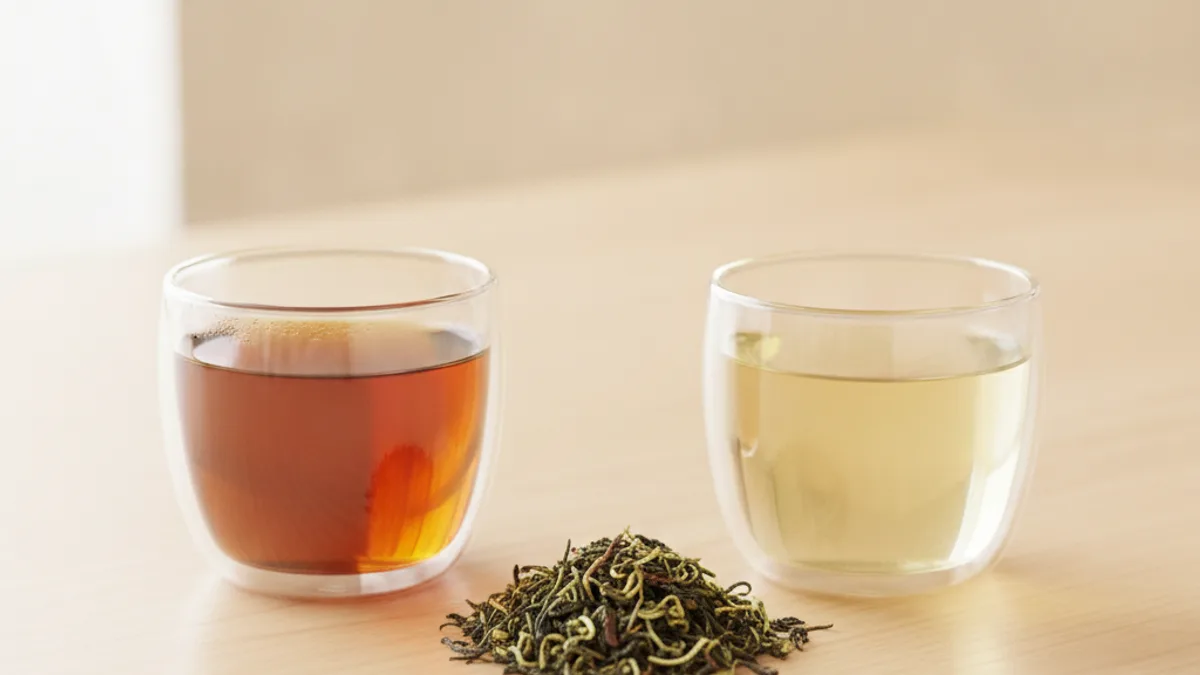
Black, green, oolong, and white teas are all the same leaf from the same plant, differing only in the degree of oxidation. This leads to differences in taste and composition, and explains why claims about "green tea for weight loss" are based on very thin evidence.
One leaf, different processing
All true teas are made from the leaves of the Camellia sinensis plant. The difference lies in how much the leaf is allowed to oxidize before drying:
- Green — oxidation is stopped almost immediately by heating;
- White — minimal processing, only wilting and drying;
- Oolong — partial oxidation;
- Black — full oxidation.
Hibiscus, chamomile, mint, and rooibos are not technically tea in this sense — they are infusions of other plants, and they contain no caffeine.
How much caffeine
A cup of black tea contains about 40–50 mg, while green tea usually has less — 20–40 mg. The range is wide and depends more on the variety, the amount of tea used, water temperature, and steeping time than on the color.
For comparison with other sources and daily guidelines, see our article on coffee. A unique feature of tea is theanine, an amino acid that changes the subjective experience of caffeine: the energy boost is often described as smoother. This has been observed, but it should not be treated as a guaranteed effect.
Tea and iron
This is the only practically significant effect worth knowing about. The tannins in tea bind non-heme iron — the type found in plant-based foods — and reduce its absorption. The effect on heme iron from meat is significantly less.
Who should care: people with iron deficiency, vegetarians, and women with heavy menstrual periods. The solution is simple: drink tea not during meals, but an hour or an hour and a half after.
Vitamin C in the same meal works in the opposite direction and improves the absorption of non-heme iron.
About weight-loss teas
Claims are usually based on two mechanisms: green tea catechins and caffeine supposedly accelerate energy expenditure. The effect has been described in studies, but it is small — we are talking about tens of kilocalories per day — and is virtually indistinguishable against the margin of error in dietary tracking. An analysis of similar mechanisms can be found in our article on fat burners.
A separate category includes "cleansing teas" and "detox teas." Some of them contain herbal laxatives, and the rapid weight loss seen with them is explained by fluid loss, not fat loss. What the liver and kidneys actually do is explained in our article on detox and "toxins".
Where do calories in tea come from
Tea itself has practically zero calories. Beyond that, it is the same as with coffee:
| Additive | Approximate |
|---|---|
| Two teaspoons of sugar | about 40 kcal |
| One tablespoon of honey | about 60 kcal |
| Milk, 50 ml | about 30 kcal |
| Condensed milk, one tablespoon | about 60 kcal |
| Bottled iced tea, 500 ml | about 100–150 kcal |
The last item is the most underestimated: bottled iced tea is closer to a sugary drink than to tea and should be evaluated by the same rules as soda.
What to keep in mind
- Count caffeine from all sources, including tea.
- Do not drink tea with meals if you have an iron deficiency.
- Look at the additives, not the variety: sugar matters more than whether it is green or black.
- Do not expect an effect on weight. The mechanism exists, but its practical significance is negligible.
- Read the ingredients of herbal blends. "Cleansing" mixtures often contain laxative components.
Frequently asked questions
- How much caffeine is in tea?
- About 40–50 mg in a cup of black tea and 20–40 mg in green tea. The range is wide and depends more on the amount of tea used, water temperature, and steeping time than on the tea color.
- How does green tea differ from black?
- By the degree of leaf oxidation: for green tea, it is stopped almost immediately by heating, while black tea is fully oxidized. The plant is the same — Camellia sinensis.
- Is it true that tea interferes with iron absorption?
- Tea tannins bind non-heme iron from plant-based foods and reduce its absorption; the effect on iron from meat is significantly lower. The solution is to drink tea not during meals, but an hour or an hour and a half after.
- Does green tea help with weight loss?
- The effect of catechins and caffeine on energy expenditure has been described, but it is minor—we are talking about tens of kilocalories per day, which is lost within the margin of error of dietary tracking. It does not work as an independent method for weight loss.
- Are herbal infusions considered tea?
- No. Hibiscus, chamomile, mint, and rooibos are made from other plants and do not contain caffeine. It is worth reading the composition of "cleansing" herbal blends: they sometimes contain laxative components.
Read next
- Coffee: how much you can drink and what adds calories — There are three questions about coffee, and they are different: how much caffeine is safe, does coffee harm your health, and why a latte with syrup costs as much as a full meal.
- Fat burners: what L-carnitine, green tea, and caffeine do in the body — A fat burner bottle usually says something true: carnitine does indeed transport fatty acids into the mitochondria, and caffeine does indeed increase energy expenditure.
- Detox and "toxins": what the liver and kidneys actually do — The feeling of heaviness, bloating, and being "clogged up" is familiar to almost everyone, and the word "toxins" explains it faster than any other.
This article is for general information. It is not medical advice, a diagnosis, or a prescription for treatment or a diet, and it does not replace a consultation with your doctor. If you have a health condition, are pregnant, take medication, or follow a diet prescribed to you, decisions about food belong with your doctor.
Figures from regulations, guidelines and studies are given as they stood when this article was prepared and may since have changed; check them against the primary sources. This article is not advertising, an offer, or individual advice, and neither the author nor the site owner is responsible for decisions taken on the basis of it.