Emulsifiers: what they do in food and what is known about them
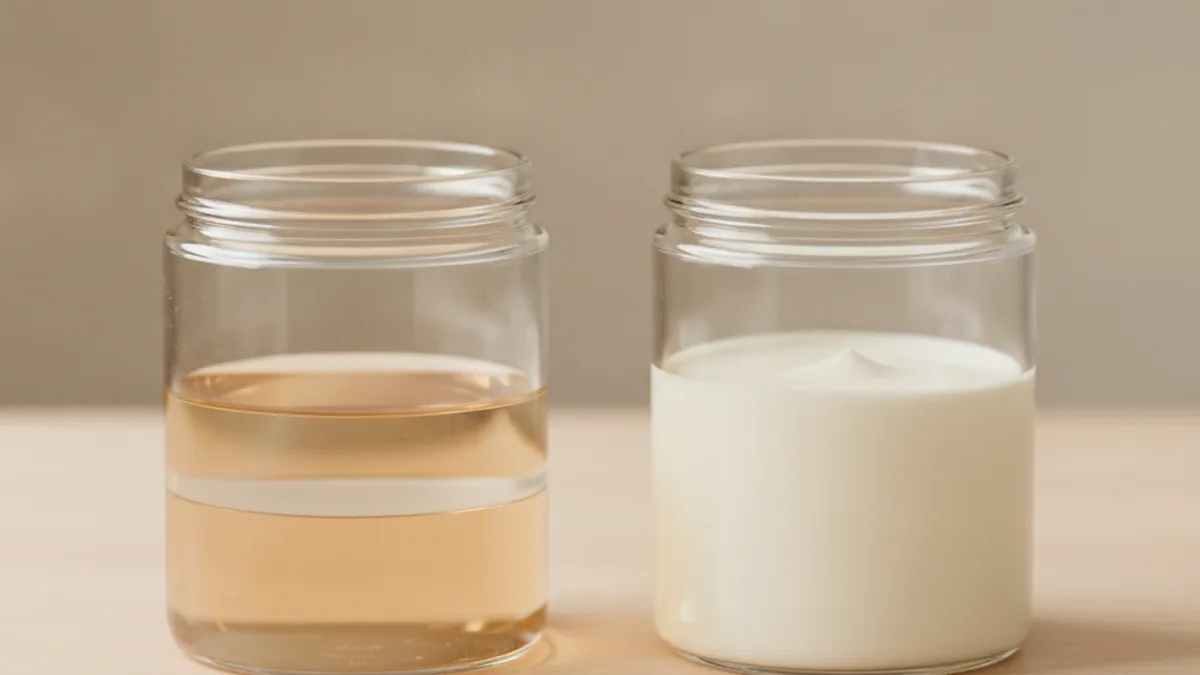
Water and fat do not mix—this is a basic fact, and it is the source of half the problems in food technology. Mayonnaise, ice cream, chocolate, bread, and sauces exist in their familiar form only because something holds these two immiscible phases together. This is the job of emulsifiers, and lecithin in chocolate is the most well-known among them.
How it works
An emulsifier molecule is dual-natured: one end is attracted to water, the other to fat. Once at the boundary of the two phases, it embeds itself there and reduces surface tension—fat droplets stop merging with each other and remain small.
The result is visible in the finished product: mayonnaise does not separate, ice cream remains smooth without large crystals, chocolate flows during molding, and bread stays fresh longer.
The most common ones
| Code | Name | Where it is found |
|---|---|---|
| E322 | Lecithins | Chocolate, baked goods, margarine, infant formula |
| E471 | Mono- and diglycerides of fatty acids | Bread, ice cream, spreads, sauces |
| E472 (a–f) | Esters of mono- and diglycerides | Baked goods, confectionery |
| E433, E435 | Polysorbates | Ice cream, desserts, sauces |
| E475 | Polyglycerol esters | Confectionery |
The first two rows cover the majority of what is encountered. Lecithin is primarily obtained from sunflower or soy—in the latter case, it falls under the list of mandatory allergens to disclose, which is covered in the article on mandatory allergens.
E471 is not a single substance, but a group: mono- and diglycerides are obtained from the same fats that go into food, and they are broken down in the same way during digestion. This explains their widespread use and relatively calm assessments.
What is known about the gut
This is the only substantive concern regarding the group, and it is worth addressing carefully.
Some studies—primarily on cell cultures and animals—describe the effect of individual emulsifiers on the intestinal mucus layer and the composition of the microflora. Reviews on the potential role of food additives in gut health collect such works together.
What they lack is translation to normal human consumption. Doses in experiments are often higher than dietary levels, models are simplified, and data on humans is limited. Therefore, the correct formulation is "the direction is being studied," rather than "it is proven."
The practical conclusion is more modest than any of the sides in the debate: products with a long list of emulsifiers are usually ultra-processed foods, and there are questions about them regardless of the specific additive. The analysis is in the article on ultra-processed food.
Emulsifiers without a code
The same work is performed by ordinary ingredients, and they look harmless in the ingredient list:
- Egg yolk — natural lecithin, which holds homemade mayonnaise together;
- Mustard — stabilizes dressings;
- Milk proteins — work at the phase boundary in dairy products;
- Honey — used in this role in confectionery recipes.
Hence a typical trick: replace E471 with "egg powder" and write "no emulsifiers." Formally true, but essentially the same thing; the trick is analyzed in the article on how additives are hidden.
What to do about it
- Do not be afraid of the word itself. An emulsifier is a function, not a characteristic of harm; sunflower lecithin and egg yolk do the same thing.
- Look at the product as a whole. Five emulsifiers in the list is a sign of a complex construction, not a property of a single substance.
- Consider soy. Soy lecithin is an allergen from the mandatory list, and it must always be disclosed.
- Check codes in the guide. The assessment of each one is in the E-additive guide.
Frequently asked questions
- What do emulsifiers do in food?
- They hold water and fat together. One end of an emulsifier molecule is attracted to water, the other to fat; it embeds itself at the boundary between them and prevents the droplets from merging. Thanks to this, mayonnaise does not separate, and ice cream remains smooth.
- Is E471 dangerous?
- Mono- and diglycerides are derived from the same fats used in food, and they are broken down in the same way during digestion. They are widely permitted, and expert assessments are reassuring. A separate topic is research into the effect of emulsifiers on the gut, where human data is currently limited.
- Is it true that emulsifiers harm the gut?
- Some studies on cell cultures and animals describe the effect of certain emulsifiers on the mucus layer and microflora, but the doses used are often higher than those found in food, and human data is limited. It is accurate to say that this area is currently being studied.
- Are there emulsifiers without an E code?
- Yes: egg yolk, mustard, milk proteins, and honey perform the same function but are not considered additives. This is the basis for the "no emulsifiers" label on products where the same function is fulfilled by egg powder.
- Why is soy lecithin highlighted separately?
- Soy is on the list of allergens that must be disclosed, which is why soy lecithin is always listed in the ingredients, regardless of the amount. Sunflower lecithin is not subject to this requirement.
Read next
- Stabilizers and thickeners: gums, starches, and pectin — Xanthan gum, guar gum, carrageenan, pectin, modified starch — this is a set of words that looks alarming on an ingredient label but means something quite boring: the product needs to have the right consistency and not separate before its expiration date.
- How manufacturers hide additives in the ingredient list — A short ingredient list sells better than a long one, and manufacturers know it.
- Ultra-processed food: what lies behind the NOVA classification — There is a lot of writing about ultra-processed food right now as if the matter is settled: there is bad industrial food and good homemade food.
This article is for general information. It is not medical advice, a diagnosis, or a prescription for treatment or a diet, and it does not replace a consultation with your doctor. If you have a health condition, are pregnant, take medication, or follow a diet prescribed to you, decisions about food belong with your doctor.
Figures from regulations, guidelines and studies are given as they stood when this article was prepared and may since have changed; check them against the primary sources. This article is not advertising, an offer, or individual advice, and neither the author nor the site owner is responsible for decisions taken on the basis of it.