How to photograph food for calorie counting
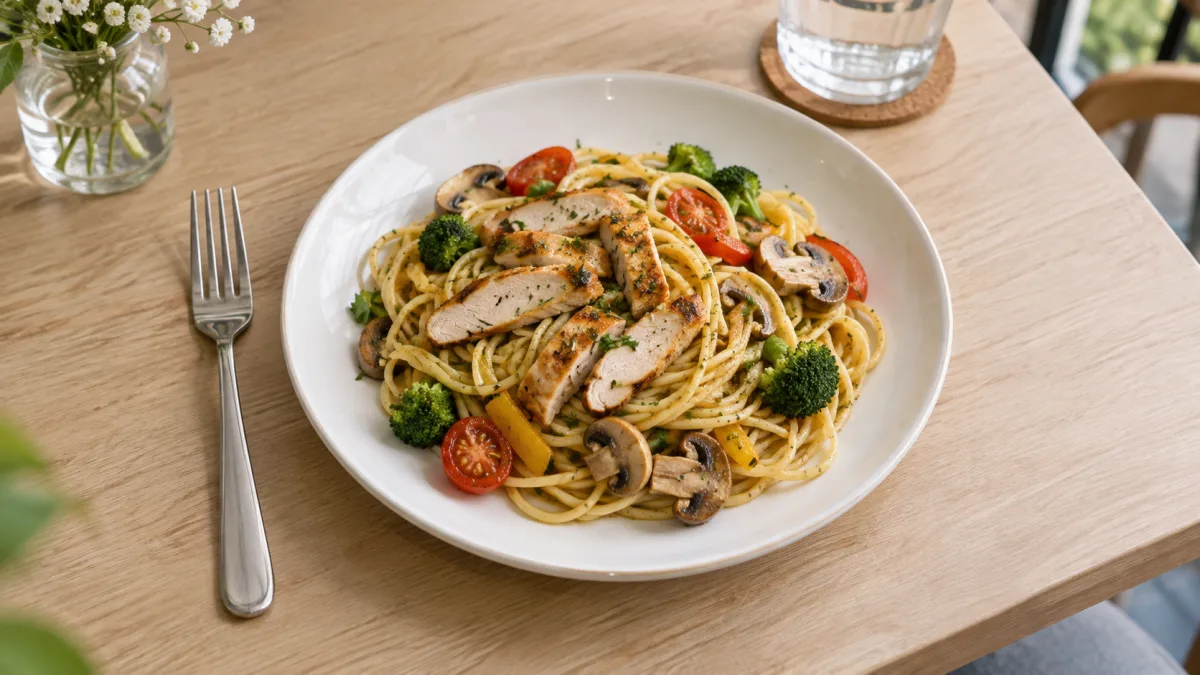
Shoot the whole plate from a slight angle, in daylight or even room light, and leave a fork or spoon in the frame. This will not make the estimate accurate to the gram, but it will give the model the size, volume, and boundaries of the dish.
Photos do not answer all questions
From a snapshot, you can recognize the type of dish and roughly estimate the visible portion. Oil in a pan, sugar in a drink, filling inside a pie, and the fat content of minced meat do not become visible from a better angle. It is better to name them in the caption or add them manually after the result.
The limitations of food recognition itself are discussed separately — how the neural network recognizes food in a photograph. Here the point is not how the model works, but what details can be provided as input.
Photograph the plate, not just the food
A close-up shot makes a small plate and a large one look the same. Leave the whole dish in the frame and one object of a recognizable size: a fork, a spoon, or a regular mug. A ruler and a coin are not needed.
The best compromise is a camera slightly above the level of the plate and at an angle. The top view shows the area well, the side view shows the height, and the medium angle preserves both features. Do not shoot from afar: in such a shot, the sauce and side dish merge into one color.
Check four things before taking the picture
- Light. Move the plate to the window or turn on even lighting. A yellow lamp and deep shadow change the color of the food, not just the beauty of the shot.
- Boundaries. Do not block the dish with a napkin, hand, or another plate. Separate parts of a complex dish should be visible.
- Scale. Leave a utensil or the whole plate in the frame, not just a piece of pizza.
- Composition. Cut the burger, shawarma, or casserole if the filling is important for the estimate. Outside, two different fillings may look the same.
What to write along with the photo
| Detail not in the photo | What to write |
|---|---|
| Oil and dressing | “Fried in a teaspoon of oil”, “two spoons of mayonnaise in the salad” |
| Portion size | “24 cm plate”, “two such pieces”, “weight 280 g” |
| Hidden composition | “Turkey patty”, “3.2% milk”, “cream-based sauce” |
| Part of the dish not eaten | “Without skin”, “left the sauce”, “drained oil from the pan” |
If the weight is known, it is more useful than any visual cue. Scales do not have to be part of every meal: it is enough to occasionally check a typical plate. How to estimate a portion without scales is covered in the material on portion weight.
For a packaged product, photograph the label
For a packaged product, a photo of the dish is a workaround. Photograph the barcode or the nutrition facts table: this gives the figures stated by the manufacturer rather than an estimate based on appearance. If the product is not found by code, you can take a picture of the ingredients and the table from the packaging.
Nutritional value on the label is usually indicated per 100 g or 100 ml, so the mass of the eaten part is still needed. Why the figure on the packaging does not always match laboratory measurement is explained in the article on nutritional value on packaging.
Do not retake because of imagined precision
Three identical frames will not produce three independent measurements. One clear snapshot and a short caption for invisible ingredients are enough. When the composition is known — for example, it is a homemade recipe — it is more accurate to calculate the ingredients and cooked weight than to try to reconstruct them from a photograph.
Frequently asked questions
- Do I need to put a ruler next to the plate?
- No. A fork, spoon, or familiar-sized mug will do. It is more important that the entire plate gets into the frame and the object does not cover the food.
- What angle is best for calorie counting?
- Shoot from above at a slight angle. This shows both the area of the dish and its height. A pure top view loses height, and a side shot loses area.
- What will the neural network not see in a food photograph?
- Oil inside a dish, sugar in a drink, dressing under the top layer of a salad, fat content of minced meat, and exact weight. These details are best written next to the photo or adjusted manually.
- Is a food photo needed if there is packaging?
- For a packaged product, it is more useful to photograph the barcode or nutrition facts table. A photo of the plate still will not tell you how many grams of the product you ate.
Read next
- How a neural network recognizes food in a photo — A photo of a plate turns into a number on the screen in a few seconds, and from the outside, it looks like a measurement.
- Why AI confidently states incorrect figures — The unpleasant feature of machine responses is not that they can be incorrect—reference books and labels can be wrong too.
- How to determine portion size without a scale — Portion weight is the most inaccurate variable in any calculation, including analysis by photo.
- Calories and macros on the label: why the numbers don't match reality — The same buckwheat in three different apps gives three different calorie counts, and the package shows a fourth.
This article is for general information. It is not medical advice, a diagnosis, or a prescription for treatment or a diet, and it does not replace a consultation with your doctor. If you have a health condition, are pregnant, take medication, or follow a diet prescribed to you, decisions about food belong with your doctor.
Figures from regulations, guidelines and studies are given as they stood when this article was prepared and may since have changed; check them against the primary sources. This article is not advertising, an offer, or individual advice, and neither the author nor the site owner is responsible for decisions taken on the basis of it.