Vitamin D: how much you need, where to get it, and when to get tested
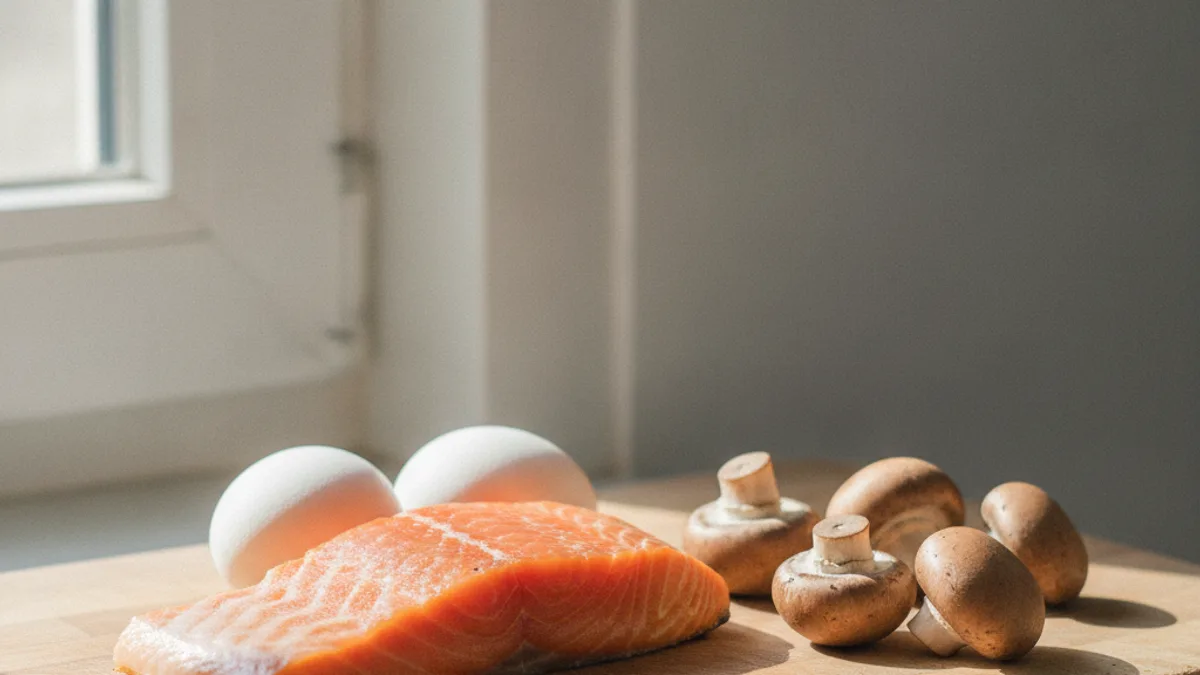
Vitamin D differs from other vitamins in that humans can produce it themselves—in the skin under ultraviolet light. This leads to the main feature of the topic: how much you need to get from food depends on how much you get from the sun, and at the latitude of most of Russia, there is only enough sun for a few months of the year.
How much is needed
EFSA has set an adequate intake of vitamin D for adults at 15 mcg per day. This value applies to healthy individuals over one year of age, including pregnant and breastfeeding women, and—importantly—it is derived for conditions where endogenous synthesis in the skin is minimal.
This leads to a practical caveat often lost in popular summaries: with sufficient sun exposure, the need for dietary vitamin D is lower and can be close to zero. Summary reference values for nutrients are collected in the general EFSA publication.
15 mcg is 600 IU: supplement manufacturers usually use the latter unit, and 1 mcg equals 40 IU.
Why there is not enough sun
Synthesis in the skin is triggered by ultraviolet B radiation, which only reaches the surface when the sun is high enough in the sky. North of approximately the 40th parallel—which includes almost all of populated Russia—the angle is too low from late autumn to early spring, and synthesis is virtually non-existent regardless of how much time is spent outdoors.
Additional factors that reduce synthesis include: cloudy weather, glass (which blocks the necessary range), clothing, sunscreen, dark skin tone, and age.
A review on vitamin D supplementation also highlights the scale of the problem in Europe: a 25(OH)D concentration below 30 nmol/L is found in approximately 13% of the general population, and below 50 nmol/L in approximately 40%.
Where vitamin D is found in food
The list of sources is short, and that is its main feature.
| Product | Vitamin D, approximate per 100 g |
|---|---|
| Wild salmon, herring, mackerel | tens of micrograms |
| Farmed salmon | significantly less than wild |
| Cod liver | very high, but also high in vitamin A |
| Egg yolk | single-digit micrograms |
| Mushrooms grown under UV light | noticeable amount, regular ones—almost none |
| Fortified foods | as much as indicated on the package |
A standard diet without fatty fish provides only a few micrograms per day—significantly less than the target. This is the reason why vitamin D is discussed separately from other nutrients: it is harder to obtain through food than most others.
About testing and supplements
Caution is needed here for two reasons.
Testing. 25(OH)D is measured in the blood. Expert bodies generally do not recommend mass screening for healthy people without risk factors; a doctor determines the need for the test in cases of bone disease, malabsorption, the use of certain medications, or in the elderly.
Supplements. Vitamin D is fat-soluble and accumulates in the body, so unlike water-soluble vitamins, there is a real risk of overdose with long-term use of high doses. Self-prescribing "loading" doses is exactly the case where harm is possible. How supplements differ from medications and what that implies is analyzed in the article on dietary supplements, vitamins, and medications.
The practical framework: dosage and the need for intake are determined by a doctor based on test results and individual circumstances, not by a general recommendation from an article.
What not to expect from vitamin D
A wide range of promises has formed around it—from immunity to mood and weight loss. Its role in calcium metabolism and bone health is confirmed and undisputed; other areas are being studied, and the results of large-scale trials for many of them have been more modest than expected.
Regarding weight specifically: there is an observed link between low vitamin D levels and excess body weight, but it is explained more by the fact that the fat-soluble vitamin is distributed in a larger volume of adipose tissue, rather than by the idea that its deficiency prevents weight loss. What truly determines weight loss is covered in the article on calorie deficit.
Frequently asked questions
- How much vitamin D do you need per day?
- The EFSA has set an adequate intake for adults at 15 mcg per day, which is 600 IU. This value was derived for conditions where endogenous synthesis in the skin is minimal; with sufficient sun exposure, the requirement for dietary vitamin D is lower.
- Why is vitamin D not produced in winter?
- Synthesis is triggered by ultraviolet B radiation, which reaches the surface only when the sun is high enough. North of approximately the 40th parallel, from late autumn to early spring, the angle is too low, and synthesis practically does not occur.
- Which foods contain the most vitamin D?
- Fatty sea fish—wild herring, mackerel, salmon—as well as cod liver, egg yolks, and mushrooms grown under ultraviolet light. A typical diet without fatty fish provides only a few micrograms per day.
- Should I get a vitamin D test?
- Expert bodies generally do not recommend mass screening for healthy individuals without risk factors. Indications for a 25(OH)D test are determined by a physician—for instance, in cases of bone disease, malabsorption disorders, the use of certain medications, or in older age.
- Can I prescribe vitamin D for myself?
- It is not recommended. The vitamin is fat-soluble and accumulates in the body, so an overdose is possible with long-term intake of high doses. Dosage and the necessity of supplementation should be determined by a physician based on test results and individual circumstances.
Read next
- How dietary supplements differ from vitamins and medications — In a pharmacy, two packages of vitamin D sit on the same shelf.
- Which fats are healthy and which are not — Dividing fats into "healthy" and "unhealthy" is convenient for a headline but almost useless at the grocery shelf: a single product usually contains all types at once, and the difference between them is not about general health benefits, but about specific effects.
- How caloric intake affects health — Caloric intake answers one question: how much of you there will be.
This article is for general information. It is not medical advice, a diagnosis, or a prescription for treatment or a diet, and it does not replace a consultation with your doctor. If you have a health condition, are pregnant, take medication, or follow a diet prescribed to you, decisions about food belong with your doctor.
Figures from regulations, guidelines and studies are given as they stood when this article was prepared and may since have changed; check them against the primary sources. This article is not advertising, an offer, or individual advice, and neither the author nor the site owner is responsible for decisions taken on the basis of it.