Prepared meal plans: how to choose a delivery service
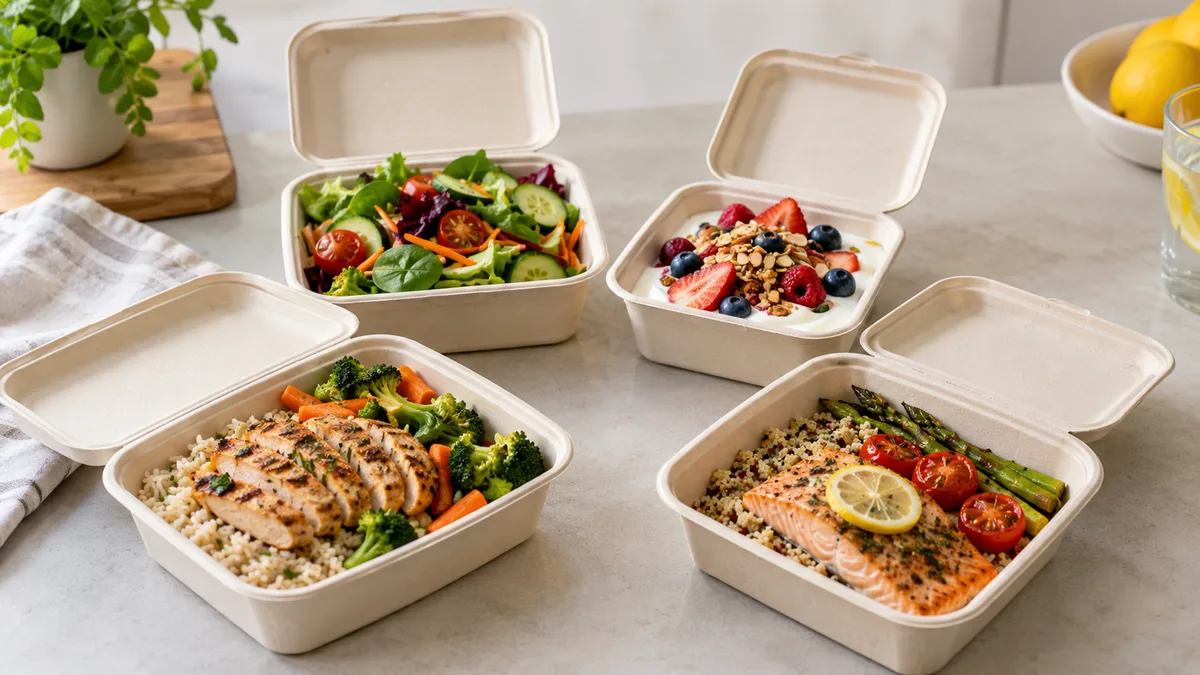
Choose a prepared meal plan by its actual daily menu, delivery terms and full price. A “weight loss” label does not tell you whether the portions, ingredients and delivery schedule suit you.
Compare the whole day you intend to order
Ask for a full sample menu from the program you are considering. You need meal names, cooked portion weights, calories and macros for each container, and the day’s total. A picture of an attractive lunch does not show breakfast or dinner. If the plan covers only two meals, you provide the others yourself.
A subscription sets a repeated routine across several days. Besides counting the food, you need to check whether you can receive, store and eat the entire delivery. For a one-off restaurant order, see nutrition information in food delivery.
Read several consecutive menus. Mark foods you actually eat and those you would replace. If you dislike fish or sweet breakfasts, repeated containers with those dishes may go unused. You still pay for them and need to buy replacement food.
Questions to ask before payment
| Check | Question | Compare |
|---|---|---|
| Portions | Are macros per container or per 100 g? | The actual daily total |
| Ingredients | Are ingredients, dressings and allergens listed? | Each dish including its sauce |
| Substitutions | Can dishes be changed and does the total change? | The menu after your swaps |
| Receiving food | When does the courier arrive and how many days come together? | Your schedule and refrigerator space |
| Price | What is the total including delivery and extras? | The same number of paid days |
| Pausing | What notice is needed to cancel or reschedule? | Terms available before payment |
Save the chosen menu and order terms. They let you compare the delivered set with the order and ask about a specific substitution. Request written confirmation or a link to the service’s terms when details exist only in a conversation.
Check the calorie and protein arithmetic
Add the values for all containers. In an illustrative menu, breakfast has 350 kcal and 18 g protein, lunch 500 and 30, dinner 450 and 25, and a snack 200 and 7. That gives 1,500 kcal and 80 g protein. These figures demonstrate how to check a table; they are not a recommended daily intake.
Ask whether sauces, desserts and drinks are included. If a sauce label is per 100 g, convert it to the container’s weight. An illustrative 25 g portion at 200 kcal per 100 g adds 50 kcal. Add it only if the service has not already included the sauce in the dish.
List food outside the program: coffee with milk, workplace snacks or a family dinner. The plan’s stated total covers its containers. Your overall intake also includes that other food. Compare services using the same list of included meals.
Do not pick the smallest calorie number solely because the program is called “weight loss.” Suitable intake depends on the person, activity and circumstances. Discuss meal choices with a doctor during pregnancy, illness, treatment or with a history of eating disorders. A program name does not account for these automatically.
Compare paid days and actual spending
Divide the full bill by the number of food days. An illustrative five-day order costing 6,000 rubles including delivery costs 1,200 rubles per day. Add separate delivery charges before dividing. An advertised starting price may apply to a different number of days or meals, so compare basket totals.
Then include replacement purchases. If inconvenient delivery makes you buy lunch elsewhere twice, add those purchases to your budget. Keep two figures: the service’s bill and actual weekly spending. This lets you compare with home cooking without assuming guaranteed savings.
Start with a short order when one is available. A trial checks the taste after reheating, portion sizes, packaging and courier reliability. A long subscription leaves these questions unresolved after you have already paid.
Check storage before the courier arrives
Read production dates, expiry dates, storage instructions and reheating directions on each container. The name “prepared meal plan” does not establish a shelf life. Make sure the entire set fits in your refrigerator and you can eat each dish within its stated period.
FDA guidance on receiving meal kits advises checking packaging and food condition; perishable products should arrive chilled. This is US food safety guidance, not a Russian delivery regulation. A warm container that should be cold, or damaged packaging, calls for contacting the supplier.
FDA storage guidance recommends a refrigerator temperature at or below 4 °C and putting perishables in the refrigerator promptly. Smell does not establish safety. Also follow the dish’s manufacturer instructions, which may specify a narrower temperature range.
Record what happened during the trial
Note which containers you finished, which you replaced and why. Record arrival time, reheating convenience and actual spending including extra purchases. If food regularly remains or you need more meals, reconsider the program instead of forcing yourself to follow a prepaid menu.
After the trial, ask for next week’s menu and check pause terms. If delivery suits only your work lunches, use it for that part of the day and plan the rest separately. See weekly meal planning for organizing shopping and cooking.
Frequently asked questions
- Which meal delivery is best for weight loss?
- Compare actual menus, suitable portions, ingredients, full price and delivery terms. The program’s name does not establish an outcome.
- How do I check daily calories?
- Add every container’s calories and check whether sauces and drinks are included. Count other food separately.
- Should I subscribe for a month immediately?
- Try a short order first if available, and read cancellation and pause terms before payment.
- Can I keep all meals for a week?
- Only if every dish’s expiry date and storage directions allow it. There is no universal shelf life for all plans.
Read next
- Nutritional values in delivery apps: where the numbers in the dish card come from — In the dish card, below the photo, there are four numbers, and they look like a measurement.
- Weekly menu: how to build your own instead of looking for a ready-made one — People look for a ready-made weekly menu to avoid thinking.
- Daily calorie intake — There is no universal norm: it depends on weight, height, age, sex, and activity level.
This article is for general information. It is not medical advice, a diagnosis, or a prescription for treatment or a diet, and it does not replace a consultation with your doctor. If you have a health condition, are pregnant, take medication, or follow a diet prescribed to you, decisions about food belong with your doctor.
Figures from regulations, guidelines and studies are given as they stood when this article was prepared and may since have changed; check them against the primary sources. This article is not advertising, an offer, or individual advice, and neither the author nor the site owner is responsible for decisions taken on the basis of it.