Fermented foods: what happens inside
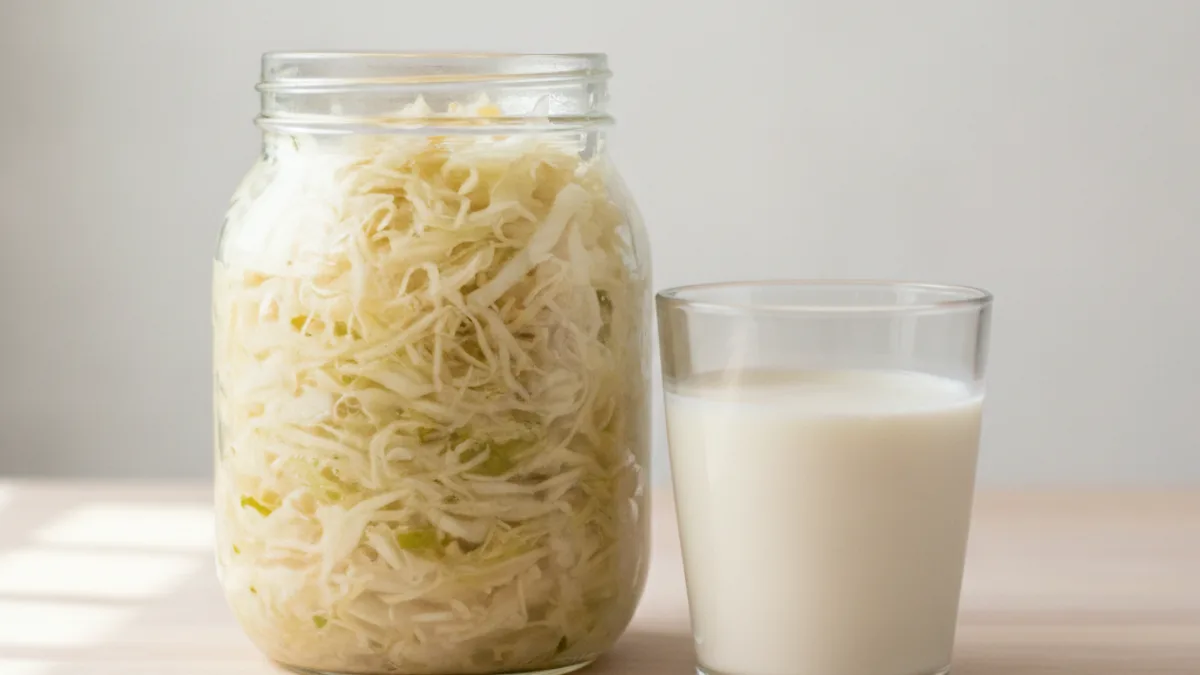
Fermentation is a preservation method invented long before the refrigerator: bacteria consume sugars and produce acid, and in an acidic environment, spoilage-causing organisms cannot survive. Everything else attributed to these products should be examined individually.
What happens during fermentation
Lactic acid bacteria convert the product's sugars into lactic acid. The acidity increases, putrefactive microflora are suppressed, and the product lasts longer. Along the way, the product itself changes:
- Some sugars disappear. Sauerkraut has fewer carbohydrates than fresh cabbage; in kefir, some of the lactose is already broken down, which is why it is better tolerated than milk by those with lactose intolerance.
- New substances appear. B vitamins, organic acids, and in some products, vitamin K2.
- Mineral bioavailability increases. Fermentation breaks down some of the phytates that bind iron and zinc. This also applies to sourdough bread.
- Histamine and other biogenic amine levels increase. For most people, this means nothing; for the exception, see histamine intolerance.
Where live bacteria are found and where they are not
This is the main practical distinction, and it is not always obvious from the product name.
| Product | Live cultures |
|---|---|
| Kefir, yogurt, ayran from the refrigerator | Yes |
| Unpasteurized sauerkraut | Yes |
| Kimchi, miso, tempeh, natto | Yes |
| Unpasteurized kombucha | Yes |
| Sourdough bread | No — baking kills them |
| Canned cabbage, pickles in vinegar | No — this is pickling, not fermentation |
| Heat-treated yogurt products from the shelf | No |
| Beer, wine | No in the finished product |
Hence a simple test: if the product is not stored in the refrigerator, it contains no live cultures. Regarding the dairy aisle specifically — how to choose yogurt by its ingredients.
A second distinction of the same kind: pickling and fermentation are different things. In pickling, acid is added (vinegar), while in fermentation, it is produced by bacteria. Cucumbers in vinegar are not a fermented product.
What is confirmed and what is not
Lactose tolerance improves. The most reliable effect: cultures break down some of the lactose and continue to do so in the gut.
Storage and safety. A historical function that works indisputably.
Impact on microflora. It exists, but not as commonly thought: bacteria from the product mostly pass through and do not colonize long-term. Their effect is temporary and depends on regular intake. Analysis — microbiome and food.
Specific health effects. Be cautious here. Data on fermented products is mostly observational, and where individual strains have been studied in controlled trials, results are strain-specific: you cannot transfer a conclusion from one product to another. What this means in practice — probiotics: why the strain is more important than the word on the label.
In other words, "fermented products are healthy" is too general a statement to be verifiable. What is verifiable is: a specific product, a specific effect, a specific sample.
What to know before you overindulge
Salt. Sauerkraut, kimchi, miso, and soy sauce are salty by design: salt here is not a seasoning, but part of the process. One hundred grams of sauerkraut contains about a gram of salt — one-fifth of the WHO daily guideline. Analysis — salt in processed foods.
Sugar in kombucha. The tea fungus feeds on sugar but does not consume it all: the finished drink retains 2–6 g per 100 ml, which is comparable to a sweet juice. The "sugars" line in the nutrition table shows this.
Bloating in the first few days. A common reaction to an increase in fermentable substrate intake. It passes if you increase the amount gradually; it may not pass if you have irritable bowel syndrome — about FODMAP.
Home canning. Fermenting in its own brine is safe due to the acid, but airtight sealing of vegetables without acid and sterilization is a path to botulism. This is not a theoretical risk: home-canned goods remain its primary source.
A reasonable minimum
One serving of a fermented product per day — a glass of kefir, a couple of spoonfuls of sauerkraut, a cup of yogurt — covers everything you can expect from this category. There is no reason to increase it further: beyond this point, it is not the benefits that start to grow, but the amount of salt.
Frequently asked questions
- Which products contain live bacteria?
- In kefir, yogurt, unpasteurized sauerkraut, kimchi, miso, tempeh, and unpasteurized kombucha. Sourdough bread, pickled vegetables, and heat-treated yogurt products do not contain live cultures.
- How does fermentation differ from pickling?
- In fermentation, acid is produced by lactic acid bacteria, whereas in pickling, it is added—usually as vinegar. Cucumbers in vinegar are not a fermented product and do not contain live cultures.
- How much fermented food should I eat per day?
- One serving is enough: a glass of kefir, a couple of spoonfuls of sauerkraut, or a container of yogurt. Eating more does not provide additional benefits but does add salt—there is about one gram of salt in one hundred grams of sauerkraut.
Read next
- Probiotics: why the strain matters more than the word on the label — The label says "lactobacillus.
- The microbiome and food: what a diet actually changes — Gut bacteria respond to a change of diet within days.
- Yogurt: how to choose based on ingredients — In the yogurt aisle, there are three different products with similar names, and the difference between them is defined by law, not by advertising.
This article is for general information. It is not medical advice, a diagnosis, or a prescription for treatment or a diet, and it does not replace a consultation with your doctor. If you have a health condition, are pregnant, take medication, or follow a diet prescribed to you, decisions about food belong with your doctor.
Figures from regulations, guidelines and studies are given as they stood when this article was prepared and may since have changed; check them against the primary sources. This article is not advertising, an offer, or individual advice, and neither the author nor the site owner is responsible for decisions taken on the basis of it.