30 g of fibre a day: an example using everyday foods
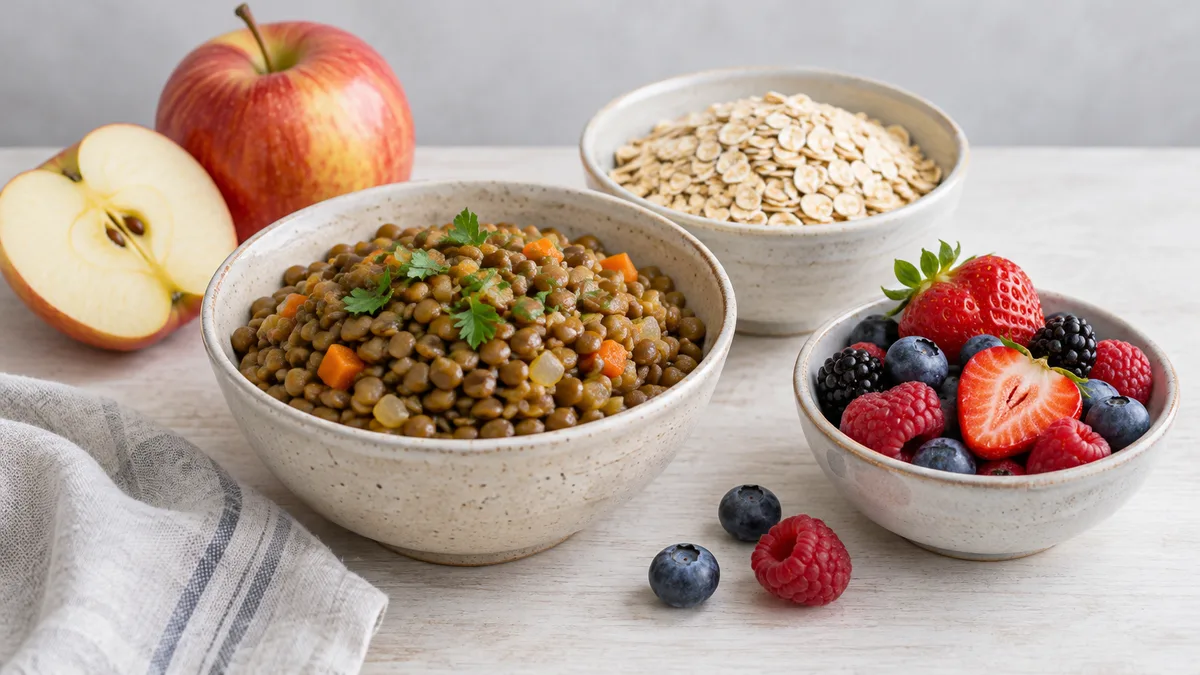
Several portions of pulses, fruit, vegetables and whole grains can provide around 30 g of fibre across a day; this is an example, not a mandatory personal target.
An example across a day
The Memorial Sloan Kettering guide lists fresh raspberries or blackberries, cooked split peas and other foods as providing seven or more grams of fibre in the specified servings. The table shows one way to distribute foods, not a complete diet.
| When | Food and serving from the guide | Fibre |
|---|---|---|
| Breakfast | Raspberries or blackberries, 1 cup | 7 g or more |
| Lunch | Cooked split peas, ½ cup | 7 g or more |
| Snack | One medium avocado | 7 g or more |
| Dinner or addition | Cooked lentils, ½ cup | 7 g or more |
The lower bounds add up to at least 28 g; actual values may be higher, but the table cannot promise exactly 30 g. Serving sizes are illustrative and a full diet includes other foods.
To calculate your own serving, use the fibre value on the label and the portion in the same units. The nutrition of dry peas does not apply to the same weight of cooked peas.
How much do you need?
The WHO recommends at least 25 g of naturally occurring dietary fibre per day for adults. This is a population guideline, not a requirement to hit an exact number every day. Individual medical dietary instructions take precedence.
Add fibre gradually
If you usually eat little in the way of pulses, vegetables or whole grains, start with a small addition to a familiar meal and increase variety as tolerated. A sudden change may bring bloating. Adequate fluids and familiar portions can help fit the change into everyday life.
Discuss changes with a clinician if you have intestinal disease, are recovering from surgery or have significant symptoms. For more ideas, see foods containing fibre.
Frequently asked questions
- Does everyone need exactly 30 g of fibre?
- No. WHO recommends at least 25 g of naturally occurring dietary fibre per day for adults as a population guideline. Discuss individual restrictions with a clinician.
- How do I calculate fibre in a portion?
- If a label gives fibre per 100 g, multiply by your portion weight and divide by 100.
- What if a sudden dietary change causes bloating?
- Do not increase the amount faster. Return to a portion you tolerate and consult a clinician for significant symptoms.
Read next
- High-fiber foods: a list and simple ways to add them to meals — You do not need bran or a specialty bar to get more fiber.
- Fiber: what it does in the gut and how much you need — We know that we "need more" fiber, but that is usually where the conversation ends: it is unclear what it physically does, why it causes bloating, and where the 25–30 grams per day recommendation comes from.
- FODMAP: what it is and who it is for — FODMAP is not a weight-loss diet or a list of harmful foods.
This article is for general information. It is not medical advice, a diagnosis, or a prescription for treatment or a diet, and it does not replace a consultation with your doctor. If you have a health condition, are pregnant, take medication, or follow a diet prescribed to you, decisions about food belong with your doctor.
Figures from regulations, guidelines and studies are given as they stood when this article was prepared and may since have changed; check them against the primary sources. This article is not advertising, an offer, or individual advice, and neither the author nor the site owner is responsible for decisions taken on the basis of it.