Cyclamate and saccharin: sweeteners that were banned and brought back
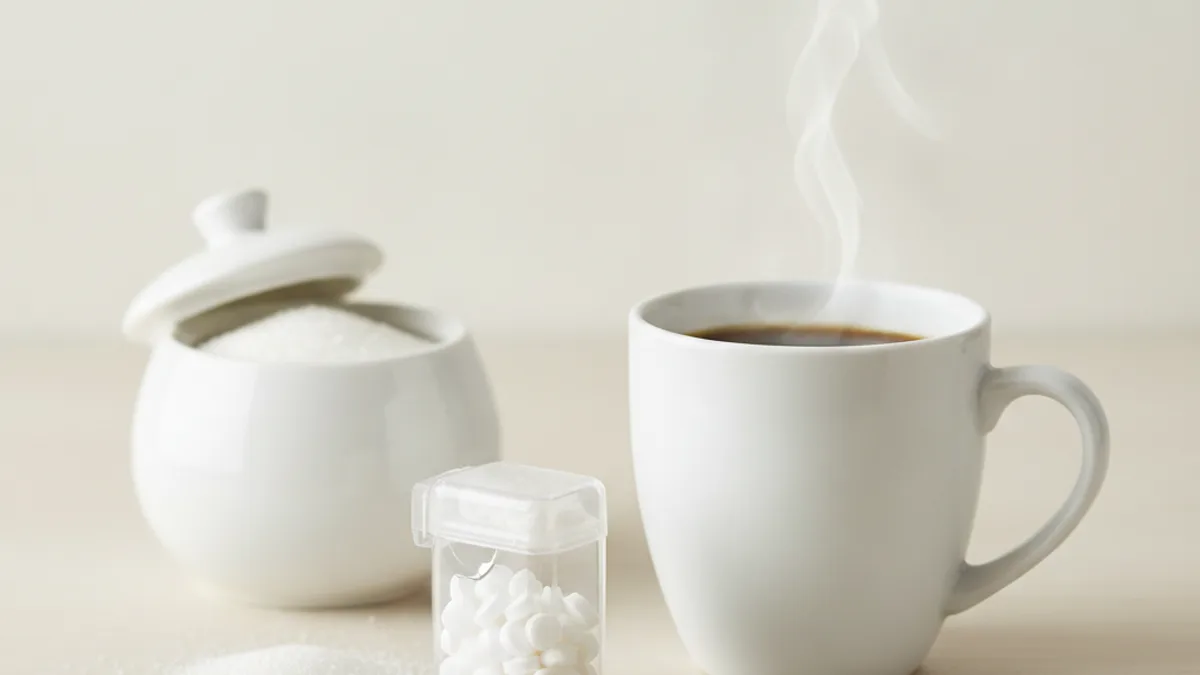
The history of these two sweeteners is a prime example of how a scientific conclusion can be retracted. Saccharin was sold for decades with a warning label that was later removed, while cyclamate remains permitted in some countries and not in others, despite the same initial data.
Saccharin: the warning that was lifted
Saccharin was discovered in the late 19th century and was the first mass-market sweetener. In the 1970s, studies showed that rats developed bladder tumors at very high doses. Restrictions and a requirement for a warning label on packaging followed.
Then something rare happened: the mechanism was fully analyzed. It turned out that the tumors develop via a pathway specific to rats, related to the composition of their urine and the formation of crystals in the bladder that mechanically damage the epithelium. This pathway does not occur in humans.
After this, the warning requirements were lifted, and saccharin returned to the lists of permitted substances. It is still used today, although due to its metallic aftertaste, it is more often found in blends with other sweeteners.
Cyclamate: the discrepancy that never closed
In the 1960s, cyclamate was used in a mixture with saccharin. A study showing bladder tumors in rats fed this mixture led to its ban in the U.S. in 1970.
Subsequent studies did not confirm these results, and in a number of jurisdictions—including the EU and Russia—cyclamate remains permitted with an established acceptable daily intake. However, the ban in the U.S. has not been lifted to this day.
The reason for the discrepancy is not scientific, but procedural: lifting a ban requires a separate decision and an applicant willing to pursue it, and there proved to be insufficient commercial incentive for this. It is worth remembering this when encountering the argument "it's banned in the U.S."—it does not always reflect a current assessment.
What follows from this pair
- Doses in animal experiments can be incomparable to dietary intake. In both stories, the amounts involved were unattainable through normal consumption.
- Mechanism is more important than correlation. Saccharin was brought back not because there were no tumors, but because it was understood why they occur specifically in rats.
- Regulatory status is not the same as scientific assessment. A ban can outlive the data on which it was based.
- The revocation of an authorization works both ways. Unlike titanium dioxide and potassium bromate, here the review turned out in favor of the substance.
Where they are found now
Both are most often found in blends: saccharin has a metallic aftertaste, while cyclamate has a weaker sweetness; together, they provide a more balanced profile and mask each other's drawbacks. Typical places include tabletop sweeteners in tablets, sugar-free drinks, chewing gum, and confectionery for diabetic diets.
What is known about sweeteners in general and how to read assessments from expert bodies can be found in the article on sugar substitutes, and about drinks containing them in the article on soda.
A separate caveat
Cyclamate is not recommended during pregnancy—this restriction is noted separately and is related to the specifics of its metabolism in the body, which varies between individuals depending on the composition of their gut microbiota.
This is a case where general safety and a recommendation for a specific group are different statements, and the latter does not negate the former.
Frequently asked questions
- Why was saccharin once sold with a warning?
- In the 1970s, studies showed bladder tumors in rats at very high doses. Later, the mechanism was analyzed: it is specific to rats and linked to the formation of crystals in their urine, and it does not occur in humans. The warning was lifted.
- Is cyclamate permitted?
- In the European Union and Russia, yes, with an established acceptable daily intake. In the United States, the 1970 ban has not been lifted to this day, although subsequent studies did not confirm the initial results.
- Why did decisions differ across countries?
- The reason is procedural: lifting a ban requires a separate decision and an applicant willing to pursue it. Therefore, the argument "banned in the US" does not always reflect the current scientific assessment.
- Why are they often used together?
- Saccharin has a metallic aftertaste, while cyclamate has a weaker sweetness. In a mixture, they provide a more balanced flavor profile and mutually mask each other's drawbacks, which is why they are found together in tablet sweeteners and beverages.
- Are there restrictions for specific groups?
- Cyclamate is not recommended during pregnancy; this is due to the specifics of how it is metabolized in the body, which varies between individuals depending on the composition of their gut microbiota.
Read next
- Artificial sweeteners: are they harmful, and do they help you lose weight? — Arguments about sweeteners are conducted as though the choice were between them and plain water.
- Titanium dioxide E171: an additive allowed for decades and then banned — Titanium dioxide has been used as a food coloring for decades and was considered one of the most inert additives: it does not dissolve, is not absorbed to any significant degree, and is chemically extremely stable.
- Soda and its "zero": what changes when sugar is removed — The difference between regular soda and its "zero" version comes down to one line in the ingredients: a sweetener instead of sugar.
This article is for general information. It is not medical advice, a diagnosis, or a prescription for treatment or a diet, and it does not replace a consultation with your doctor. If you have a health condition, are pregnant, take medication, or follow a diet prescribed to you, decisions about food belong with your doctor.
Figures from regulations, guidelines and studies are given as they stood when this article was prepared and may since have changed; check them against the primary sources. This article is not advertising, an offer, or individual advice, and neither the author nor the site owner is responsible for decisions taken on the basis of it.