Protein after 60: why requirements are higher
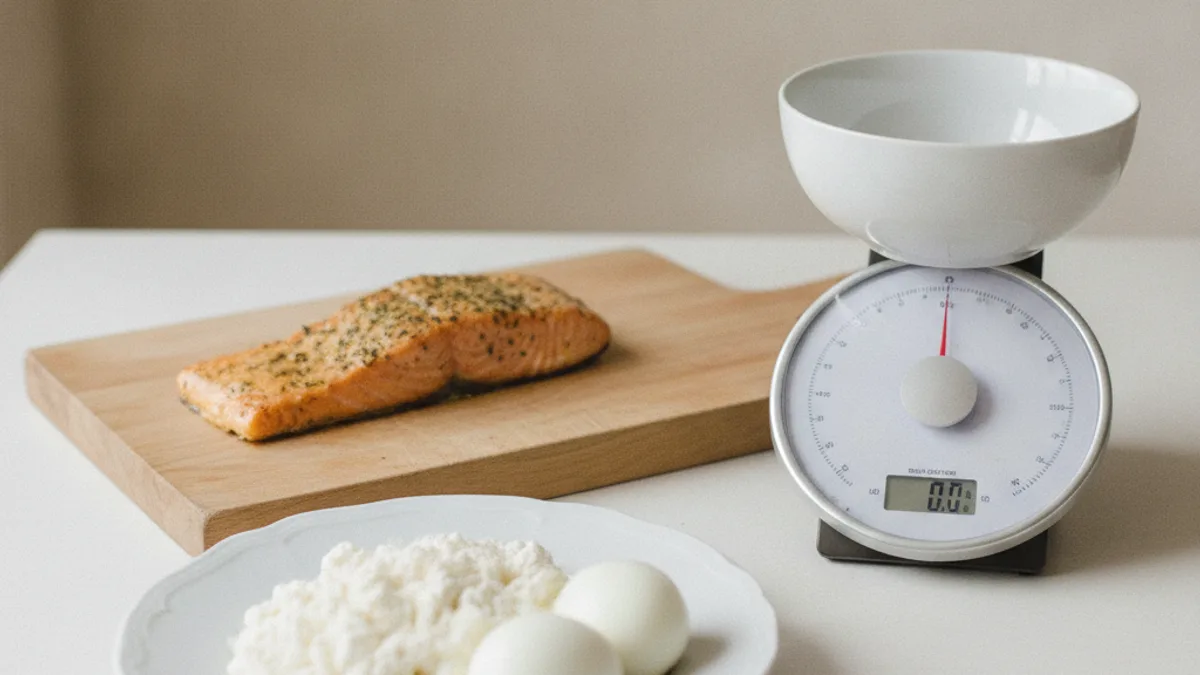
The general protein requirement—0.83 g per kilogram of body weight—is calculated for adults in general. For older adults, two independent expert groups recommend more: 1.0–1.2 g per kilogram, and even higher in case of illness. The reason is not age itself, but the fact that muscles respond less effectively to the same portion of protein.
Recommended amounts
The PROT-AGE Study Group position paper: healthy older adults are recommended to consume 1.0–1.2 g of protein per kilogram of body weight daily. Those who are physically active and exercise regularly should aim for 1.2 g/kg or more. In cases of acute or chronic illness, requirements are higher: 1.2–1.5 g/kg.
The ESPEN expert group recommendations are consistent: healthy seniors should consume at least 1.0–1.2 g/kg daily, with higher amounts for those with malnutrition or at risk of it due to illness.
For comparison: the EFSA reference value for adults is 0.83 g/kg. The difference between 0.83 and 1.2 for a 70 kg person is 58 g versus 84 g of protein per day, which is roughly one extra serving of a protein-rich food per day.
Why more is required
The key concept is anabolic resistance: as we age, muscles respond less effectively to the same portion of amino acids by synthesizing protein. To achieve the same response, a larger dose per meal is needed—hence the higher daily requirement.
The second reason is sarcopenia, the gradual loss of muscle mass and strength, which both groups aimed to prevent. Protein does not work in isolation here: both recommendations pair it with physical activity, primarily resistance training.
The mechanism of how muscles respond to protein is explained in our article on protein and muscle protein synthesis.
How to meet this goal through food
84 g of protein looks intimidating only as a number. In terms of food, it looks like this:
| Meal | What | Protein |
|---|---|---|
| Breakfast | 200 g of 5% cottage cheese or two eggs with bread | 25–34 g |
| Lunch | 120 g of chicken, fish, or meat | 25–30 g |
| Dinner | 150 g of fish or a serving of legumes with grains | 20–30 g |
| Snack | a glass of kefir or yogurt | 6–10 g |
The main gap is almost always at breakfast: porridge made with water and tea provide only a few grams. A breakdown of how to fix this is in our article on protein-rich breakfasts, and requirements for other age groups are in our article on protein intake.
What hinders meeting the requirement
- Reduced appetite. Portions decrease, and protein-rich foods are often the first to be cut from the diet as they are the most "filling."
- Teeth and chewing. Meat is replaced by bread and porridge; the solution is fish, cottage cheese, eggs, and pureed legumes.
- Habit of a single protein-heavy meal. All protein consumed at dinner is utilized less effectively than when distributed across three meals—a direct consequence of anabolic resistance.
- Cost. Calculating the price per gram of protein rather than per package helps; this is explained in our article on price per kilogram.
Who needs restriction instead of an increase
PROT-AGE makes a direct exception: for people with severe kidney disease (estimated glomerular filtration rate below 30 ml/min/1.73 m², not on dialysis), protein intake is restricted instead.
This is a case where general recommendations are not just inapplicable but harmful, and the decision must be made by a doctor. The same applies to post-operative situations, cancer, and during certain drug therapies: the requirement is set by the attending physician.
Practical steps
- Calculate your requirement. Weight × 1.0–1.2 g, and compare it with your current intake.
- Distribute it across three meals instead of trying to make up for it in the evening.
- Add resistance training in an accessible form. Both recommendations pair it with protein, not as a substitute.
- Verify with data, not feelings. A couple of days of tracking provides a more accurate picture than the impression that "I eat enough."
Frequently asked questions
- How much protein is needed after 60?
- The PROT-AGE and ESPEN groups recommend 1.0–1.2 g per kilogram of body weight per day for healthy older adults, 1.2 g/kg or more for those who are physically active, and 1.2–1.5 g/kg for those with acute or chronic illnesses.
- Why do protein needs increase with age?
- Due to anabolic resistance: muscles respond less effectively to the same portion of amino acids by synthesizing protein, so a larger dose per meal is required to achieve the same response.
- Is high protein intake harmful to the kidneys?
- For healthy individuals, expert bodies have not established an upper limit, but in cases of severe kidney disease (GFR below 30 mL/min/1.73 m², without dialysis), PROT-AGE explicitly recommends restricting protein. This is a decision for a physician.
- How should protein be distributed across meals?
- Evenly across three meals rather than all at once at dinner: with anabolic resistance, the dose per meal is just as important as the total daily amount.
- Do older adults need protein powders?
- They are not necessary: the recommended amount can be met through regular foods such as cottage cheese, eggs, fish, meat, and legumes. Powder remains a convenient option when appetite is reduced or chewing is difficult.
Read next
- How much protein do you need per day — There are two opposing figures regarding protein: the official recommendation of about 0.
- Protein and muscle protein synthesis: dose, leucine and the anabolic window — Protein comes with its own arithmetic: thirty grams per meal, a leucine threshold, a window after training.
- Three protein-rich breakfasts that take ten minutes to prepare — The usual breakfast has one problem, and it's not the calories: porridge made with water, toast with jam, and coffee contain almost no protein.
This article is for general information. It is not medical advice, a diagnosis, or a prescription for treatment or a diet, and it does not replace a consultation with your doctor. If you have a health condition, are pregnant, take medication, or follow a diet prescribed to you, decisions about food belong with your doctor.
Figures from regulations, guidelines and studies are given as they stood when this article was prepared and may since have changed; check them against the primary sources. This article is not advertising, an offer, or individual advice, and neither the author nor the site owner is responsible for decisions taken on the basis of it.