Night shifts: what happens to appetite and weight
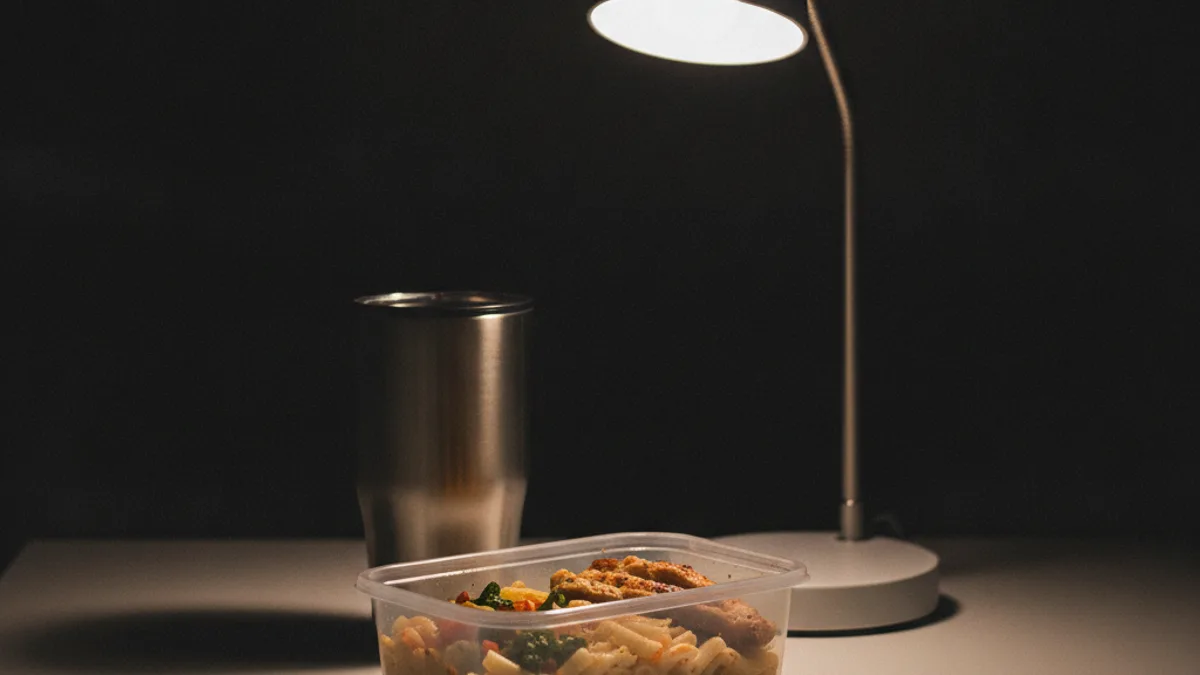
People with shift schedules are more likely to be overweight, a consistent finding across many observations. The focus should not be on the fact itself, but on how much of it depends on the schedule versus eating at four in the morning.
What the observations showed
A meta-analysis in Obesity Reviews (2018) combined 28 studies and yielded an odds ratio of 1.23 (95% CI 1.17–1.29) for overweight and obesity in shift workers compared to day workers.
Two clarifications from the same work are more important than the overall figure:
- Abdominal obesity occurred more frequently than other types — an odds ratio of 1.35. That is, it is not just the weight that differs, but where it is deposited, and these have different consequences.
- Permanent night workers were in a worse position than those with rotating shifts: 1.43 versus 1.14.
These are observations, not an experiment. Shift work itself is associated with other conditions — income level, availability of food on-site, amount of sleep — and part of the effect is due to these. However, the link is reproduced in different countries and across different samples, and it is not possible to attribute it entirely to accompanying circumstances.
It is worth knowing the context: in 2019, a working group of the International Agency for Research on Cancer classified night shift work that disrupts circadian rhythms as Group 2A — "probably carcinogenic to humans" (report in Lancet Oncology). This is a statement about the strength of the evidence, not the magnitude of the risk.
Why you crave different things at night
Three mechanisms, each of which has been measured separately.
Hunger hormones are shifted. Leptin and ghrelin follow a circadian rhythm and show a different pattern at night than during the day. A person awake at four in the morning feels hungry not because they haven't eaten enough, but because they are in the wrong phase.
The body processes carbohydrates worse at night. The same food causes a higher and longer glucose spike at night than during the day. The mechanism is analyzed separately — circadian rhythms and meal timing.
Sleep deprivation changes choices. With short sleep, the craving for high-calorie food increases, and this is reproduced in controlled experiments. Analysis — how sleep deprivation affects weight and appetite.
Added to this is the fact that it is not related to physiology: at night, a vending machine is working, not a cafeteria, and the selection consists of chocolate bars and soda.
What can be changed and what cannot
| What | Changeable |
|---|---|
| The schedule itself | Usually no |
| Shift in hunger hormones | No — this is a consequence of the schedule |
| What exactly to eat at night | Yes, entirely |
| When exactly to eat during the shift | Yes |
| Duration of sleep between shifts | Partially |
| What is eaten immediately after the shift | Yes |
Practically all available leverage is in the last three rows, and they do not require changing jobs.
What to do during the shift
Bring food with you. The only solution that cancels out the vending machine. It is made once at home, in a state where you are capable of choosing, not at four in the morning.
Shift the main meal closer to the beginning of the shift. Eating a substantial meal at 10 PM and a light one at 3 AM is tolerated better than the other way around: both in terms of glucose tolerance and sleep afterward.
Keep protein in your night meal. It keeps you full longer and triggers fewer subsequent cravings than the same number of calories from pastries.
Do not "overeat" after the shift. The commute home and the first hour at home is a period when hunger is maximal and decisions are at their worst. A pre-decided breakfast works better than the intention to eat moderately.
Coffee — only in the first half of the shift. The half-life of caffeine is about five hours; consumed in the early morning, it will remain in the blood by the time you need to fall asleep. More details — caffeine and adenosine.
How to count if the day does not match the calendar
A standard food diary is tied to the date, but for a shift worker, a meal at 3 AM belongs to the previous workday, not the current one. Because of this, a "day" in the diary ends up being either one-and-a-half days or half a day, and the average over calendar days loses its meaning.
The way to get around this is simple: look at the weekly average, not the daily one. A week contains a whole number of shifts, and within it, the shift of boundaries no longer matters. How to read weekly numbers — is analyzed separately.
What is worth checking with a doctor
Shift work is associated with more than just weight. With permanent night shifts, it makes sense to check fasting glucose, lipid profile, and blood pressure once a year — not because something will necessarily be found, but because these are the indicators that are more likely to deviate from the norm in this group.
Frequently asked questions
- How much more common is excess weight among shift workers?
- A 2018 meta-analysis of 28 studies shows an odds ratio of 1.23 for overweight and obesity. For abdominal obesity, the figure is higher at 1.35, and it is higher for permanent night workers than for those working rotating shifts.
- Why do we crave sweets at night?
- Three factors combine: hunger hormones follow a circadian rhythm and produce a different pattern at night, sleep deprivation increases cravings for high-calorie food, and usually only a vending machine is available at night rather than a cafeteria.
- When is the best time to eat during a night shift?
- A substantial meal closer to the beginning of the shift and a light one toward morning is tolerated better than the reverse: at night, carbohydrates cause a higher glucose spike, and late eating has a more negative impact on sleep after the shift.
Read next
- How sleep loss affects appetite and weight — Sleep usually turns up in the last paragraph of a weight-loss article, phrased vaguely enough to be safe.
- Meal timing and the body clock: why breakfast and midnight are not the same meal — The same plate is not handled the same way at eight in the morning and at midnight.
- Visceral fat: why it matters and how to measure it — Two people at the same weight, with the same BMI, can carry very different metabolic risk.
This article is for general information. It is not medical advice, a diagnosis, or a prescription for treatment or a diet, and it does not replace a consultation with your doctor. If you have a health condition, are pregnant, take medication, or follow a diet prescribed to you, decisions about food belong with your doctor.
Figures from regulations, guidelines and studies are given as they stood when this article was prepared and may since have changed; check them against the primary sources. This article is not advertising, an offer, or individual advice, and neither the author nor the site owner is responsible for decisions taken on the basis of it.