Metabolism: is it true that it can be "boosted" and that it can "break"
One person is promised a metabolism boost through spices and frequent small meals, another explains weight plateaus by claiming their metabolism is broken from dieting. Both statements refer to the same number — how many kilocalories the body burns per day — which can be broken down into parts to see which of them is actually capable of shifting.
What makes up daily energy expenditure
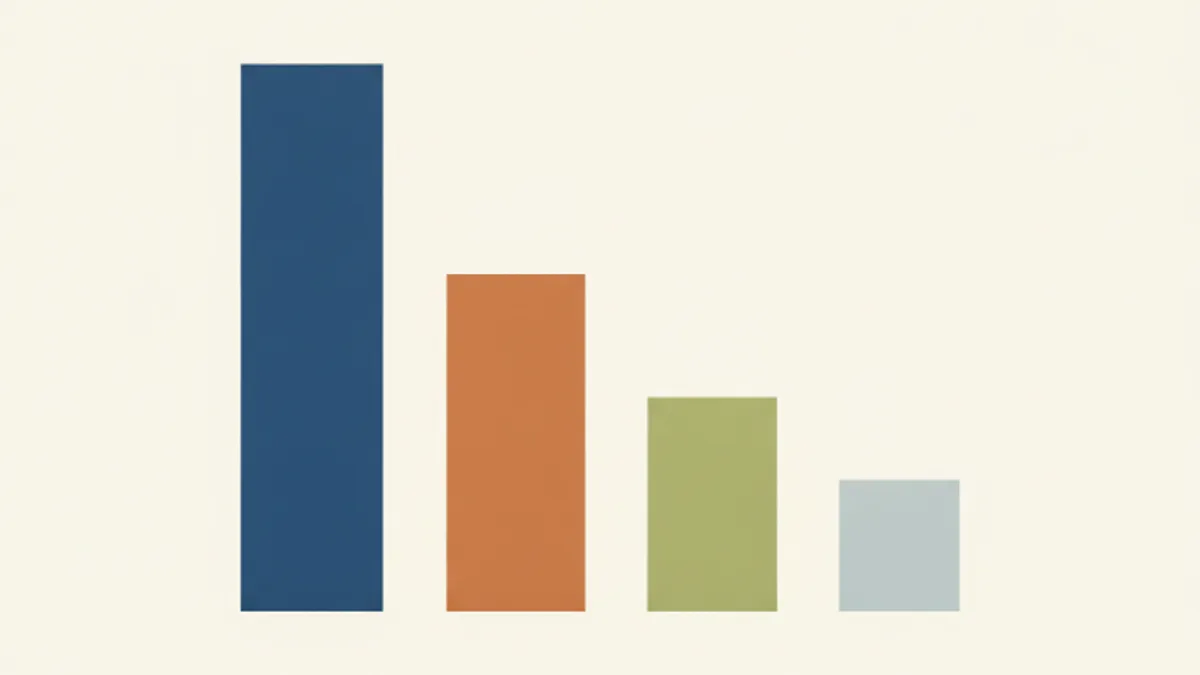
Energy expenditure consists of four components, and they vary significantly in size.
Basal metabolic rate (BMR) is the energy required for the body to function at complete rest: breathing, circulation, protein synthesis, maintaining body temperature, and electrical gradients across cell membranes. For a person with a typical lifestyle, this accounts for about two-thirds of total expenditure. It is by far the largest component.
Thermic effect of food (TEF) is the energy used for digestion, absorption, and processing of consumed food. On a mixed diet, this is about one-tenth of the energy consumed.
Non-exercise activity thermogenesis (NEAT) includes all movement outside of structured exercise: walking, taking stairs, cleaning, standing while working, gesturing, and the habit of not sitting still. This is the component that varies most significantly between two people of the same weight.
Exercise is the smallest component for most people, simply due to time: three hours in the gym per week accounts for less than two percent of the week.
Going forward, any promise of "boosting" metabolism can be evaluated using this breakdown: which component does it address, and what portion of that component can it realistically shift?
Why basal metabolic rate is hard to influence
Basal metabolic rate is not a dial that can be turned, but the sum of the energy requirements of specific tissues. The liver, brain, kidneys, and heart consume dozens of times more energy per kilogram of their mass than skeletal muscle at rest, and together they account for the bulk of resting expenditure. An adult cannot change the mass of these organs through anything advertised in marketing.
Skeletal muscle at rest consumes about ten to fifteen kilocalories per kilogram per day, while adipose tissue consumes several times less. This leads to honest arithmetic: a kilogram of muscle, which takes months to build in the gym, adds only about ten kilocalories to daily expenditure. Muscles are important for weight loss, but not for this reason—more on that below.
However, this leads to a conclusion that directly contradicts marketing claims: a larger body spends more energy. One hundred kilograms at rest require significantly more energy than sixty, and as weight decreases, the basal metabolic rate drops because the tissue that created that demand has decreased. This is not a malfunction, but the same calculation with different numbers, and it explains a significant part of what is called a weight loss plateau.
What is actually promised by the word "boost"
Frequent small meals. The image of a "furnace that needs to be stoked every three hours" relies on the thermic effect of food. But this effect is proportional to the amount eaten, not the number of meals: six meals of 400 kilocalories and three of 800 provide the same total and roughly the same ten percent for processing. In studies with equal caloric intake, different meal frequencies did not change expenditure or the rate of weight loss. It may influence appetite and the convenience of a routine, but it does not affect the "furnace."
Spicy food. Capsaicin from peppers does indeed increase expenditure and slightly suppresses appetite; the effect has been measured repeatedly. The magnitude is in the tens of kilocalories, and it lasts for hours, not days. This is not enough to offset a pastry.
Caffeine. Here, the effect is the most reliable of all those listed: caffeine stimulates the sympathetic nervous system, and resting expenditure measurably increases. The magnitude is again tens of kilocalories per serving, the duration is a few hours, and regular consumption leads to tolerance. The practical benefit of coffee for energy expenditure is usually different and indirect: it helps a person move more and train better.
Cold and brown fat. Brown adipose tissue is structured so that its mitochondria can divert oxidation away from ATP synthesis and directly into heat—a process managed by the UCP1 protein. Newborns have a lot of it; in adults, small depots remain on the neck and above the collarbones, which are visible on PET scans and activated by cold. Beyond this, we enter an area where data is scarce: the measured contribution of these depots in adults is small and varies greatly between individuals, and there are practically no studies showing that ice baths lead to fat loss. Caution here is not just a figure of speech—cold procedures are unsafe for those with heart and vascular diseases.
Supplements. Green tea, L-carnitine, and other "thermogenics" are sold specifically on this promise; what actually happens with them is analyzed separately in the article on fat burners.
Everything on this list has one thing in common: each approach addresses the thermic effect of food or a small increase in resting metabolism—that is, the smallest components. The most flexible component—non-exercise activity—is not mentioned in these promises at all.
Age: what large-scale measurements have shown
"Metabolism slows down after thirty" sounds like a physiological fact, but it was only recently verified when measurements of expenditure using the doubly labeled water method—the only way to measure daily expenditure of a person living a normal life—were combined. The consolidated database included more than six thousand people from dozens of countries, from infants to ninety-year-olds.
The picture emerged in four stages. Expenditure per kilogram of mass rises sharply in the first year of life, then slowly declines until about age twenty, then stays on a flat plateau until about age sixty, and only after that begins to decline—by less than one percent per year. There is no "break" in the data at thirty or thirty-five.
The feeling that "everything became harder" after thirty is not imagined, but the reason is different. Without strength training, muscle mass is lost by a few percent per decade, and along with work, driving, and children, non-exercise activity decreases. Two out of four components change, but age itself does not.
Adaptation to deficit, often called a broken metabolism
Here, the claim has some basis. During a prolonged deficit, expenditure decreases more than the loss of mass would predict, and this has been known for a long time: in the classic Minnesota experiment of the 1940s, the resting expenditure of subjects fell significantly below the calculated value and returned to normal when nutrition was restored.
The mechanism is understood in parts. Adipose tissue produces leptin in proportion to its quantity, and during weight loss, its level drops, which the hypothalamus reads as a signal of energy shortage. In response, the production of the active thyroid hormone T3 decreases, the tone of the sympathetic nervous system drops, and hunger increases. Separately and unnoticed by the person, non-exercise activity decreases: fewer steps, fewer unnecessary movements, more desire to sit. This is what accounts for the main part of the drop, because it is the most flexible component.
The magnitude is important. The difference from the calculation is usually measured in tens, rarely hundreds, of kilocalories per day. This is enough for weight loss to proceed slower than expected, but not enough to explain a complete halt in weight loss on a diet that a person estimates at 1200 kilocalories. When weight stays the same for months, it is usually not physiology that is off, but the tracking of food intake—what to do about this is analyzed in the article on calorie deficit.
Whether this adaptation is reversible is a less clear-cut question. With a moderate deficit and a return to maintenance calories, expenditure recovers along with mass and hormones. Data on extreme cases vary: the most famous study observed participants in a television project where weight was lost very quickly and significantly, and it found a difference from the calculation even after six years—but that involved fourteen people and extreme conditions, and the magnitude of the effect is disputed in subsequent analyses. In no version is this a "break": it is an adjustment that lasts as long as the deficit lasts, and which is smaller the more careful the deficit is.
When the slowdown is real
There is a condition where metabolism truly drops measurably—hypothyroidism. Thyroid hormones directly set the rate of basal metabolism, and when they are lacking, expenditure decreases. However, this does not look like the "slow metabolism" discussed in weight loss circles, but rather a set of symptoms: constant cold sensitivity, drowsiness and fatigue, dry skin, hair loss, constipation, slow heart rate, facial puffiness, and in women, menstrual irregularities.
Weight gain in hypothyroidism is usually modest, a few kilograms, and a noticeable part of it is due to fluid retention, not fat. Dozens of extra kilograms cannot be explained by hypothyroidism alone.
The diagnosis is made based on blood tests, not how one feels: the listed complaints are non-specific and occur with sleep deprivation, iron deficiency, and depression. The first step is a TSH test, followed by free T4 results and a decision by an endocrinologist. Taking thyroid medication "to boost metabolism" without a diagnosis is dangerous: an excess of these hormones causes heart rhythm disturbances and bone mass loss. Separately, it is worth mentioning iodine: Russia is a region with insufficient iodine intake, and the recommendation by Rospotrebnadzor to use iodized salt is for the prevention of iodine deficiency, not the treatment of an existing thyroid disease.
Other situations should also be discussed with a doctor rather than resolved by an article: taking medications that affect weight and appetite, pregnancy, diabetes, and kidney disease. Strict calorie restriction in these cases is unsafe in itself.
What actually drives energy expenditure
- Muscle mass. The value is not in the ten kilocalories of resting energy per kilogram, but in the fact that during a deficit, the body loses both fat and muscle, and strength training shifts this proportion toward fat. Preserved muscle means a preserved basal metabolic rate when coming off a diet.
- Non-exercise activity. The only component that a person can change by multiples, not just percentages, and the first thing that quietly decreases during a deficit. Steps, stairs, and standing while working provide more than all thermogenics combined.
- Protein. Processing it consumes from one-fifth to one-third of its own caloric value—significantly more than carbohydrates and fats. Plus, it provides satiety and protects muscle mass. This is the only item in a diet that influences expenditure.
- Moderation of the deficit. The stricter the restriction, the more activity, muscle tone, and hormones drop—meaning the more is taken away from the components of expenditure themselves.
- Knowing your input. Before looking for a "break" in expenditure, it is worth seeing the real number of calories consumed and comparing it with your daily calorie requirement. In most cases, the explanation is found here.
Frequently asked questions
- Can you boost your metabolism?
- Not significantly. The largest part of daily energy expenditure comes from the basal metabolic rate, which is determined by body mass and the mass of organs and muscles, rather than spices, coffee, or eating patterns. All popular "boosting" methods affect only a few dozen kilocalories per day and last for only a few hours.
- Is it true that metabolism slows down after 30?
- Large-scale measurements of energy expenditure using the doubly labeled water method have shown that energy expenditure per kilogram of body mass remains stable from approximately age twenty to sixty. The feeling of slowing down is explained by the loss of muscle mass and a decrease in daily physical activity, rather than by age itself.
- Is it true that frequent small meals speed up metabolism?
- No. The energy required for digestion depends on the total amount of food consumed, not on how many meals it is divided into. With equal caloric intake, meal frequency does not change energy expenditure or the rate of weight loss, although it may affect appetite and the convenience of a routine.
- Can you break your metabolism with diets?
- During prolonged caloric deficit, energy expenditure does indeed decrease more than weight loss alone would predict: levels of leptin and T3 hormone drop, and most importantly, daily physical activity decreases subconsciously. We are talking about dozens, rarely hundreds, of kilocalories per day, and this adjustment reverses when returning to maintenance calories.
- How do I know if weight is not being lost due to the thyroid gland?
- Through blood tests, not by how you feel: the first step is a TSH test, followed by a free T4 test based on the results, and a consultation with an endocrinologist. Hypothyroidism is usually accompanied by other symptoms—feeling cold, drowsiness, dry skin, constipation, a slow heart rate, and weight gain of a few kilograms, which largely consists of fluid retention.
Read next
- Calorie deficit: how to calculate it and how to hold it — A calorie deficit is the one thing without which weight does not come down.
- Daily calorie intake — There is no universal norm: it depends on weight, height, age, sex, and activity level.
- Weight loss plateau: why weight stalls and what to do about it — The weight has stayed at the same number for the third week in a row, even though the diet hasn't changed — and the first instinct is usually the same: to cut even more.
This article is for general information. It is not medical advice, a diagnosis, or a prescription for treatment or a diet, and it does not replace a consultation with your doctor. If you have a health condition, are pregnant, take medication, or follow a diet prescribed to you, decisions about food belong with your doctor.
Figures from regulations, guidelines and studies are given as they stood when this article was prepared and may since have changed; check them against the primary sources. This article is not advertising, an offer, or individual advice, and neither the author nor the site owner is responsible for decisions taken on the basis of it.