Hypnosis for weight loss
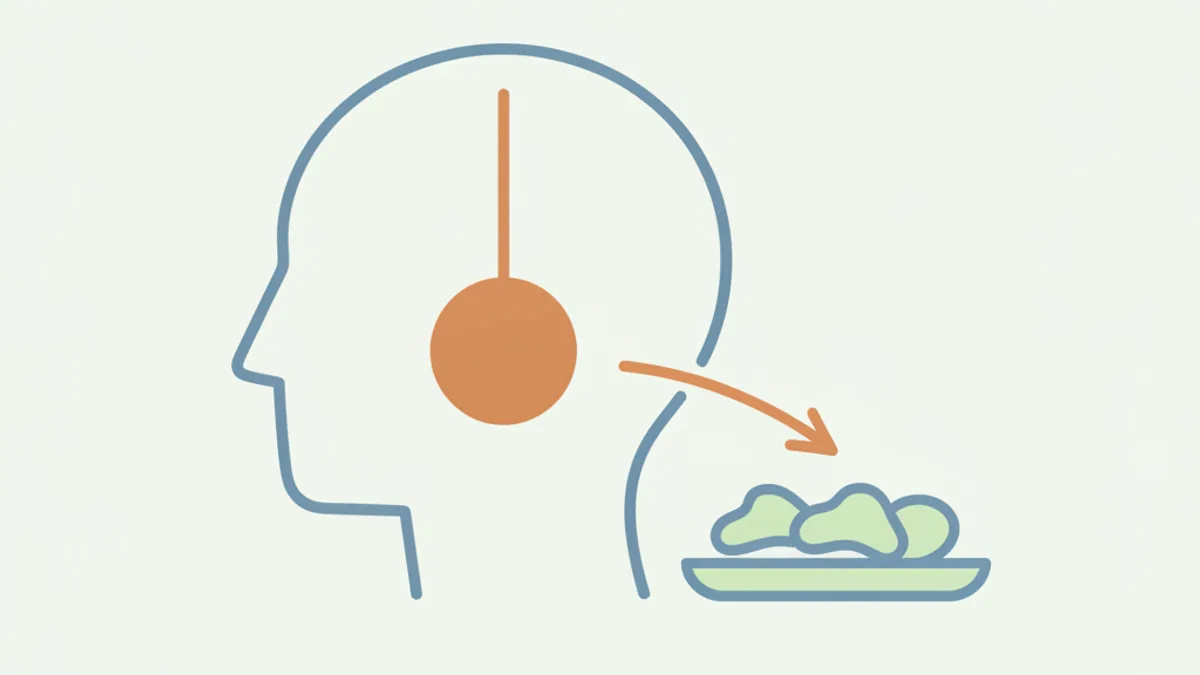
Reviews for this method are more polarized than for any other: some say their life has changed, while others say they wasted their money. There are explainable reasons for such a discrepancy, and it is worth knowing them before, rather than after, paying for a course.
What is promised
The phrasing is familiar: "eliminate sugar cravings," "reprogram eating behavior," "lose weight without diets or counting." Usually, a course of sessions is offered, sometimes including audio recordings for self-listening.
The appeal is clear. All other methods require changing behavior and waiting; this one promises to change desires directly.
Hypnotizability: why people's experiences vary so much
The main thing missing from most debates about hypnosis is that susceptibility to suggestion is a measurable individual characteristic, and it varies greatly between people. Standardized scales have existed for decades to assess it, used in research: the Stanford Hypnotic Susceptibility Scale and the Harvard Group Scale.
The picture they paint is roughly this: about a tenth of people respond strongly to suggestion, about the same number hardly respond at all, and the rest are somewhere in between. Hypnotizability also turned out to be a remarkably stable trait: when measured again many years later, an individual's results change very little.
This also clears up a common misconception. High hypnotizability is not suggestibility in the everyday sense, not gullibility, and not "weak will." It is related more to the ability to deeply immerse oneself in the imaginary—the same thing that allows you to forget about your surroundings while reading a book or watching a movie.
Hence the range of reviews. Two people took the same course from the same specialist and got different results—and this is an expected outcome, not evidence that one of them is being dishonest.
What weight loss studies show
Care is needed here, because the previous section is easy to read as "so it will definitely help someone." Hypnotizability explains who will respond to suggestion. The question of whether hypnosis treats obesity is separate, and the answer to it is weaker.
- There are few studies, and they are small. This is an area where few large, high-quality studies have been conducted.
- Hypnosis does not provide weight loss as a standalone method. There are no studies showing a sustainable result from hypnosis alone, without changing diet.
- It is discussed as an adjunct to psychotherapy. Some studies recorded a small additive effect to cognitive behavioral therapy; these data were criticized for their methodology, and later reviews rate the quality of evidence as low.
- The effect size, where it was found, is small—a few kilograms.
- There are almost no long-term observations. What happens a year after the course is mostly unknown.
It is worth noting the opposite: there are areas where hypnosis has a noticeably better evidence base, such as pain management and irritable bowel syndrome. So the question is not "does hypnosis work at all," but what exactly it is capable of. Appetite management is not yet on that list.
What actually happens during the course
Besides the suggestion itself, several other things are at work, and they provide part of the result:
- A person does not come to the course in a vacuum. Usually, a more attentive attitude toward food begins at the same time.
- Expectation of a result influences behavior. The belief that sugar cravings have been "removed" is quite capable of reducing the amount of sugar consumed.
- A paid course motivates. Money spent and commitments to a specialist are a known factor in adherence.
- The underlying causes of overeating are addressed. With a good specialist, the majority of the work is conversation, not trance.
None of this devalues the result: if you lost weight, you lost weight. But it is useful to understand what you are paying for and that part of what is listed is available through other means.
How to choose a specialist
This is perhaps more important than the question of effectiveness itself. Hypnotherapy in Russia is not a separate licensed profession; anyone can hang a "hypnologist" sign, and the market is full of people with weekend certificates. What to check:
- Basic education. A psychotherapist or clinical psychologist. Hypnosis is a tool within psychotherapy, not a profession in itself.
- Documents on training specifically in hypnotherapy—specifying the program and hours, not just a fancy certificate.
- Willingness to state the limitations of the method. A specialist who honestly says that the result is not guaranteed and depends, among other things, on hypnotizability, inspires more trust than one who promises results to everyone.
- A clear plan. How many sessions, what happens in each, and what signs will indicate if things are not going as planned.
- Working with diet and behavior, not instead of them. Hypnosis that complements changes in diet is a viable structure. Hypnosis instead of them is not.
Signs that you should leave
- They promise specific kilograms by a specific date.
- They claim that you won't have to change your diet at all.
- They suggest stopping medical supervision or canceling prescriptions.
- They sell a large package at once, pressuring you on the speed of the decision and offering a "today only" discount.
- There is no psychological or medical education.
- They refuse to discuss what will happen if it doesn't work.
What to go to a specialist for first
If emotions, compulsive episodes, or anxiety are behind the overeating, the most studied path is cognitive behavioral therapy; hypnosis can complement it, and here individual susceptibility will determine how useful this addition proves to be. If an eating disorder is suspected, seeing a specialist is not an "alternative" but a necessity, and calorie-counting apps in such a situation can be harmful.
If the question is simpler—it's unclear where the calories are coming from—you should start with observation. A couple of weeks show the picture, and it usually explains weight stagnation without any trance.
Frequently asked questions
- Does hypnosis for weight loss work for everyone?
- No, and this is not a coincidence: suggestibility is a measurable individual trait. Approximately one-tenth of people respond strongly to suggestion, about the same number respond very little, and the rest fall somewhere in between. This explains the wide range of reviews for the same specialist.
- What is hypnotizability and can it be tested?
- It is the degree of susceptibility to hypnotic suggestion. It is assessed using standardized scales—such as the Stanford or Harvard Group scales—and proves to be a stable trait: when measured again years later, the result changes little. It is not related to gullibility or willpower.
- Does hypnosis help with weight loss?
- As a standalone method, without dietary changes, there are no studies showing a sustainable result. As an adjunct to cognitive behavioral therapy, a small effect is discussed, but the quality of evidence is rated as low. However, in other areas—such as pain management and irritable bowel syndrome—the evidence base for hypnosis is significantly stronger.
- How to choose a hypnotherapy specialist?
- Hypnotherapy is not a separate licensed profession, so look at the basic education: a psychiatrist or clinical psychologist, plus documentation of training in hypnotherapy. A good sign is a willingness to define the limits of the method and not guarantee results.
- How to spot a charlatan?
- You should be wary of promises of specific weight loss by a certain deadline, assurances that you won't have to change your diet, suggestions to stop seeing a doctor, pressure to buy a large package of sessions by emphasizing the urgency of the solution, and a lack of psychological or medical education.
Read next
- How to lose weight correctly — Weight loss is boring: a slight energy deficit, enough protein, strength training, and time.
- Types of diets — When comparing diets in studies, an inconvenient result emerges: the difference between them is smaller than the difference between the people who follow them and those who do not.
- Eating habits: what works and what doesn't — Almost all nutrition plans fail not because of a lack of knowledge, but because of execution.
This article is for general information. It is not medical advice, a diagnosis, or a prescription for treatment or a diet, and it does not replace a consultation with your doctor. If you have a health condition, are pregnant, take medication, or follow a diet prescribed to you, decisions about food belong with your doctor.
Figures from regulations, guidelines and studies are given as they stood when this article was prepared and may since have changed; check them against the primary sources. This article is not advertising, an offer, or individual advice, and neither the author nor the site owner is responsible for decisions taken on the basis of it.