Organic products: what it means by law
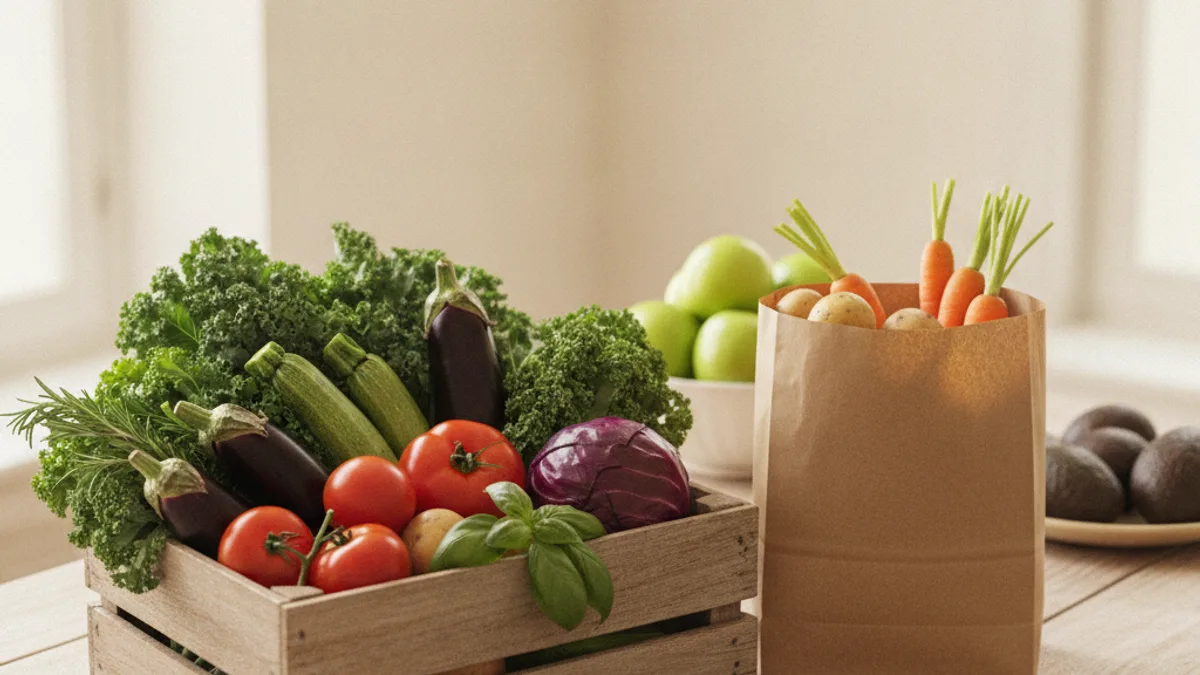
Of all the labels on packaging, "organic" is a rare case where the word is backed by a legal document. Other terms in this category have no such backing, and the difference between them is worth knowing.
What is protected by law
The Federal Law "On Organic Products" was adopted on August 3, 2018, and has been in effect since January 1, 2020. It does two things.
Sets production requirements. It bans agrochemicals, pesticides, antibiotics, and growth stimulants; prohibits GMOs and hydroponics; and sets requirements for crop rotation, animal welfare, and separate storage and transportation.
Protects the word itself. The word "organic," its abbreviations, and derivatives can only be used in labeling after compliance has been verified. You cannot label a product as organic without certification—this is a violation, not a marketer's creative choice.
Those who have verified their compliance gain the right to use a unified graphic symbol and are added to a registry maintained by the Ministry of Agriculture. The registry is public: you can check a producer by their name.
What about "eco," "bio," "farm-style," and "natural"?
| Label | What it means |
|---|---|
| Organic | Law, certification, unified symbol, registry |
| Products with improved characteristics ("green") | Separate law and its own symbol; requirements are less strict than for organic |
| Eco, bio | No separate status; on imports, they may be part of foreign certification |
| Farm-style | Indicates the type of farm, not the production method |
| Natural, from the farm, rustic | Not defined by anything |
Practical conclusion: if a package says "eco" without a symbol and a certificate number, it is just design, not a characteristic. For what the other words on the front of the package mean, see our analysis of labels.
What organic does not promise
This is where disappointment most often arises, because the law describes the production method, while the buyer usually expects something else.
Does not promise higher nutritional value. Comparisons of the composition of organic and conventional products show little and inconsistent differences: slightly more of some nutrients, the same amount of others. There is no basis to rely on this when choosing a diet.
Does not promise lower calorie content. Organic sugar is still sugar, and organic oil is 900 kcal per 100 ml.
Does not promise the absence of additives. Organic products have their own shortened list of permitted food additives, but it is not empty. How to read the full composition—in ten seconds.
Does not mean that conventional products are unsafe. Pesticide residues are lower in organic products, but they are also controlled by standards in conventional products, and exceeding these limits is a matter of oversight, not the norm.
What it actually provides
- Traceability. Certification is a verified chain from field to shelf, and the registry shows who is responsible for it.
- Input restrictions. Fewer synthetic pesticides and prophylactic antibiotics in livestock farming—the latter is significant in the conversation about antibiotic resistance.
- Environmental requirements. Crop rotation, the rejection of certain fertilizers, and requirements for animal housing conditions. For many buyers, this is the primary motive, and it is a valid one.
How to check in a minute at the shelf
- Find the unified organic product symbol on the package, not just a green leaf from a stock photo.
- Find the name of the certification body and the certificate number nearby.
- If in doubt, check the producer in the Ministry of Agriculture's public registry.
- Look at the ingredients and the nutrition facts table, just like with any other product: the word "organic" does not replace them.
- Compare the price per kilogram with a conventional equivalent—the only comparable figure on the price tag.
Is it worth paying extra
This is not a question about health, but about what you are paying for. If your motive is the production method, animal welfare, and fewer synthetics in the field, organic provides exactly that, and the premium goes toward that purpose.
If your motive is "healthier and more nutritious," the data does not support such an expectation, and the same money spent on a larger quantity of conventional vegetables will provide more for your diet. For information on how requirements for the same product differ in different countries, see our separate article, and for information on GOST and TU labels, look here.
Frequently asked questions
- What does the label "organic" on a package mean?
- It means the production has been certified under the federal law on organic products: without agrochemicals, pesticides, antibiotics, and GMOs. The word is protected, and it cannot be used without verifying compliance.
- How do "eco" and "bio" differ from "organic"?
- In Russia, "eco" and "bio" do not have a separate status: they are marketing terms rather than specific characteristics. Only organic products and products with improved characteristics are legally defined, each having its own label and registry.
- Are organic products healthier?
- In terms of nutritional value, the difference is small and inconsistent. Certification describes the production method, not the composition: the calorie count, sugar, and additives in an organic product are checked according to the same labeling standards.
Read next
- "Sugar-free," "fitness," "eco": what these labels actually mean — The front of a package speaks in short words: "light," "fitness," "sugar-free," "eco.
- GOST and TU: what is actually behind these letters — GOST is often read as a mark of quality, while TU is seen as permission to do whatever one wants.
- Food standards in different countries: why the same product varies — The same brand in two countries may have a different composition, and this is not always about cost-cutting.
This article is for general information. It is not medical advice, a diagnosis, or a prescription for treatment or a diet, and it does not replace a consultation with your doctor. If you have a health condition, are pregnant, take medication, or follow a diet prescribed to you, decisions about food belong with your doctor.
Figures from regulations, guidelines and studies are given as they stood when this article was prepared and may since have changed; check them against the primary sources. This article is not advertising, an offer, or individual advice, and neither the author nor the site owner is responsible for decisions taken on the basis of it.