Nootropics: what meta-analyses showed in healthy people
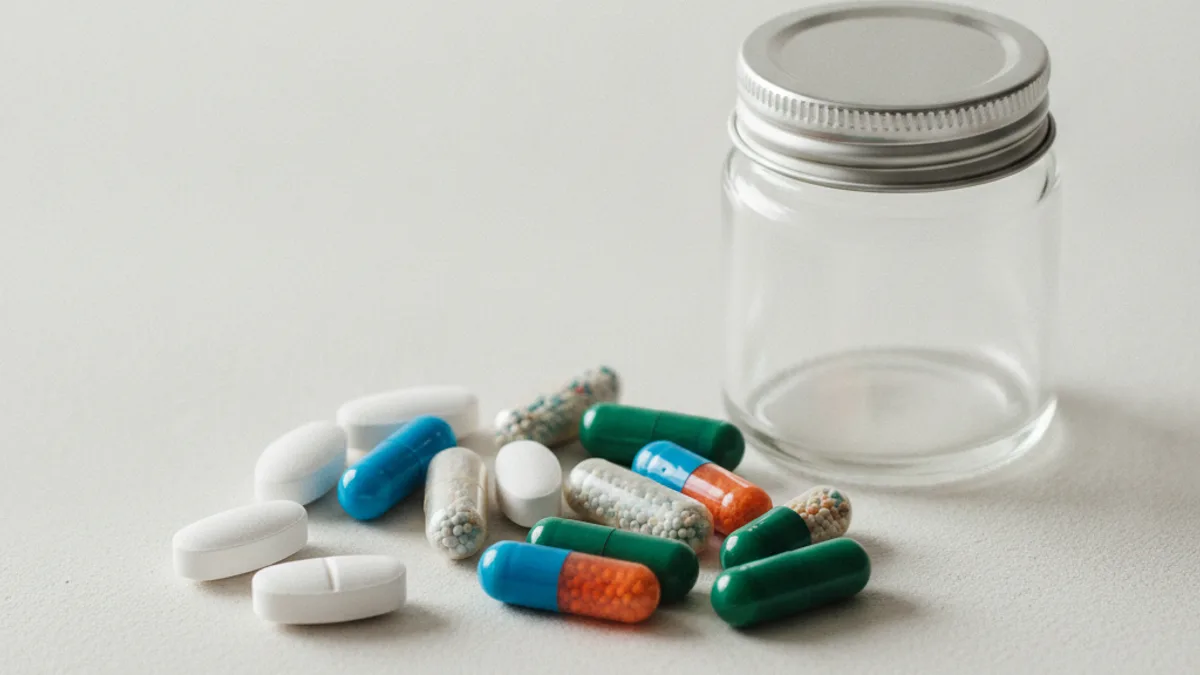
The word "nootropic" unites things that have nothing in common except a promise: prescription drugs, plant extracts, amino acids, and B vitamins. It is pointless to test such a set entirely. Testing them one by one is possible, and this has already been done.
Prescription stimulants: the numbers exist
The most meticulous work in this area is a series of three meta-analyses on the effect of a single dose in healthy, non-sleep-deprived adults. The analysis included 47 studies: 14 on modafinil, 24 on methylphenidate, and 10 on dextroamphetamine.
- Modafinil. Overall standardized effect 0.12. Of the individual domains, only working memory updating significantly changed — 0.28.
- Methylphenidate. Overall effect 0.21, due to memory recall (0.43), sustained attention (0.42), and response inhibition (0.27).
- Dextroamphetamine. No significant effects were found.
The authors specifically note that the effect sizes are small, and the experimental conditions poorly reflect real-world use. Work in European Neuropsychopharmacology.
A standardized effect of 0.12–0.21 is a shift noticeably smaller than what the difference between a well-rested and a sleep-deprived person provides. Plus, the setup itself: a single dose was measured in the laboratory, not months of intake.
The status is a separate point. In Russia, methylphenidate and amphetamine are included in List I of the list of narcotic drugs and psychotropic substances (Decree of the Government of the Russian Federation No. 681 of 30.06.1998) — the circulation of such substances is prohibited. Modafinil is included in the list of potent substances for the purposes of Article 234 of the Criminal Code of the Russian Federation (Decree of the Government of the Russian Federation No. 964 of 29.12.2007). This is not a fine print note, but a criminal matter.
Plant extracts
There are many studies here, and they are structured differently. A network meta-analysis on the effect of natural extracts on cognitive functions in healthy adults included 27 studies, 2334 samples, and 19 different extracts, after which it ranked them by the probability of being the best. No extract surpassed placebo in attention. Work in Frontiers in Pharmacology.
Next begins a methodological caveat that is usually lost in retellings. Nineteen interventions across 27 studies form a network where each comparison accounts for one or two works. Ranks in such a network are unstable: adding a single trial can reorder the leaders. Therefore, "ranked first in the meta-analysis" here does not mean the same as "showed an effect in a trial."
Plus, the initial problem, the same as with adaptogens: different extracts from different parts of the plant in different doses are sold under one name. More details can be found in the article on adaptogens.
Caffeine and L-theanine
The most common pair, and the only one with a clear mechanism. Caffeine blocks adenosine receptors and relieves accumulated feelings of fatigue; L-theanine is discussed as a means to smooth out nervousness from caffeine. What is measured here and where the data ends can be found in the article on caffeine and adenosine.
An important detail about caffeine: a significant part of its "effect" in a regular consumer is the relief of withdrawal, not an improvement beyond the baseline level. A trial in which participants did not drink coffee for several days before the test partly measures precisely this.
Why a "stack" cannot be verified
Nootropics are usually sold in sets: five to eight substances in one capsule. Such a product cannot be evaluated by any existing studies because individual substances, not mixtures, were tested. Interactions between components are unknown, doses in the set are usually lower than those studied, and the buyer cannot verify the content of active substances.
In Russia, such mixtures are circulated as biologically active additives: proof of efficacy is not required before market entry. What follows from this can be found in the article on dietary supplements, vitamins, and medicines.
What is checked first
A consistent detail in all reviews: the effect of an intervention is measured relative to the initial state. For a person who sleeps five hours, the difference between "before" and "after" extending sleep is greater than any of the listed effects — this is visible in the figures in the article on sleep hygiene.
Frequently asked questions
- How much does modafinil improve cognitive function in healthy individuals?
- In a meta-analysis of 14 studies, the overall standardized effect was 0.12, and only one domain proved significant: working memory updating (0.28). These measurements were taken after a single dose in non-sleep-deprived adults in a laboratory setting.
- What about methylphenidate and amphetamine?
- Methylphenidate has an overall effect of 0.21, driven by memory recall, sustained attention, and inhibitory control. No significant effects were found for dextroamphetamine in this analysis.
- What about herbal nootropics?
- A network meta-analysis of 27 studies involving 19 different extracts ranked them by the probability of being the most effective, but none outperformed a placebo in terms of attention. Each comparison in such a network relies on only one or two studies, making the rankings unstable.
- Is it possible to evaluate a pre-made "stack" of multiple substances?
- Based on available research, no. Studies have tested individual substances, not mixtures. Component interactions have not been researched, and doses in such kits are typically lower than those studied.
- What is the legal status of these drugs in Russia?
- Methylphenidate and amphetamine are included in List I of the list of narcotic drugs and psychotropic substances under Russian Government Decree No. 681 of June 30, 1998: the circulation of such substances is prohibited. Modafinil is included in the list of potent substances for the purposes of Article 234 of the Criminal Code of the Russian Federation under Decree No. 964 of December 29, 2007.
Read next
- Caffeine and adenosine: why it works, why it stops, and what to do about it — Caffeine does not supply energy.
- Adaptogens: ashwagandha, rhodiola and studies with sixty participants — The word adaptogen was coined in the mid-twentieth century for substances said to raise resistance to stress in general, without specifying to what.
- How dietary supplements differ from vitamins and medications — In a pharmacy, two packages of vitamin D sit on the same shelf.
This article is for general information. It is not medical advice, a diagnosis, or a prescription for treatment or a diet, and it does not replace a consultation with your doctor. If you have a health condition, are pregnant, take medication, or follow a diet prescribed to you, decisions about food belong with your doctor.
Figures from regulations, guidelines and studies are given as they stood when this article was prepared and may since have changed; check them against the primary sources. This article is not advertising, an offer, or individual advice, and neither the author nor the site owner is responsible for decisions taken on the basis of it.