Melatonin: minutes, not hours, and what was found inside the bottles
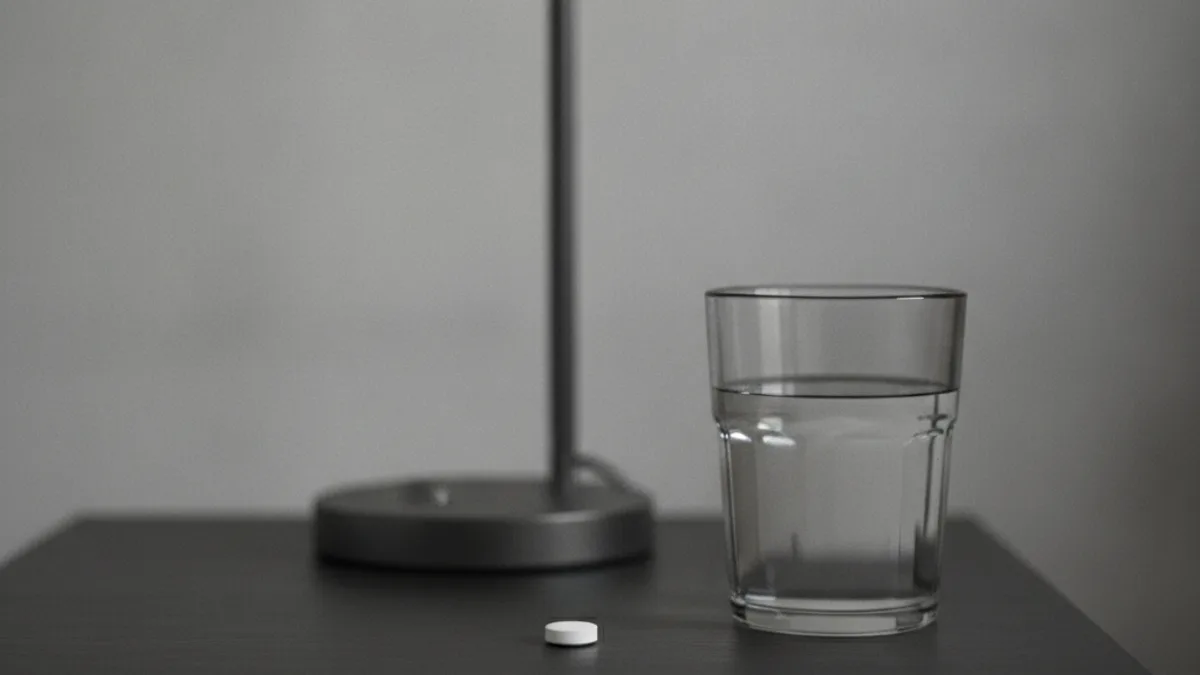
Melatonin is a hormone that signals the onset of darkness to the body. It is sold as a sleep aid, and this is the first discrepancy: a time signal and a consciousness-suppressing agent work in different ways. The second discrepancy is between the number on the bottle and what is actually inside.
How many minutes melatonin provides
A meta-analysis of 19 studies with 1,683 participants with primary sleep disorders yielded these figures: sleep onset latency decreased by an average of 7.1 minutes, and total sleep time increased by 8.3 minutes. The authors describe the effect as moderate but sustained—it does not disappear with continued use. It is also explicitly stated that the absolute benefit compared to a placebo is less than that of other pharmacological agents for insomnia. Study in PLOS ONE.
A later meta-analysis on sleep quality reached a similar conclusion—Journal of Neurology. And a network meta-analysis of insomnia treatments in adults, which compared interventions against each other, ranked melatonin significantly lower than agents designed as sleeping pills—publication in The Lancet.
Seven minutes is not a calculation error or nitpicking. It is the scale of the effect, which usually does not match the buyer's expectations.
Where it works better
Melatonin is a phase signal, and it is most effective where the phase itself is shifted, rather than sleep being disrupted per se: jet lag, shift work, and delayed sleep phase syndrome. In these scenarios, it is not so much about "how much to take" as it is about "when": taking it at the wrong time of day shifts the rhythm in the opposite direction.
How the phase mechanism itself is structured and why morning and evening affect the body differently is covered in the article on circadian rhythms and meal timing.
What was found in the bottles
The most inconvenient part of the topic. An analysis of 31 commercial supplements using liquid chromatography showed that the melatonin content deviated from what was stated on the label by a range of −83% to +478%. The variation between batches of the same product reached 465%. In more than 71% of samples, the content did not fall within a ten-percent corridor of the stated amount.
Furthermore, eight samples were found to contain serotonin in amounts ranging from 1 to 75 micrograms—a substance that was not listed in the ingredients. Study in the Journal of Clinical Sleep Medicine.
In other words, the number on the packaging in this category simply does not describe the contents. This is a characteristic of the supplement market, not a specific brand—the same logic is analyzed in the article on dietary supplements, vitamins, and medications.
Doses: why more does not mean stronger
Tablets ranging from 0.3 to 10 mg are available in pharmacies. The physiological nocturnal peak in humans corresponds to very small amounts, and studies on phase shifting have utilized these small doses. Higher doses keep the concentration elevated for longer, including into the morning—hence the typical complaint of feeling groggy during the first half of the day.
This is not a dosage recommendation. It is a description of why the correlation "more milligrams equals deeper sleep" is not supported by the data.
What melatonin does not combine with
Melatonin affects blood clotting and interacts with anticoagulants, anticonvulsants, and certain antidepressants; fluvoxamine sharply increases its concentration. There is little data on long-term use in children and adolescents, and the question of its effect on puberty remains open. It has not been studied during pregnancy and breastfeeding.
Separately: if sleep has been poor for months, meta-analyses on insomnia point to a different intervention—cognitive behavioral therapy, which has a greater effect that persists after the course ends. The figures are in the article on sleep hygiene.
Frequently asked questions
- How much does melatonin reduce sleep onset?
- In a meta-analysis of 19 studies with 1,683 participants—by an average of 7.1 minutes, with an increase in total sleep time of 8.3 minutes. The authors describe the effect as moderate but one that does not disappear with continued use.
- Is melatonin a sleeping pill?
- Not by mechanism: it is a signal that darkness has arrived, not a substance that shuts down consciousness. In a network meta-analysis of insomnia medications, it performs worse than drugs specifically developed as sleep aids.
- Does the content in the supplement match the label?
- In an analysis of 31 commercial products, the content deviated from the stated amount by −83% to +478%, the variation between batches of the same product reached 465%, and more than 71% of the samples did not fall within a ten-percent margin. Eight samples contained serotonin, which was not listed on the label.
- Does a larger dose work better?
- The data does not show such a correlation. Studies on phase shifting used small doses. Larger doses maintain a high concentration for longer, including into the morning, which is associated with daytime grogginess.
- What does melatonin interact with?
- With anticoagulants, anticonvulsants, and certain antidepressants; fluvoxamine sharply increases its concentration. There is little data on long-term use in children, and it has not been studied during pregnancy or breastfeeding.
Read next
- How sleep loss affects appetite and weight — Sleep usually turns up in the last paragraph of a weight-loss article, phrased vaguely enough to be safe.
- Meal timing and the body clock: why breakfast and midnight are not the same meal — The same plate is not handled the same way at eight in the morning and at midnight.
- How dietary supplements differ from vitamins and medications — In a pharmacy, two packages of vitamin D sit on the same shelf.
This article is for general information. It is not medical advice, a diagnosis, or a prescription for treatment or a diet, and it does not replace a consultation with your doctor. If you have a health condition, are pregnant, take medication, or follow a diet prescribed to you, decisions about food belong with your doctor.
Figures from regulations, guidelines and studies are given as they stood when this article was prepared and may since have changed; check them against the primary sources. This article is not advertising, an offer, or individual advice, and neither the author nor the site owner is responsible for decisions taken on the basis of it.