Autophagy: why the Nobel Prize was awarded and what is being sold based on it
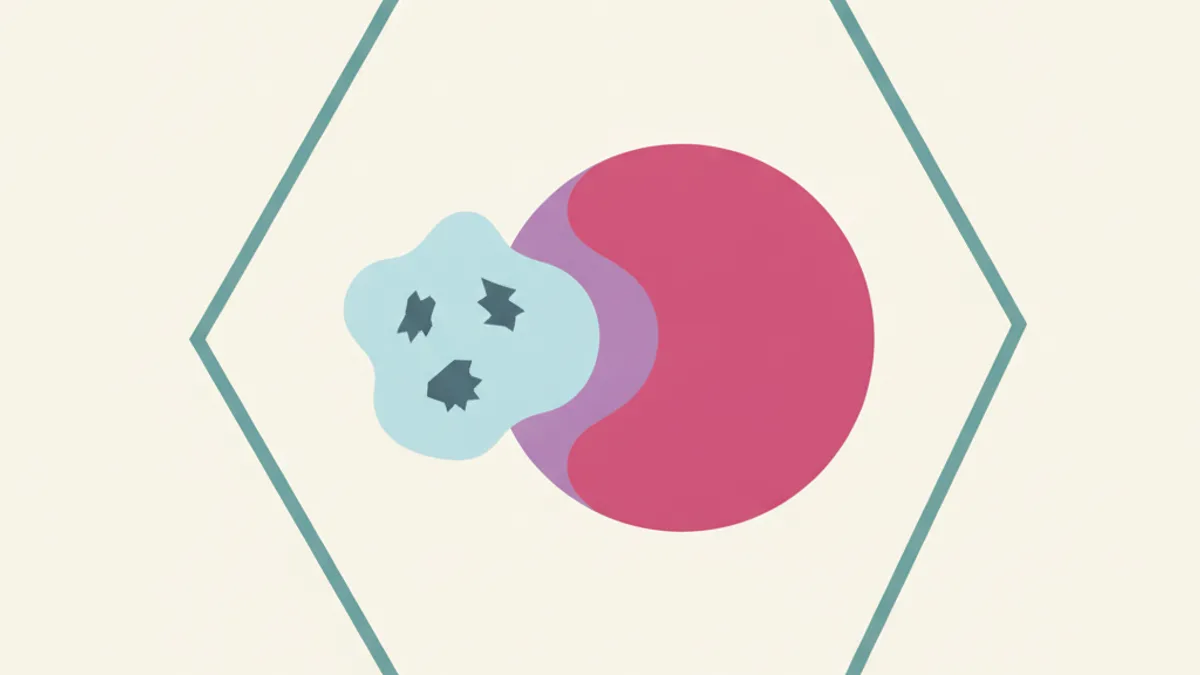
Autophagy is a mechanism by which a cell breaks down its own damaged parts and recycles the material. This is textbook biology, for which a Nobel Prize was awarded in 2016. What happened next is what happens with any recognized mechanism: it was attached to a diet regimen and turned into a marketing tool.
What was actually discovered
Yoshinori Ohsumi received the 2016 Nobel Prize in Physiology or Medicine for deciphering the mechanisms of autophagy. He worked with baker's yeast: he found mutants in which the process was impaired and, through them, identified the genes that control it. It was later discovered that homologs of these same genes function in humans. Analysis in the Journal of the Royal College of Physicians of Edinburgh.
The prize was awarded for understanding the mechanism, not for proving that it is beneficial for humans to enhance it through fasting. These are different claims, and the latter is not present in the award citation.
How autophagy is actually measured
This is the root of the problem. Autophagy is a flux: the formation of a membrane vesicle, the capture of contents, fusion with a lysosome, and degradation. It is impossible to measure this flux in a living human.
What is measured are indirect markers: the amount of LC3 and p62/SQSTM1 proteins, and the expression of genes like BECN1 and LAMP. Moreover, an increase in a marker can be interpreted in two ways—either the process has intensified, or it has stalled halfway and material has accumulated. A review of autophagy in skeletal muscle describes how this process is organized in the very tissue from which biopsies are usually taken — Cold Spring Harbor Perspectives in Biology.
Furthermore, biopsies are taken from accessible tissue: muscle, fat, or blood. What happens in the liver or in neurons is not measured by this.
Eleven people and four days
There are few of them, and they are small studies.
In a randomized crossover study, 11 overweight adults ate either within a window of 8 a.m. to 2 p.m. or from 8 a.m. to 8 p.m. Early time-restricted feeding lowered the average daily glucose level by 4 mg/dL and the amplitude of fluctuations by 12 mg/dL, and increased fasting morning ketones, cholesterol, and the expression of SIRT1 and LC3A genes in blood cells. Publication in Nutrients.
Eleven people, four days, an expression marker in blood cells. In retellings, this turns into "autophagy turned on in the body," even though only one indicator was measured in one tissue.
A study that compared mice and humans directly yielded a more inconvenient result. In mice, intermittent fasting increased autophagy markers in the liver, but not in the muscle. In humans, a 24-hour fast increased SQSTM1, while in an intermittent fasting regimen after an overnight break, the levels of BECN1, SQSTM1, and LAMP2 in the muscle were reduced — the authors attribute this to weight loss. Publication in Nutrition.
Where the "16 hours" came from
Nowhere specific. Humans do not have a measured threshold after which autophagy "turns on": the process is continuous and is regulated smoothly by nutritional status via the mTOR and AMPK signaling pathways. The numbers mentioned in videos—16, 18, 24 hours—are not taken from studies that determined this point in humans.
Separately: a significant portion of the initial data was obtained from rodents, whose metabolism is faster and for whom a day of fasting corresponds to a completely different proportion of their life cycle.
What actually happens during a break without food and what comparisons of regimens have shown is covered in the article on 16/8 intermittent fasting.
What is being sold under this term
Three categories. Timer apps that show "phases" with labels like "autophagy has begun"—these phases are drawn, not measured. Supplements with spermidine, resveratrol, and the like, which are called autophagy inducers based on cellular data. And fasting courses, where the mechanism serves as an explanation rather than a result.
A common feature: the argument is built on the existence of a mechanism, not on a measured outcome in humans. The same technique is analyzed in the article on anti-aging supplements.
Known, measured, not established
Known: autophagy exists, its mechanisms have been deciphered, and it is regulated by nutritional status. Measured in humans: shifts in individual markers in accessible tissues in small, short-term studies, sometimes in conflicting directions. Not established: how many hours without food a person needs to achieve a clinically significant effect, and whether this effect exists at all.
Frequently asked questions
- What was the Nobel Prize for autophagy awarded for?
- Yoshinori Ohsumi received the 2016 Nobel Prize in Physiology or Medicine for deciphering the mechanisms of autophagy. The work was conducted on baker's yeast: through mutants with an impaired process, the genes controlling it were identified.
- After how many hours of fasting does autophagy turn on?
- There is no such measured threshold in humans. The process is continuous and is regulated smoothly by nutritional status via the mTOR and AMPK signaling pathways. The figures of 16, 18, and 24 hours are not derived from studies that defined this point in humans.
- How is autophagy measured in humans?
- Indirectly: by the amount of LC3 and p62/SQSTM1 proteins and by gene expression in accessible tissue—muscle, fat, or blood. An increase in a marker can be interpreted both as an intensification of the process and as its blockage with an accumulation of material.
- What have human studies shown?
- In a study of 11 participants, early time-restricted feeding increased the expression of SIRT1 and LC3A in blood cells. In another study, 24-hour fasting increased SQSTM1, while under an intermittent regimen, the levels of several markers in muscle were reduced.
- Are there supplements that activate autophagy?
- Substances described as such received this label based on cellular and animal data. There are no trials where taking such a supplement changed a clinical outcome in humans rather than just a marker.
Read next
- 16/8 intermittent fasting: what happens during the fasting window — People usually say the same thing about 16/8: at some point, the body "switches to fat," and then "autophagy kicks in.
- Longevity supplements: NMN, resveratrol and what human trials measured — This shelf has the best story of any: a molecule, ageing cells, mice that lived longer.
- Meal timing and the body clock: why breakfast and midnight are not the same meal — The same plate is not handled the same way at eight in the morning and at midnight.
This article is for general information. It is not medical advice, a diagnosis, or a prescription for treatment or a diet, and it does not replace a consultation with your doctor. If you have a health condition, are pregnant, take medication, or follow a diet prescribed to you, decisions about food belong with your doctor.
Figures from regulations, guidelines and studies are given as they stood when this article was prepared and may since have changed; check them against the primary sources. This article is not advertising, an offer, or individual advice, and neither the author nor the site owner is responsible for decisions taken on the basis of it.